


ML enhanced bioactivity prediction for angiotensin II receptor: A potential anti-hypertensive drug target
- PMID: 40659675
- PMCID: PMC12259890
- DOI: 10.1038/s41598-025-08653-4
ML enhanced bioactivity prediction for angiotensin II receptor: A potential anti-hypertensive drug target
Abstract
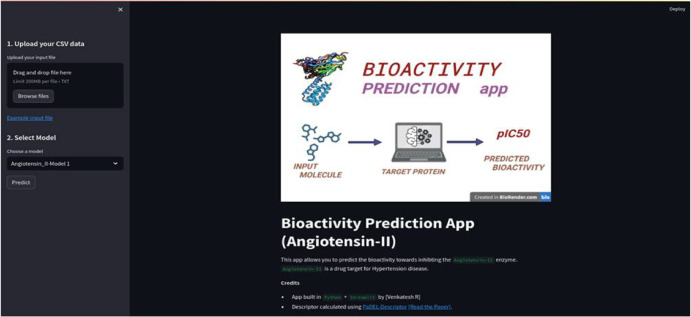
The process of drug discovery is intricate, and encompasses a series of detailed phases of research, development, and testing, aimed at evaluating the safety and effectiveness of prospective therapeutic agents. Artificial Intelligence has emerged as a transformative tool in this domain, adept at analysing vast datasets to uncover intricate patterns and relationships unperceivable to humans. This study introduces a bioactivity prediction application employing the Quantitative Structure-Activity Relationship model to forecast bioactivity against Angiotensin II receptor, a major drug target in hypertension management. Angiotensin II receptor modulation holds promise for treating a spectrum of diseases, including hypertension, cardiovascular ailments, and renal disorders. Through AI-driven approaches researchers in the field of drug discovery are able to effectively identify a majority of promising drug candidates, expediting the lead optimization process while reducing costs. This paradigm shift not only accelerates therapeutic development but also minimizes the need for exhaustive in vitro or in vivo testing, thus enhancing the efficiency of drug discovery endeavours.
Keywords: Angiotensin II receptor; Drug discovery; Hypertension; ML drug identification; Molecular descriptors; QSAR.
© 2025. The Author(s).
Conflict of interest statement
Declarations. Competing interests: The authors declare no competing interests.
Figures


References
-
- Flack, J. M. & Adekola, B. Blood pressure and the new ACC/AHA hypertension guidelines. Trends Cardiovasc. Med.30 (3), 160–164 (2020). - PubMed
-
- Paul, M., Poyan Mehr, A. & Kreutz, R. Physiology of local renin-angiotensin systems. Physiol. Rev.86 (3), 747–803. 10.1152/physrev.00036.2005 (2006). https://journals.physiology.org/doi/full/ - DOI - PubMed
MeSH terms
Substances
LinkOut - more resources
Full Text Sources
Medical
