


New bone formation of biphasic calcium phosphate bone substitute material: a systematic review and network meta-analysis of randomized controlled trials (RCTs)
- PMID: 40663189
- PMCID: PMC12263524
- DOI: 10.1186/s40729-025-00636-4
New bone formation of biphasic calcium phosphate bone substitute material: a systematic review and network meta-analysis of randomized controlled trials (RCTs)
Abstract
Objective: • To systematically determine the effectiveness of biphasic calcium phosphate (BCP) as bone substitute materials (BSM) compared to other BSMs for new bone formation in dental implant treatment through a network meta-analysis (NMA).
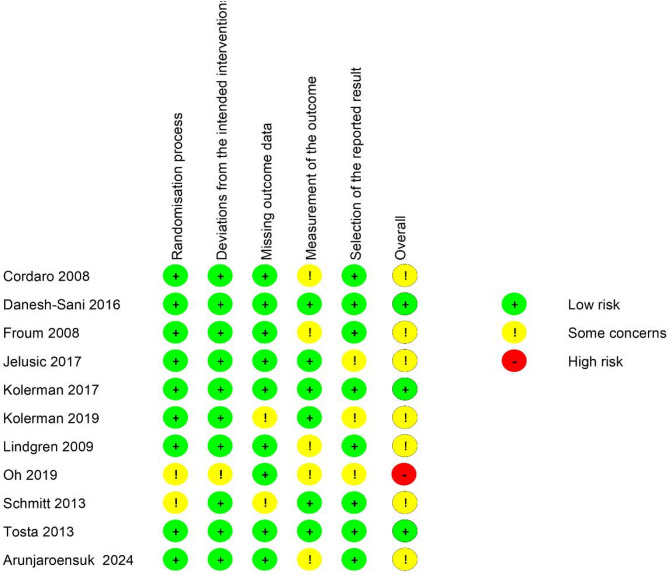
Materials and method: • Following PRISMA-NMA guidelines, randomized controlled trials (RCTs) on lateral sinus augmentation and dental implants comparing BCP with other BSMs for histomorphometric new bone formation were included. Studies were retrieved from MEDLINE, Cochrane, Scopus, and Embase (up to November 2024), with quality assessed via the Cochrane risk of bias 2 (RoB2.0) tool. Analysis included direct and network meta-analyses using a random-effects model, with SUCRA scores determining treatment rankings. The PROSPERO registration number was CRD42024607526.
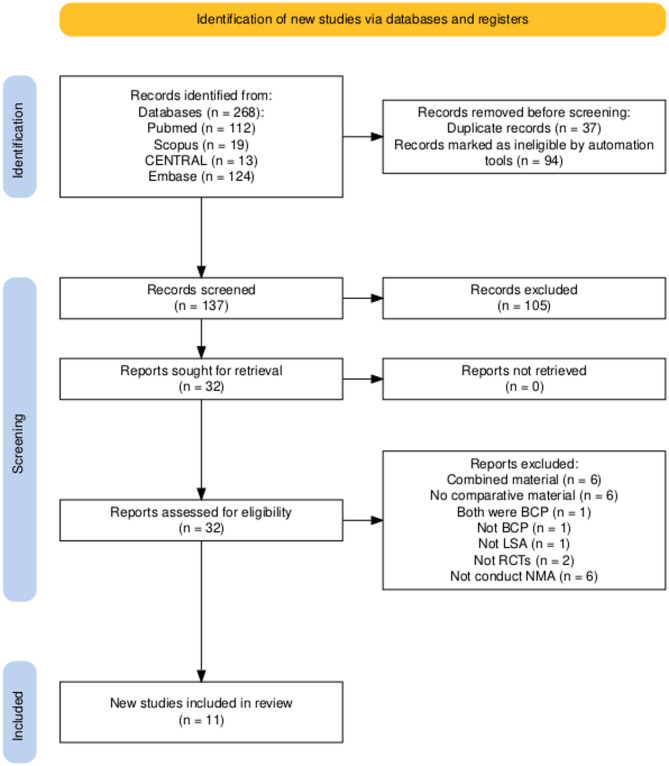
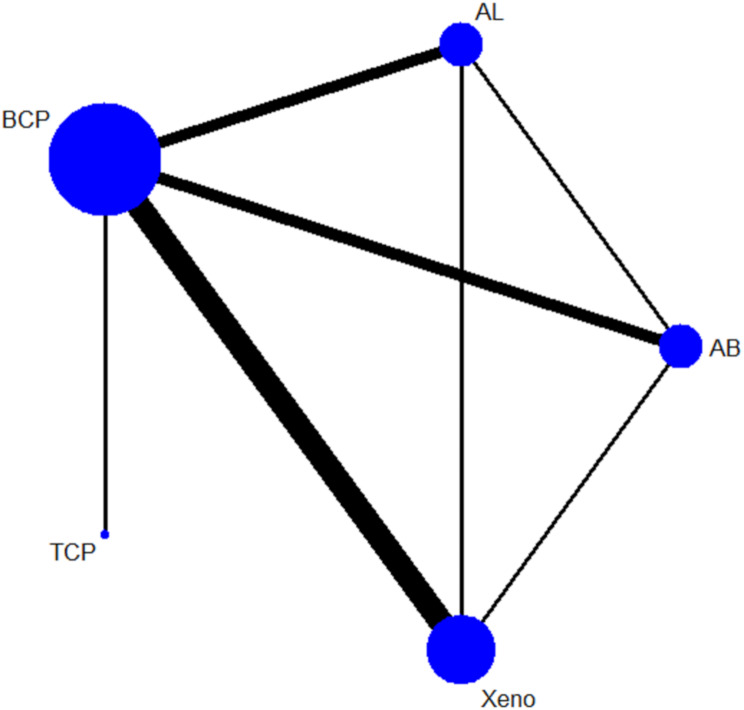
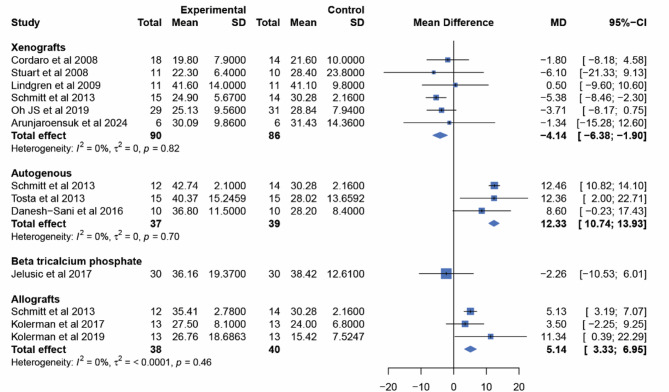
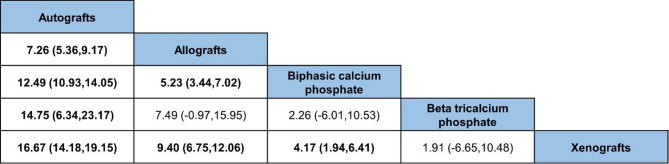
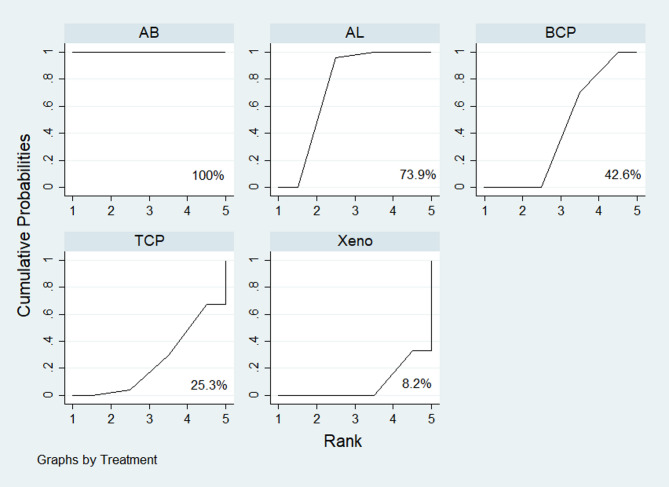
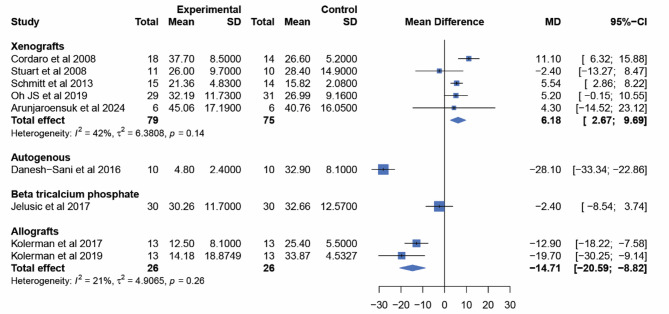
Results: • Of 268 studies, 11 met criteria, covering 283 patients and 362 sinus augmentations using autografts (AB), allografts (AL), beta tricalcium phosphate (TCP), BCP, and xenografts (Xeno). NMA showed AB resulted in 12.33% more new bone formation than BCP (95% CI: 10.74, 13.93), with AL showing 5.14% more (95% CI: 3.33, 6.95). Xeno showed 4.14% less bone formation than BCP (95% CI: -6.38, -1.90). AB ranked highest for new bone formation, followed by AL, BCP, TCP, and Xeno. Residual graft material was highest in Xeno (6.21%; 95% CI: 2.81, 9.61).
Conclusion: • BCP demonstrated sufficient new bone formation, outperforming xenografts in both bone formation and residual graft material. While autografts and allografts exhibited superior bone regeneration, BCP remains an effective option for bone augmentation treatments.
Keywords: BCP; Biphasic calcium phosphate; Dental implants; Histomorphometry; Hydroxyapatite-beta tricalcium phosphate; Network meta-analysis; Sinus floor augmentation.
© 2025. The Author(s).
Conflict of interest statement
Declarations. Ethics approval and consent to participate: This meta-analysis was registered under the trial number CRD42024607526 in the International Prospective Register of Systematic Reviews (PROSPERO: www.crd.york.ac.uk/PROSPERO ). Consent for publication: Not applicable. Competing interests: The authors declare no competing interests.
Figures
References
-
- Chappuis V, Araújo MG, Buser D. Clinical relevance of dimensional bone and soft tissue alterations post-extraction in esthetic sites. Periodontol 2000. 2017;73(1):73–83. - PubMed
-
- Araújo MG, Silva CO, Misawa M, Sukekava F. Alveolar socket healing: what can we learn? Periodontol 2000. 2015;68(1):122–34. - PubMed
-
- Ten Heggeler JM, Slot DE, Van der Weijden GA. Effect of socket preservation therapies following tooth extraction in non-molar regions in humans: a systematic review. Clin Oral Implants Res. 2011;22(8):779–88. - PubMed
-
- Roden RD. Jr. Principles of bone grafting. Oral Maxillofac Surg Clin North Am. 2010;22(3):295–300, v. - PubMed
-
- Marx RE. Bone and bone graft healing. Oral Maxillofac Surg Clin North Am. 2007;19(4):455–66. - PubMed
Publication types
MeSH terms
Substances
Grants and funding
LinkOut - more resources
Full Text Sources
Miscellaneous
