


Clinical efficacy of magnet-assisted removal for dental high-speed dental handpiece broken Burs in mandibular third molar surgery: a retrospective study
- PMID: 40665268
- PMCID: PMC12265203
- DOI: 10.1186/s12903-025-06513-1
Clinical efficacy of magnet-assisted removal for dental high-speed dental handpiece broken Burs in mandibular third molar surgery: a retrospective study
Abstract
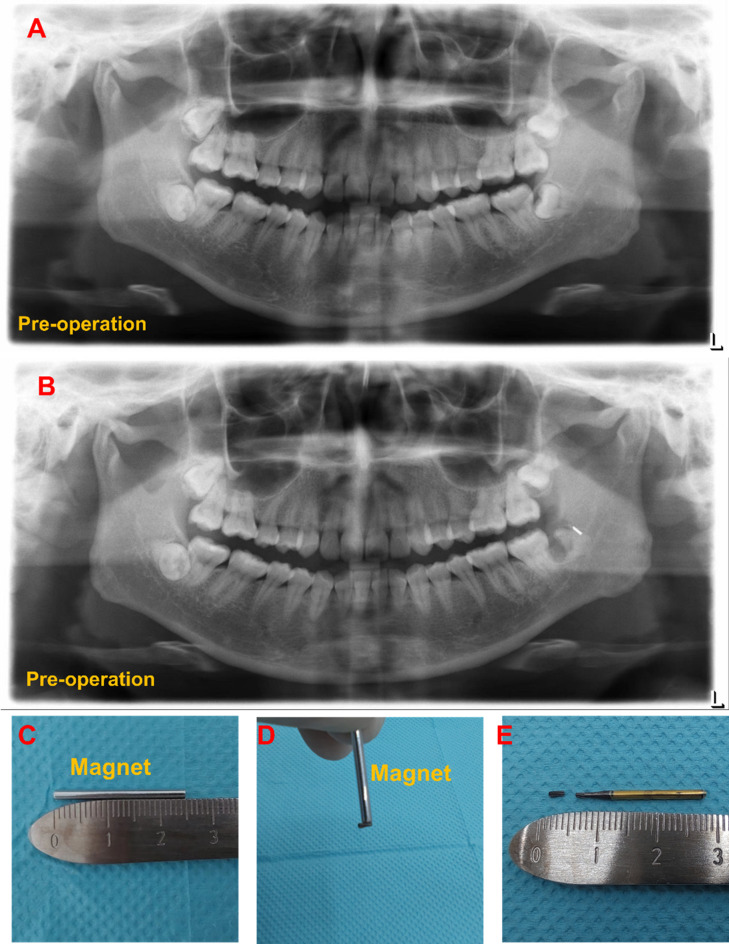
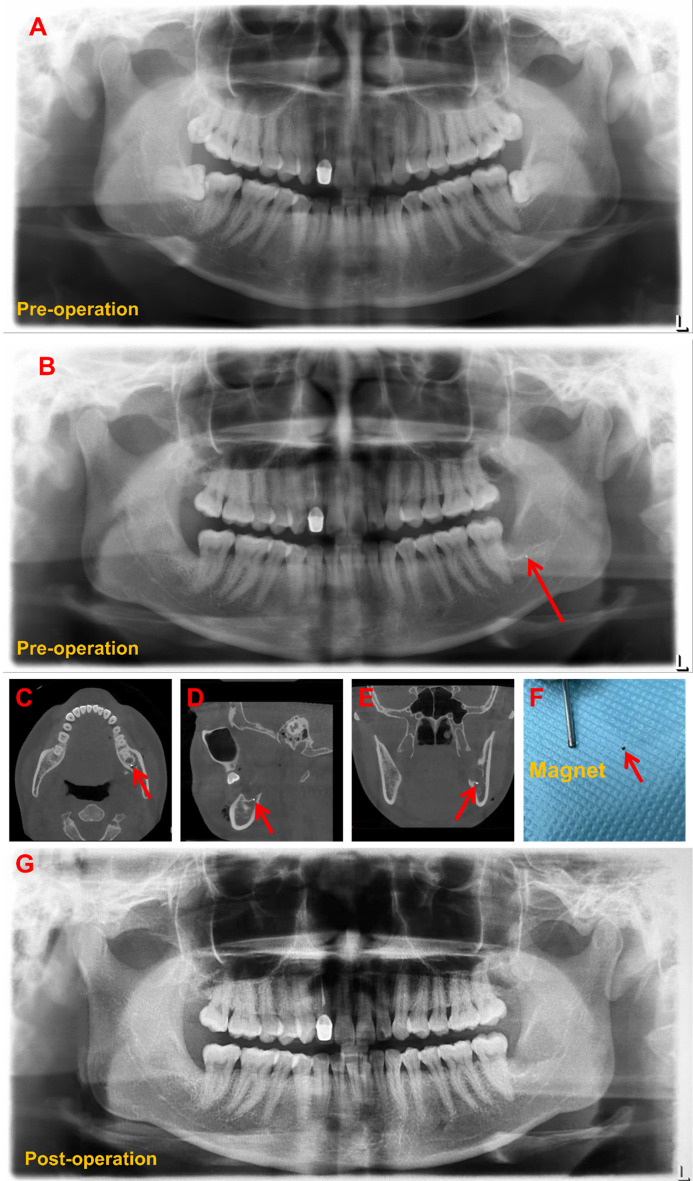
Background: Breakage and displacement of the high-speed dental handpiece bur is one of the intraoperative complications during mandibular third molar extraction. The retained metallic fragments can trigger issues such as pain and infection. Traditional retrieval methods require extensive tissue dissection, increasing the risk of nerve injury and postoperative complications. While emerging technologies are precise, their high cost and technical complexity hinder widespread adoption. Therefore, there is an urgent need for minimally invasive and easy-to-use treatments. This retrospective study aimed to compare the clinical efficacy of magnet-assisted removal and conventional methods for retrieving broken burs during mandibular third molar surgery, as well as to analyze the associated factors and outcomes.
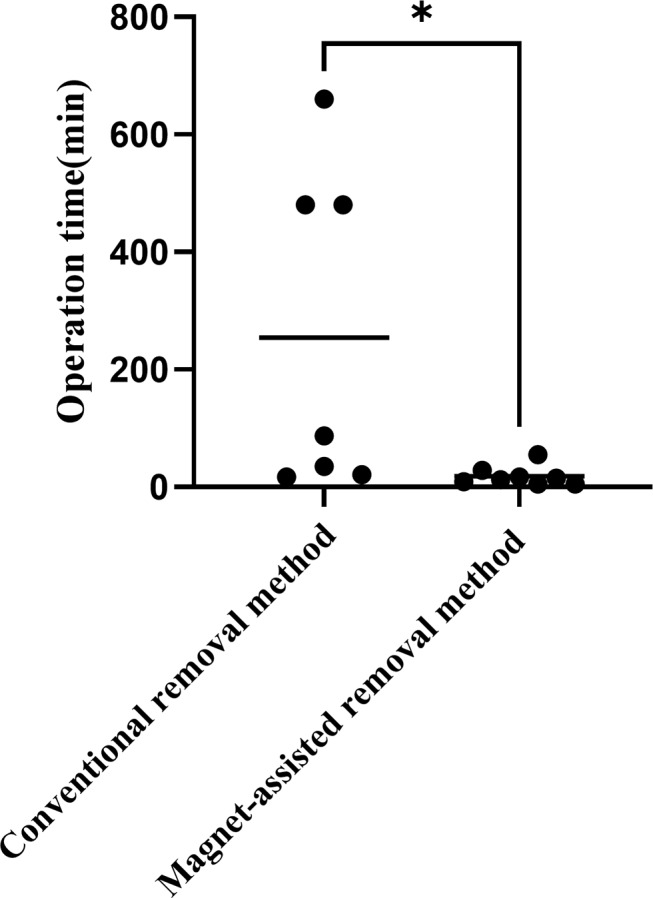
Methods: This retrospective study analyzed 15 cases of broken burs removal divided into conventional removal (n = 7) and magnet-assisted removal (n = 8) groups. Primary outcomes included operative time and success rate; secondary outcomes encompassed 24-hour postoperative visual analogue scale (VAS) pain scores, limited mouth opening at 72 h postoperatively, and neurosensory disturbances.
Results: Compared to conventional removal, magnet-assisted removal significantly reduced operative time (P = 0.03) and showed a non-significant trend toward lower neurosensory complication rates (P = 0.036). Although the success rate of magnet-assisted removal (100%) exceeded that of conventional removal techniques (71.4%), this difference was not statistically significant. The magnet group demonstrated superior secondary outcomes, lower mean VAS scores and fewer cases of limited mouth opening.
Conclusions: Magnet-assisted removal is a technically simple, safe, and effective minimally invasive alternative to conventional removal methods. Its advantages include reduced operative duration and potentially improved postoperative recovery.
© 2025. The Author(s).
Conflict of interest statement
Declarations. Ethics approval and consent to participate: This study was performed in line with the principles of the Declaration of Helsinki and approved by the Ethics Committee of School of Stomatology, Wenzhou Medical University. (Protocol No. WYKQ2023043). Written informed consent was obtained from the subject. Consent for publication: All authors have given their consent to the submission and publication of this manuscript. The manuscript has not been published elsewhere, nor is it under consideration for publication in another journal. Competing interests: The authors declare no competing interests.
Figures

References
-
- Candotto V, Oberti L, Gabrione F, Scarano A, Rossi D, Romano M. Complication in third molar extractions. J Biol Regul Homeost Agents. 2019;33(3 Suppl 1):169–72. Dental supplement. - PubMed
-
- Bouloux GF, Steed MB, Perciaccante VJ. Complications of third molar surgery. Oral Maxillofac Surg Clin North Am. 2007;19(1):117–28. vii. - PubMed
MeSH terms
Grants and funding
LinkOut - more resources
Full Text Sources
Medical
