


Combination Hyaluronic Acid and Multipotent Stromal Cells Fails to Improve Rat Knee OA Outcomes Compared to Cells Alone
- PMID: 40666263
- PMCID: PMC12262070
- DOI: 10.2147/ORR.S525292
Combination Hyaluronic Acid and Multipotent Stromal Cells Fails to Improve Rat Knee OA Outcomes Compared to Cells Alone
Abstract
Introduction: Multipotent Stromal Cells (MSCs) are utilized as therapeutic agents for addressing musculoskeletal conditions, including knee osteoarthritis (OA). However, major challenges in the clinical application include maintenance of the cells in the joint capsule. Hyaluronic acid (HA) is endogenous in synovial joints and commercially available as a joint lubricant. We tested the hypothesis that delivery of MSCs in HA into an OA rat knee model could improve outcomes.
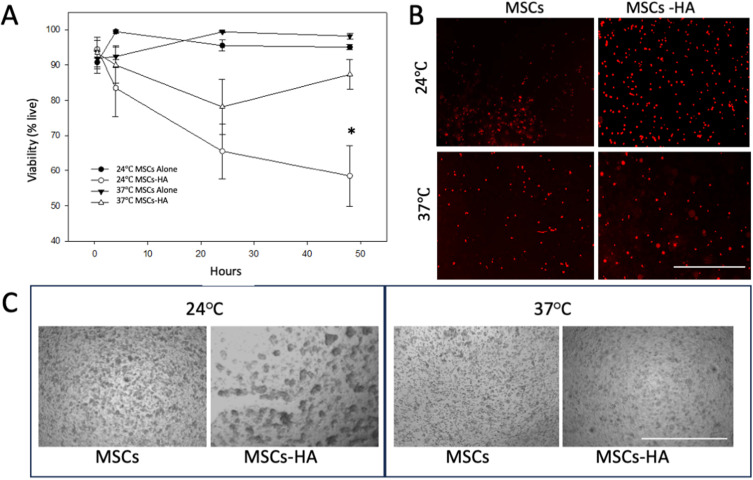
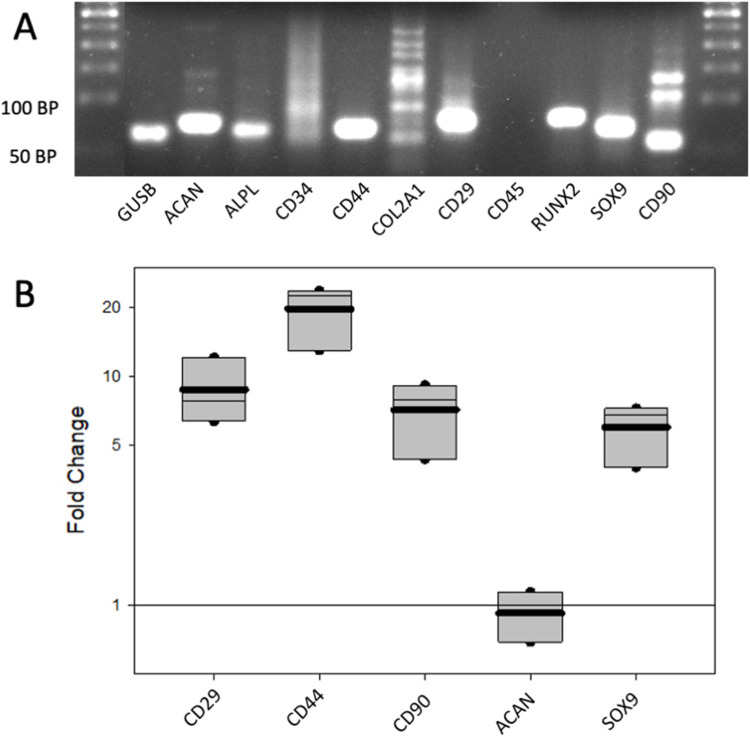
Methods: Rat bone marrow MSCs were suspended in a commercially available HA paste, and cell viability measured with live/dead stains. Biomarkers for MSC chondrogenesis and osteogenesis were monitored with PCR. MSCs with or without HA were injected into the knees of OA rats and histology conducted 6 weeks later.
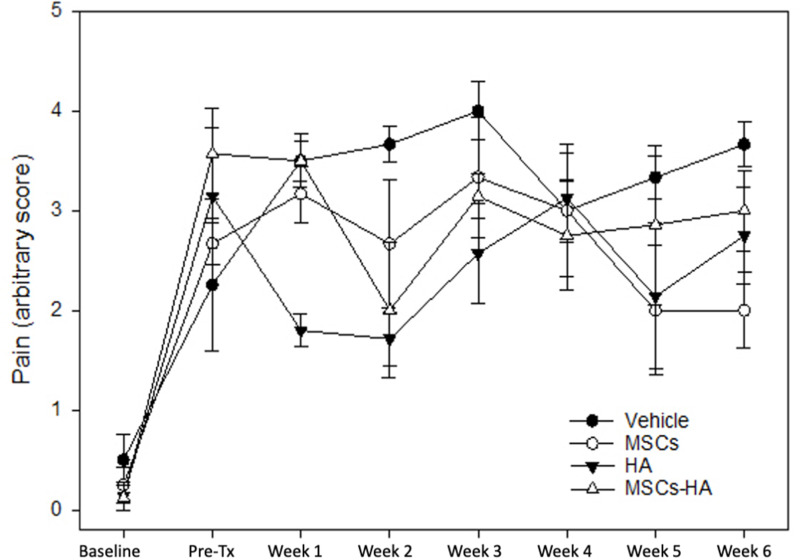
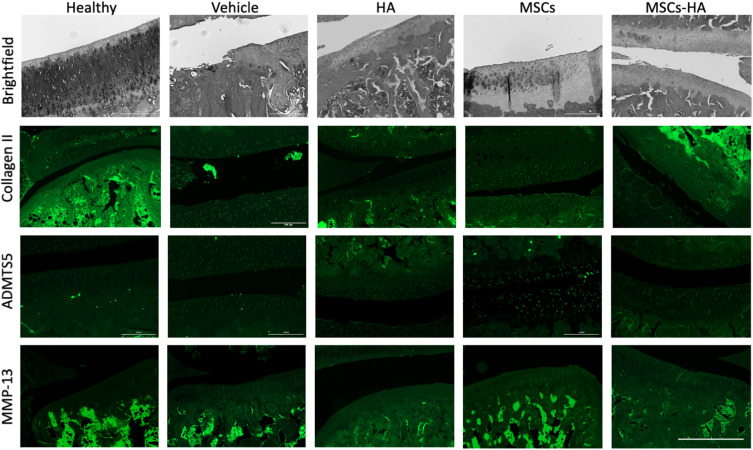
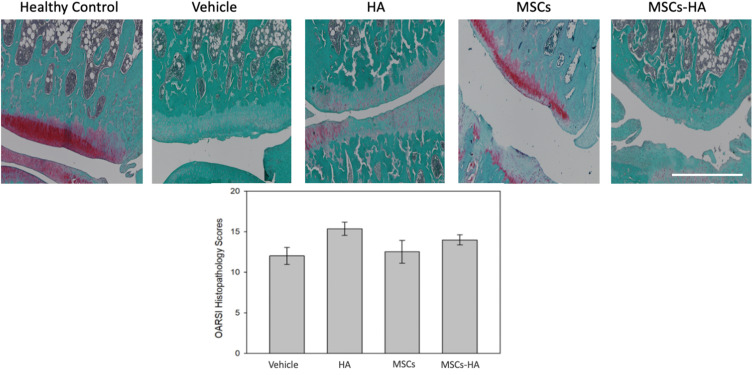
Results: Suspending MSC in HA resulted in a slight reduction in viability. The gene expression profile showed an increase in MSC biomarkers for cells in HA with a decrease in osteogenic markers. Four groups of treatment (vehicle, MSCs alone, HA alone, MSCs + HA) were injected into the knees of osteoarthritic rats. Pain scores, collected weekly, showed no difference between the groups. Immunohistochemistry for inflammatory markers illustrated no obvious differences between groups. Proteoglycans, indicative of cartilage, showed a loss in the vehicle group and modest signs of cartilage with MSCs alone, but when mixed with the HA, any benefit was lost. OARSI Histological Scoring completed by 2 independent technicians concluded no improvement in joint integrity with the addition of HA.
Conclusion: A commercially available HA failed to enhance joint regeneration compared to MSCs alone.
Keywords: Hyaluronic acid; multipotent stem cell; osteoarthritis.
© 2025 Davis et al.
Conflict of interest statement
MH, DM, AW, SH and LSB are employees of Likarda, Inc, which gains no benefit from the results of this study. LSB is also the founder and has equity in Likarda, Inc. The authors report no other conflicts of interest in this work.
Figures
References
LinkOut - more resources
Full Text Sources
