


Vaccine attitudes, practices, and literacy among New York State primary care providers and their office personnel
- PMID: 40667745
- PMCID: PMC12269657
- DOI: 10.1080/21645515.2025.2529635
Vaccine attitudes, practices, and literacy among New York State primary care providers and their office personnel
Abstract
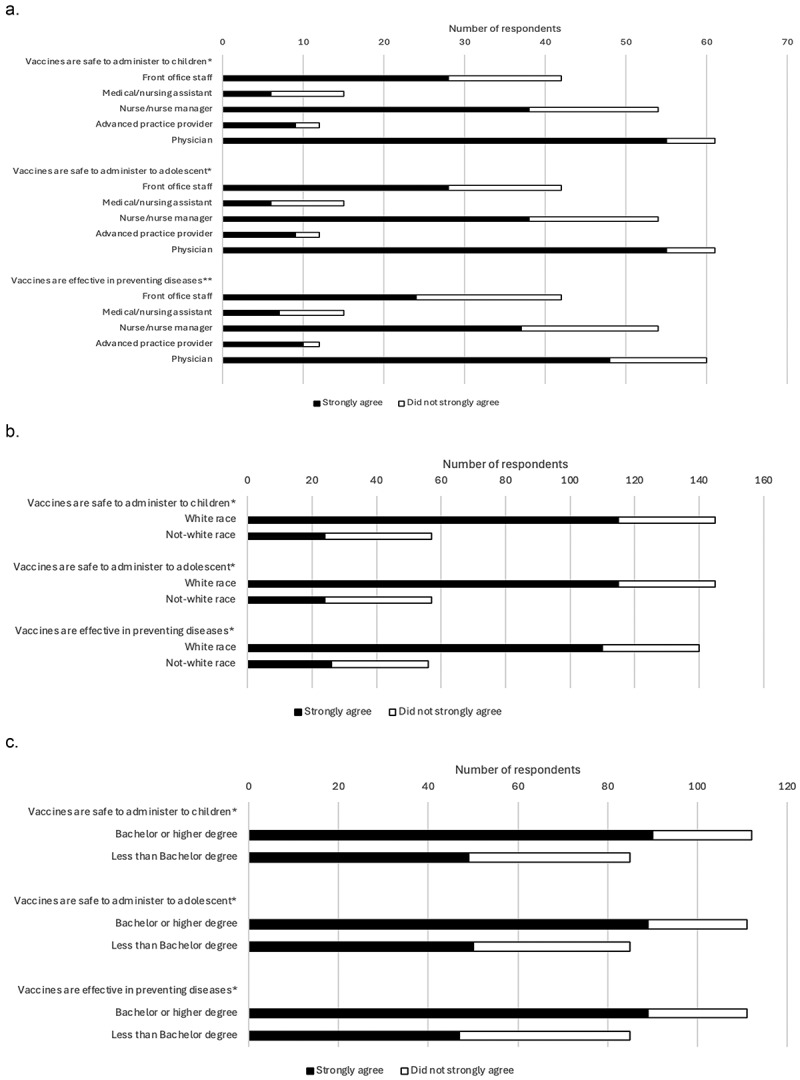
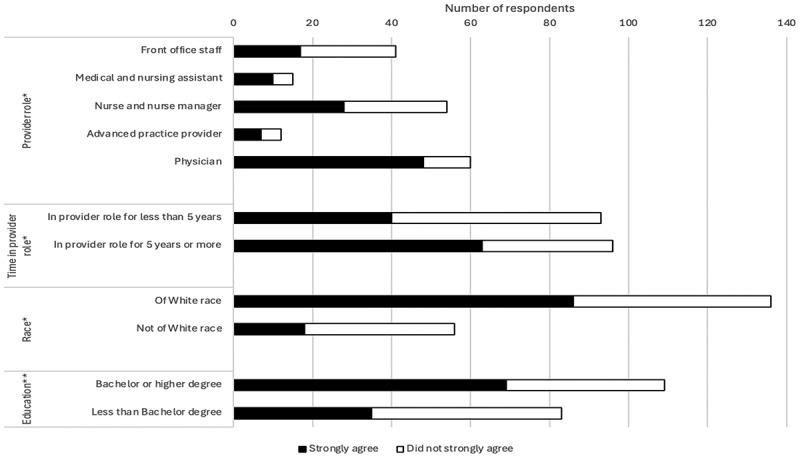
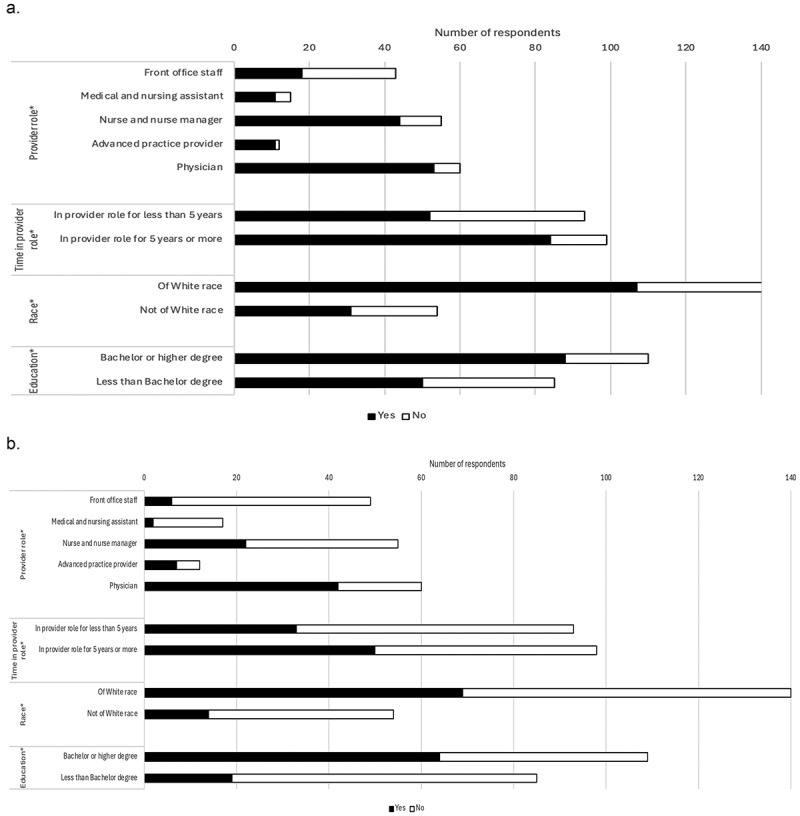
Consistency of the healthcare delivery team's communication to families is influential in vaccine decision-making. We aim to describe personal vaccine practices, attitudes, and literacy among New York State primary care office providers and personnel. We disseminated an anonymous survey to providers and office personnel (including but not limited to front office staff, medical assistance, nurses, advanced practice providers, and physicians) of 12 primary care practices between May and July 2023. Responses were assessed using chi-square tests, t-tests, and one way ANOVA tests to compare categorical variables, the means between two groups, and means across multiple groups, respectively. 216 respondents completed the survey. 25/213 (12%) and 16/147 (11%) reported declining routinely recommended vaccine(s) for themselves or for their child(ren), respectively, most commonly the COVID-19 and/or influenza vaccines. Less than three-quarters of respondents strongly agreed with the following statements: vaccines are safe to administer to children (149/214, 70%), vaccines are safe to administer to adolescents (149/213, 70%), and vaccines are effective in preventing disease (146/213, 69%). In total, 149/213 (70%) and 89/211 (42%) of respondents report that parents express concerns to them about vaccines in the clinic and outside of the practice setting, respectively, yet just over half of the respondents (116/210, 55%) report strong agreement with being comfortable having vaccine conversations with parents. Vaccine hesitancy exists across all healthcare team roles. Practice-wide education regarding vaccine safety, efficacy and importance and strategies for communicating about vaccines with patients and families is needed to improve vaccine confidence among the healthcare teams and patients.
Keywords: Vaccine confidence; immunization; vaccine acceptance; vaccine communications; vaccine hesitancy; vaccine literacy.
Figures
Similar articles
-
The attitude of the unvaccinated children's parents toward pediatric COVID-19 vaccination in Tabriz, Iran.BMC Pediatr. 2025 Mar 28;25(1):248. doi: 10.1186/s12887-025-05615-7. BMC Pediatr. 2025. PMID: 40155899 Free PMC article.
-
Factors associated with parental literacy and hesitancy toward pediatric vaccination.BMC Public Health. 2025 Jul 2;25(1):2201. doi: 10.1186/s12889-025-23410-y. BMC Public Health. 2025. PMID: 40604612 Free PMC article.
-
[Hesitancy and Refusal of the COVID-19 Vaccine Among Healthcare Professionals: A Cross-Sectional Study in a Portuguese Hospital].Acta Med Port. 2025 Apr 1;38(4):217-227. doi: 10.20344/amp.22540. Epub 2025 Apr 1. Acta Med Port. 2025. PMID: 40185134 Portuguese.
-
Face-to-face interventions for informing or educating parents about early childhood vaccination.Cochrane Database Syst Rev. 2018 May 8;5(5):CD010038. doi: 10.1002/14651858.CD010038.pub3. Cochrane Database Syst Rev. 2018. PMID: 29736980 Free PMC article.
-
Parents' and informal caregivers' views and experiences of communication about routine childhood vaccination: a synthesis of qualitative evidence.Cochrane Database Syst Rev. 2017 Feb 7;2(2):CD011787. doi: 10.1002/14651858.CD011787.pub2. Cochrane Database Syst Rev. 2017. PMID: 28169420 Free PMC article.
References
MeSH terms
Substances
LinkOut - more resources
Full Text Sources
Medical
