


Chronic 17β-estradiol treatment improves negative valence, anhedonic profile, and social interactions in ovariectomized, middle-aged female rats
- PMID: 40672384
- PMCID: PMC12263923
- DOI: 10.3389/fnbeh.2025.1553501
Chronic 17β-estradiol treatment improves negative valence, anhedonic profile, and social interactions in ovariectomized, middle-aged female rats
Abstract
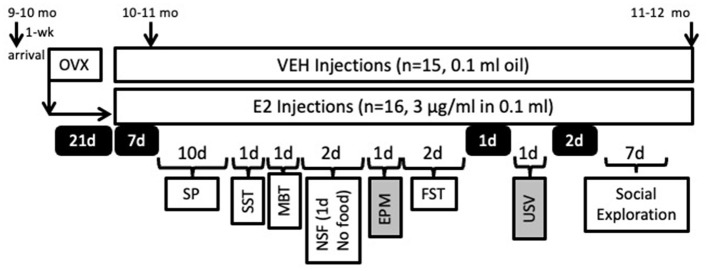
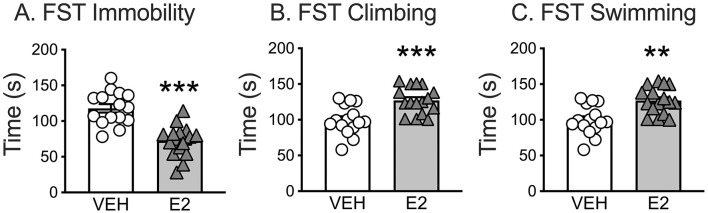
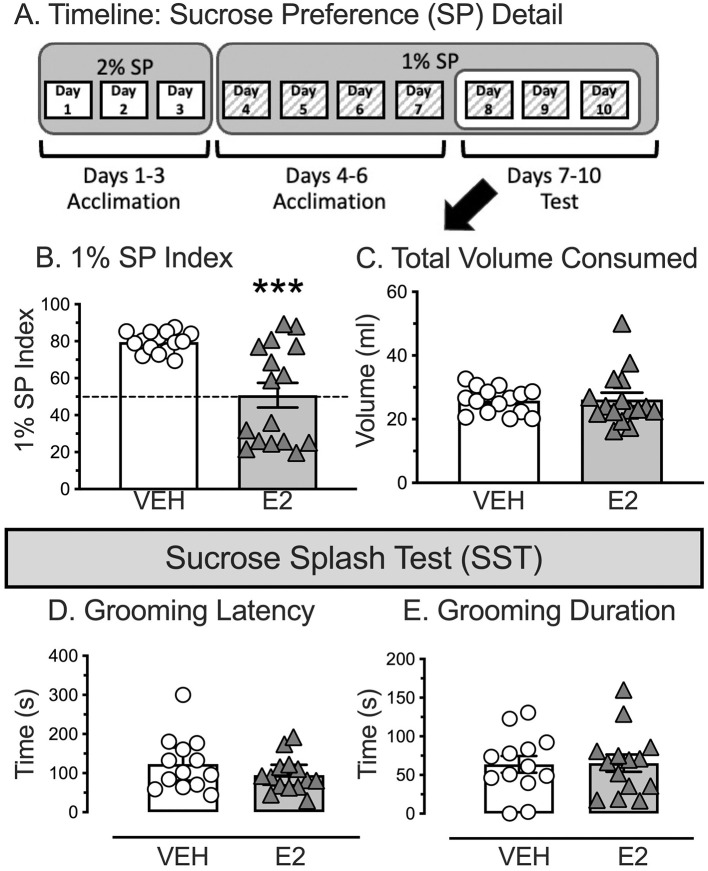
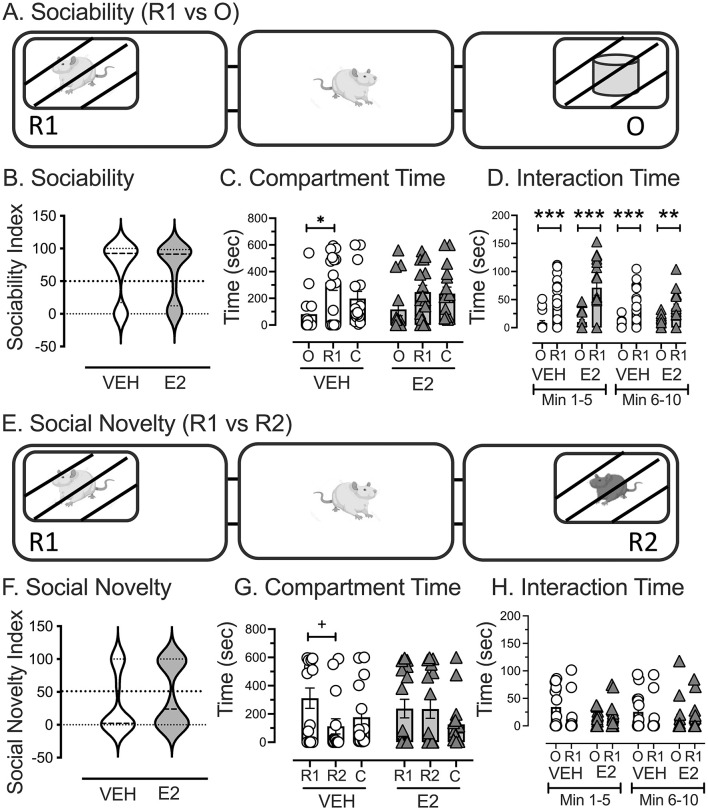
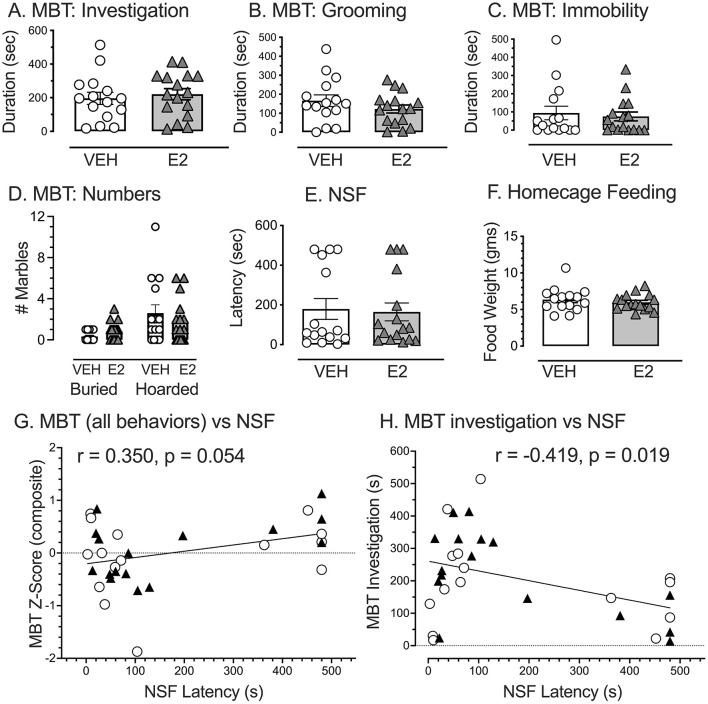
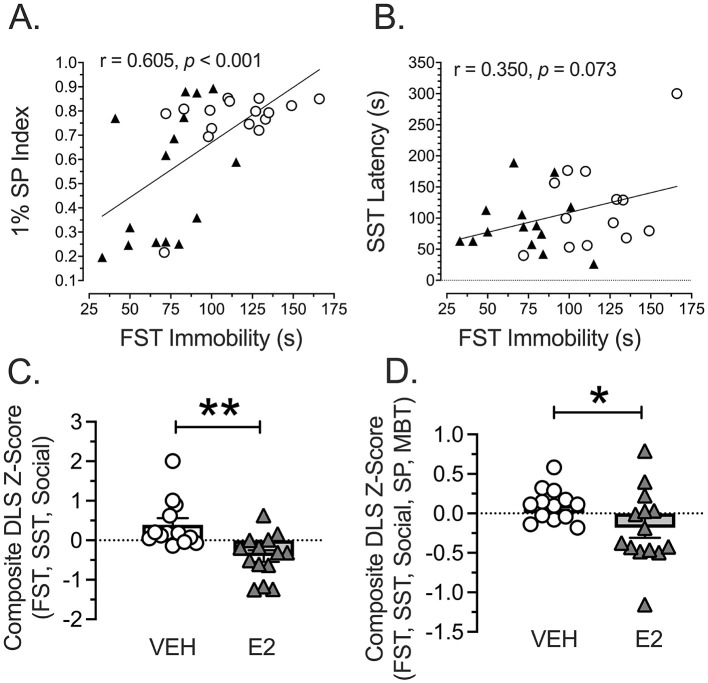
Women experience depression at nearly 2-fold higher rates than men, with middle-age during the menopausal transition being particularly vulnerable. Preclinical studies commonly focus on young adult or aged subjects and/or rely upon a few behavioral tasks. Given the highly variable and heterogenous nature of depression, the current study implemented a behavioral battery to assess whether estradiol (E2, endogenously expressed in women and rats) would improve depressive measures using the Research Domain Criteria (RDoC) for negative valence, anhedonia, sociability, and anxiety in early middle-aged, ovariectomized (OVX) female rats. F344-cdf rats were OVX and injected daily with E2 (3 μg/ml, or oil). Behavioral testing began after 14 days of injections, which continued throughout the study. E2 improved the depressive profile when using a composite metric for negative valence (immobility on the forced swim task, FST), anhedonia (duration to initiate grooming following sucrose splash and latency to initiate grooming with sucrose), sociability (time interacting toward a novel conspecific), and novelty-induced anxiety (time spent investigating marbles). Interestingly, FST immobility significantly and positively correlated with sucrose preference to show they were opposingly related: higher immobility on FST corresponded to more sucrose ingested. Also, time spent in a chamber with a novel conspecific was less informative than time directed at the conspecific. Other tasks, such as the marble bury test showed some hoarding behavior. These nuances revealed difficulties in assessing behaviors within and across studies, but overall showed that E2 improved the depressive-like syndrome (DLS) in middle-aged females based upon the RDoC.
Keywords: Forced Swim Test (FST); anhedonia and sociability in middle-age depression; anxiety; estrogen; estrogen improves negative valence; sociability; sucrose preference.
Copyright © 2025 Conrad, Peay, Sladkova, Kim, Donnay, Acuña and Whittaker.
Conflict of interest statement
The authors declare that the research was conducted in the absence of any commercial or financial relationships that could be construed as a potential conflict of interest.
Figures
References
LinkOut - more resources
Full Text Sources
Miscellaneous
