


Global burden of disease from high-sodium diets, 1990-2021: analysis of GBD 2021 data
- PMID: 40672419
- PMCID: PMC12263369
- DOI: 10.3389/fnut.2025.1617644
Global burden of disease from high-sodium diets, 1990-2021: analysis of GBD 2021 data
Abstract
Objectives: This study aimed to assess the global, regional, and national burden of disease attributable to high-sodium diets from 1990 to 2021.
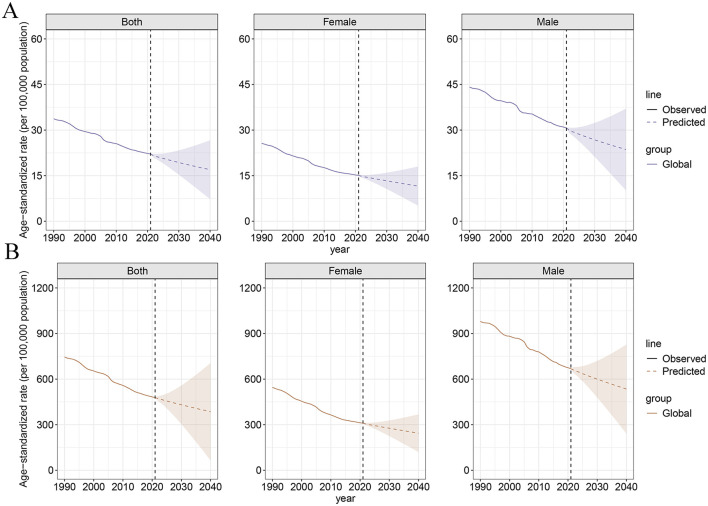
Methods: Data on the global high-sodium diet-related disease burden were obtained from the Global Burden of Disease 2021 (GBD2021). A Bayesian age-period-cohort model (BAPC) was used to project trends from 2022 to 2040.
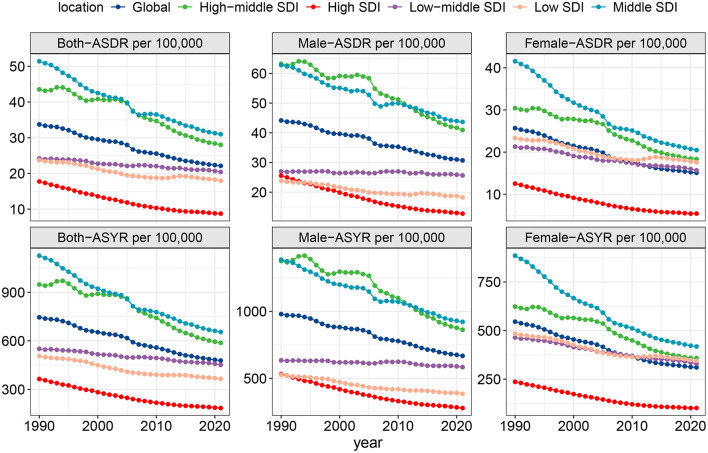
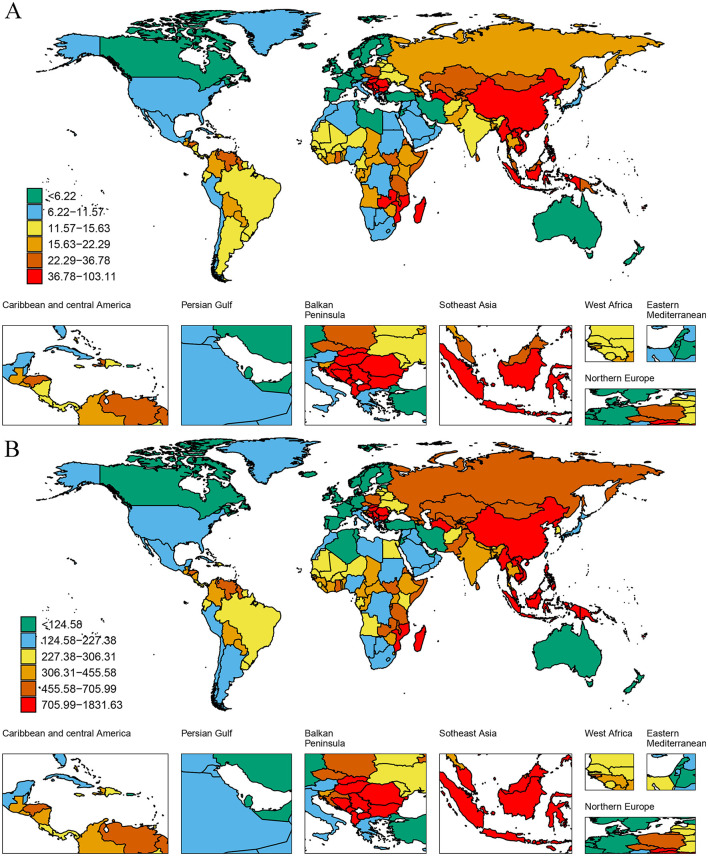
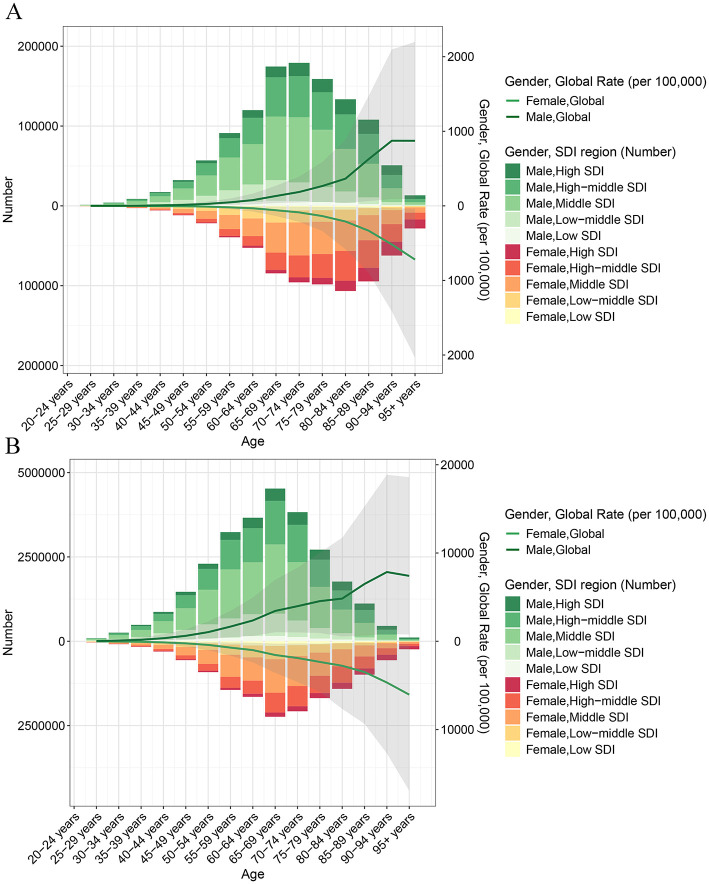
Results: Between 1990 and 2021, both the age-standardized death rate (ASDR) and age-standardized disability-adjusted life years rate (ASYR) attributable to high-sodium diets declined. The burden varied across Social Development Index (SDI) levels, regions, and countries, with Central Europe, East Asia, and Southeast Asia experiencing the highest burden. At the national level across 204 countries, the Republic of Bulgaria recorded the highest ASDR and ASYR, while the Islamic Republic of Pakistan experienced the most rapid increases in both ASDR and ASYR. Additionally, the ASDR and ASYR increased with age and were consistently higher in men than in women. The GBD2021 reported 8 diseases attributed to high-sodium diets, arranged in descending order of disease burden as follows: stroke, Ischemic heart disease, Hypertensive heart disease, Stomach cancer, Chronic kidney disease, Atrial fibrillation and flutter, Aortic aneurysm, Lower extremity peripheral arterial disease. The BAPC prediction results showed that the ASDR and ASYR of high-sodium diets would decrease by 23.28 and 19.46%, respectively, from 2022 to 2040.
Conclusions: The global disease burden due to high-sodium diets has decreased over the past three decades, though disparities remain. Targeted investigations are urgently needed, particularly in high-burden regions, to further reduce the health impacts of excessive sodium intake.
Keywords: GBD2021; cardiovascular diseases; global burden; global trend; high sodium intake.
Copyright © 2025 Nie, Wang, Huang, Li, Lu, Li and Wu.
Conflict of interest statement
The authors declare that the research was conducted in the absence of any commercial or financial relationships that could be construed as a potential conflict of interest.
Figures

Similar articles
-
The global burden of stroke attributable to high alcohol use from 1990 to 2021: An analysis for the global burden of disease study 2021.PLoS One. 2025 Jul 14;20(7):e0328135. doi: 10.1371/journal.pone.0328135. eCollection 2025. PLoS One. 2025. PMID: 40658674 Free PMC article.
-
Burden of knee osteoarthritis in China and globally: 1990-2045.BMC Musculoskelet Disord. 2025 Jul 1;26(1):582. doi: 10.1186/s12891-025-08858-8. BMC Musculoskelet Disord. 2025. PMID: 40598022 Free PMC article.
-
Global burden and trend of stroke attributable to metabolic risks among young adults (20-39 years old) from 1990 to 2021.Front Cardiovasc Med. 2025 Jun 2;12:1561052. doi: 10.3389/fcvm.2025.1561052. eCollection 2025. Front Cardiovasc Med. 2025. PMID: 40529554 Free PMC article.
-
[Volume and health outcomes: evidence from systematic reviews and from evaluation of Italian hospital data].Epidemiol Prev. 2013 Mar-Jun;37(2-3 Suppl 2):1-100. Epidemiol Prev. 2013. PMID: 23851286 Italian.
-
Dietary Approaches to Stop Hypertension (DASH) for the primary and secondary prevention of cardiovascular diseases.Cochrane Database Syst Rev. 2025 May 6;5(5):CD013729. doi: 10.1002/14651858.CD013729.pub2. Cochrane Database Syst Rev. 2025. PMID: 40326569 Review.
References
LinkOut - more resources
Full Text Sources
Miscellaneous
