


Investigating the Oxidative Potential and In Vitro Toxicity of Ambient Water-Soluble PM10 in an Eastern Mediterranean Site
- PMID: 40672655
- PMCID: PMC12261277
- DOI: 10.1021/acsestair.5c00085
Investigating the Oxidative Potential and In Vitro Toxicity of Ambient Water-Soluble PM10 in an Eastern Mediterranean Site
Abstract
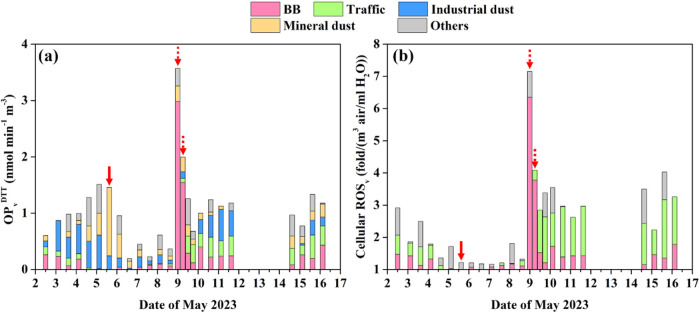
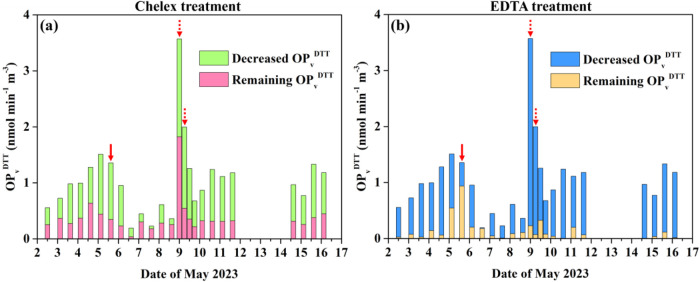
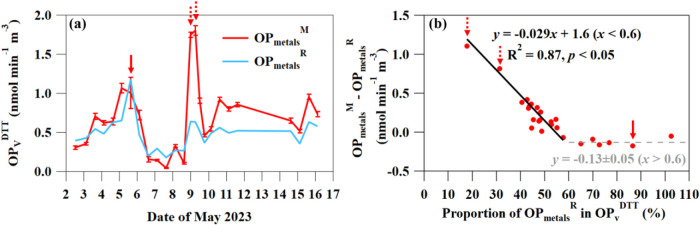
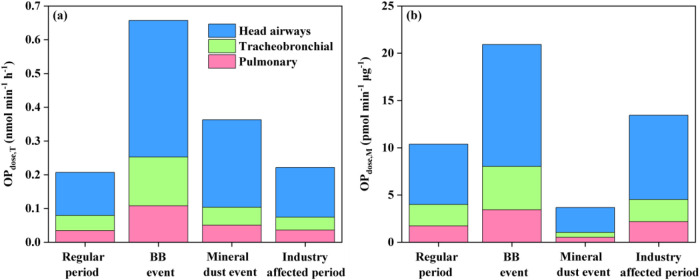
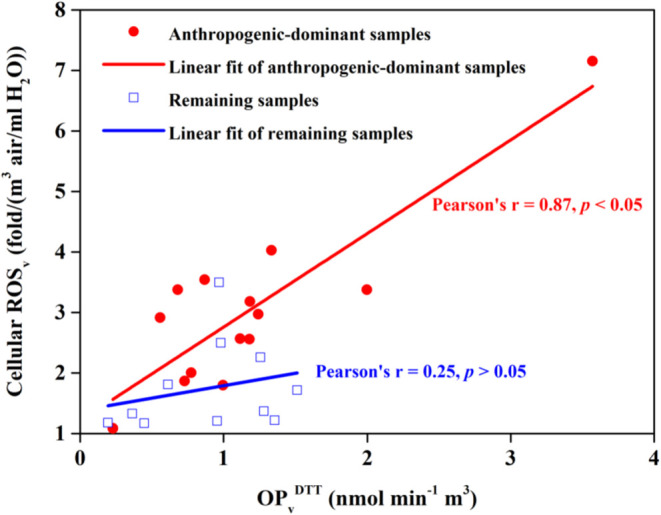
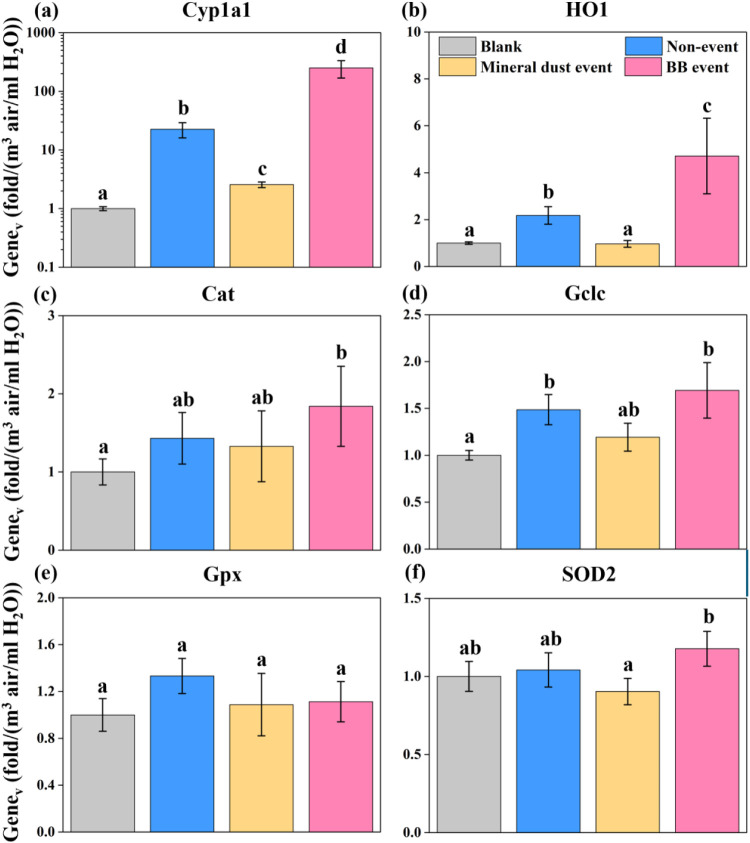
In this study, the acellular dithiothreitol (DTT) assay, the in vitro cellular DCFH-DA assay on human lung epithelial cells, and gene expression measurements were used to assess the toxicity of water-soluble (WS) PM10 relating to reactive oxygen species (ROS) in summer at an Eastern Mediterranean urban site. Large influences from anthropogenic sources on health risks were observed with acellular and cellular assays. Anthropogenic biomass burning (BB) and natural dust events increased human pulmonary exposure to the oxidative potential (OPdose,T) of WS-PM10 by 209 and 47%, respectively, compared to regular periods. OPv DTT and ROSv results were positively correlated in anthropogenic-dominant samples, while showed no significant correlation in the remaining samples. As a result, the BB and dust event had higher and lower levels of cellular ROSv compared with the nonevent period, respectively. Source apportionment results suggest that specific organic contents (e.g., PAHs) had relatively low contents in samples less influenced by anthropogenic sources, possibly explaining the divergence in acellular and cellular results. Heavy metals were dominant contributors of OPv DTT throughout the campaign, and a Chelex method is recommended over a EDTA method for quantification of their summed OPv DTT.
Keywords: EDTA; biomass burning; cytotoxicity; dust event; oxidative potential; particulate matter; reactive oxygen species.
© 2025 The Authors. Published by American Chemical Society.
Figures
References
-
- World Health Organization Ambient (Outdoor) Air Pollution, 2025. https://www.who.int/news-room/fact-sheets/detail/ambient-(outdoor)-air-q.... (accessed June 8, 2025).
-
- Burnett R., Chen H., Szyszkowicz M., Fann N., Hubbell B., Pope C. A., Apte J. S., Brauer M., Cohen A., Weichenthal S., Coggins J., Di Q., Brunekreef B., Frostad J., Lim S. S., Kan H., Walker K. D., Thurston G. D., Hayes R. B., Lim C. C., Turner M. C., Jerrett M., Krewski D., Gapstur S. M., Diver W. R., Ostro B., Goldberg D., Crouse D. L., Martin R. V., Peters P., Pinault L., Tjepkema M., van Donkelaar A., Villeneuve P. J., Miller A. B., Yin P., Zhou M., Wang L., Janssen N. A. H., Marra M., Atkinson R. W., Tsang H., Thach T. Q., Cannon J. B., Allen R. T., Hart J. E., Laden F., Cesaroni G., Forastiere F., Weinmayr G., Jaensch A., Nagel G., Concin H., Spadaro J. V.. Global Estimates of Mortality Associated with Long-Term Exposure to Outdoor Fine Particulate Matter. Proc. Natl. Acad. Sci. U.S.A. 2018;115(38):9592–9597. doi: 10.1073/pnas.1803222115. - DOI - PMC - PubMed
-
- Stafoggia M., Renzi M., Forastiere F., Ljungman P., Davoli M., de’ Donato F., Gariazzo C., Michelozzi P., Scortichini M., Solimini A., Viegi G., Bellander T.. Group, the B. C. Short-Term Effects of Particulate Matter on Cardiovascular Morbidity in Italy: A National Analysis. Eur. J. Prev. Cardiol. 2022;29(8):1202–1211. doi: 10.1093/eurjpc/zwaa084. - DOI - PubMed
-
- Yu Y., Sun Q., Li T., Ren X., Lin L., Sun M., Duan J., Sun Z.. Adverse Outcome Pathway of Fine Particulate Matter Leading to Increased Cardiovascular Morbidity and Mortality: An Integrated Perspective from Toxicology and Epidemiology. J. Hazard. Mater. 2022;430:128368. doi: 10.1016/j.jhazmat.2022.128368. - DOI - PubMed
LinkOut - more resources
Full Text Sources
Research Materials
Miscellaneous