


Prevalence and associated factors of anemia during pregnancy at a tertiary hospital in Zambia
- PMID: 40674404
- PMCID: PMC12270163
- DOI: 10.1371/journal.pone.0327801
Prevalence and associated factors of anemia during pregnancy at a tertiary hospital in Zambia
Abstract
Background: Anemia during pregnancy is among the leading causes of poor outcomes among mothers and neonates in low-resource settings like Zambia. This study aimed to determine the prevalence and factors associated with anemia among pregnant women attending antenatal care (ANC) at Livingstone University Teaching Hospital (LUTH).
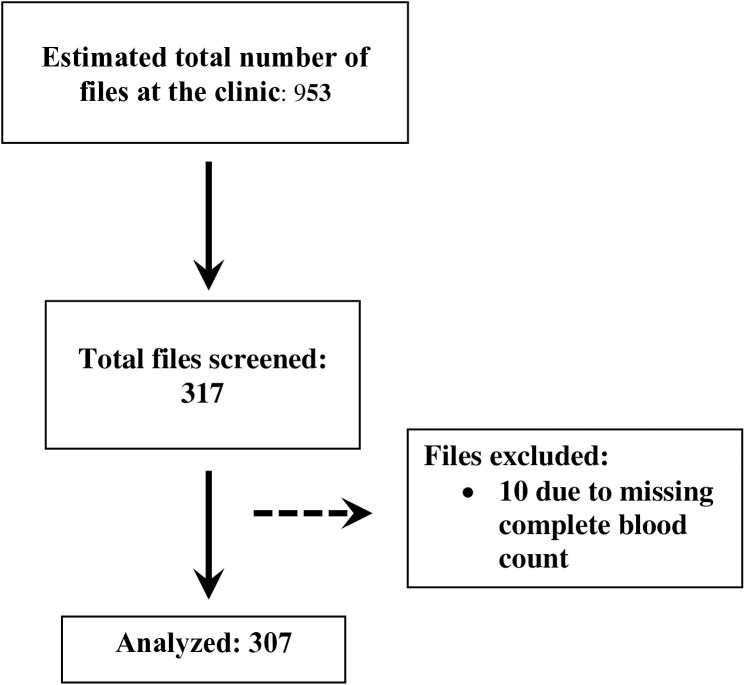
Methods: A retrospective cross-sectional study was conducted of which 307 records using a systemic random sampling method were abstracted among pregnant women attending ANC from 12th October 2023-12th January 2024. Demographic and clinical factors were collected from medical records using the Kobo Toolbox application and analyzed using STATA version 15. Descriptive statistics were used to summarize participant characteristics, and multi-variable logistic regression was employed to identify factors associated with anemia.
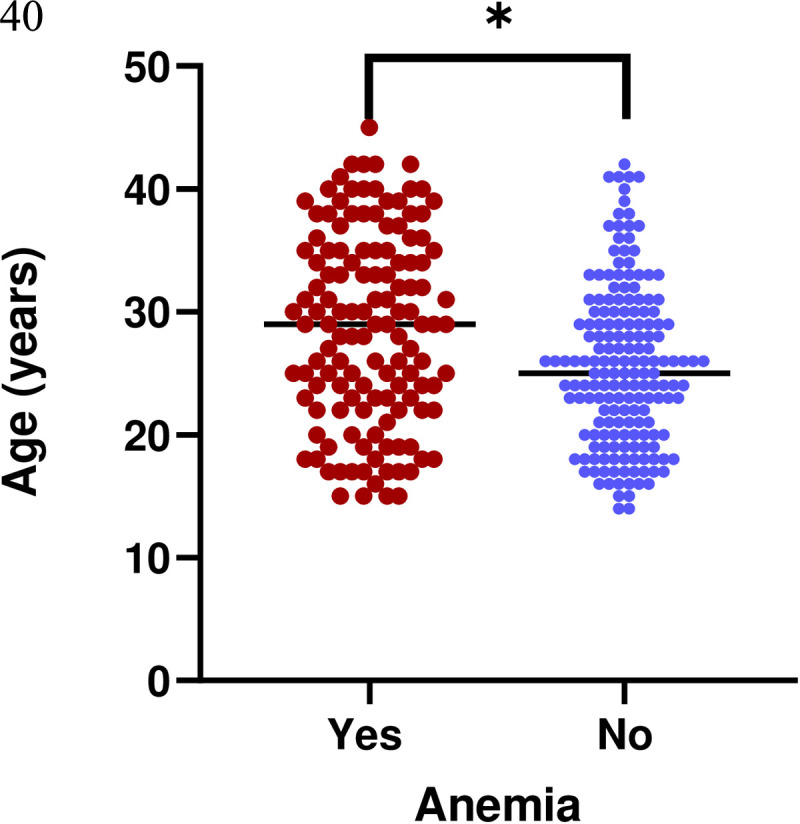
Results: The median age of the participants was 26 years (interquartile range 21, 32) and the overall prevalence of anemia was 42.7% (mild: 16.8%, moderate: 20.8%, and severe: 5.1%). Factors positively associated with anemia were being in the second and third trimesters (adjusted odds ratio (AOR) =9.06, 95% confidence interval (CI): 1.72, 47.79, p = 0.009 and AOR = 4.14, 95% CI: 1.05, 16.31, p = 0.042, respectively), history of abnormal uterine bleeding (AOR = 4.09, 95% CI: 1.14, 14.72, p = 0.031), high parity (AOR = 2.09, 95% Cl: 1.19, 1.61, p = 0.025), and having an underlying medical condition (AOR = 2.23, 95% Cl: 1.13, 4.42, p = 0.021).
Conclusion: Anemia in pregnancy is common in our setting, associated with being in an advanced gestational age, having a history of abnormal uterine bleeding, having high parity, and having underlying medical conditions. Targeted interventions in the second and third trimesters and among women with underlying medical conditions are imperative in reducing the burden of anemia in pregnancy and improving maternal and neonatal outcomes.
Copyright: © 2025 Siame et al. This is an open access article distributed under the terms of the Creative Commons Attribution License, which permits unrestricted use, distribution, and reproduction in any medium, provided the original author and source are credited.
Conflict of interest statement
The authors have declared that no competing interests exist.
Figures
Similar articles
-
Magnitude and determinants of anemia in the third trimester among pregnant women in Dodoma: An analytical cross-sectional study.Medicine (Baltimore). 2025 May 30;104(22):e42131. doi: 10.1097/MD.0000000000042131. Medicine (Baltimore). 2025. PMID: 40441199 Free PMC article.
-
Alcohol consumption and associated factors among pregnant women at public health centers in Asella town, southeastern Ethiopia: a multicenter mixed-method cross-sectional study.BMC Pregnancy Childbirth. 2025 Jul 10;25(1):745. doi: 10.1186/s12884-025-07875-8. BMC Pregnancy Childbirth. 2025. PMID: 40640777 Free PMC article.
-
Prevalence and correlates of microalbuminuria in high-risk persons with hypertension, diabetes, or HIV at a tertiary hospital in Zambia.PLoS One. 2025 Jul 14;20(7):e0328529. doi: 10.1371/journal.pone.0328529. eCollection 2025. PLoS One. 2025. PMID: 40658688 Free PMC article.
-
Intermittent oral iron supplementation during pregnancy.Cochrane Database Syst Rev. 2015 Oct 19;2015(10):CD009997. doi: 10.1002/14651858.CD009997.pub2. Cochrane Database Syst Rev. 2015. PMID: 26482110 Free PMC article.
-
Metformin for women who are overweight or obese during pregnancy for improving maternal and infant outcomes.Cochrane Database Syst Rev. 2018 Jul 24;7(7):CD010564. doi: 10.1002/14651858.CD010564.pub2. Cochrane Database Syst Rev. 2018. PMID: 30039871 Free PMC article.
References
-
- Ikabongo I, Vwalika B, Lubeya MK. Prevalence and Factors associated with Short Interpregnancy Intervals among women attending antenatal care at first level hospitals in lusaka, zambia. Med J Zambia. 2024;50(3):217–25. doi: 10.55320/mjz.50.3.352 - DOI
MeSH terms
LinkOut - more resources
Full Text Sources
Medical
