


Finding the link of acculturation: the impact of perceived neighbourhood-level residential environment on mental health among rural-to-urban migrants in China
- PMID: 40676570
- PMCID: PMC12273036
- DOI: 10.1186/s12889-025-23652-w
Finding the link of acculturation: the impact of perceived neighbourhood-level residential environment on mental health among rural-to-urban migrants in China
Abstract
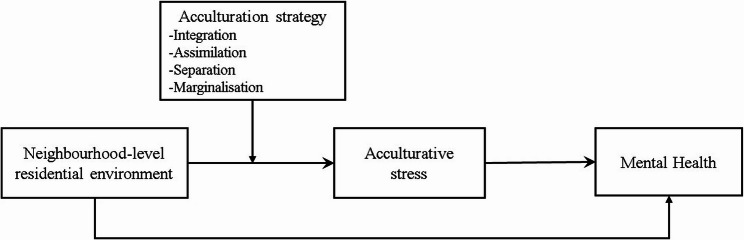
Background: The mental health of migrants living in the post-migration urban environment poses a significant public health challenge in both developed and developing economies. Few empirical studies attempted to disentangle the influence pathways that acculturation might produce the link between the residential environment and health effects.
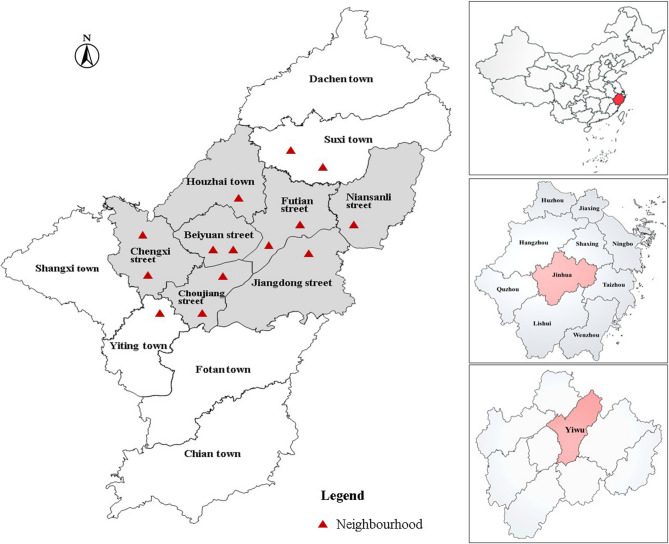
Methods: Data from 385 migrants was collected using a multi-stage stratified sampling method from 25 communities in Yiwu, China. We used a multi-level regression model and conditional process analysis to examine the health effects of the perceived neighbourhood environment and influence pathways of acculturation.
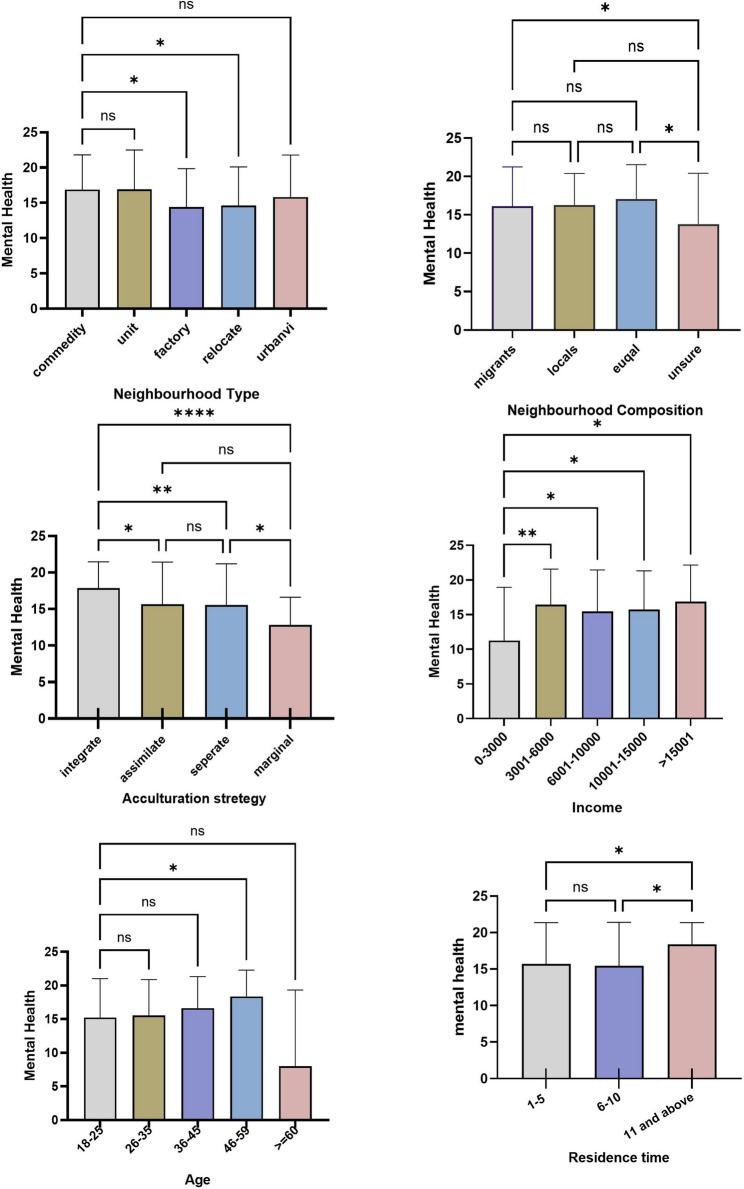
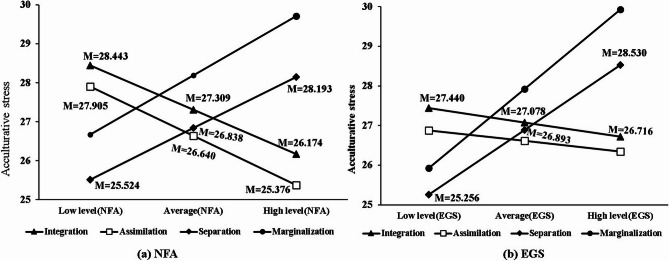
Results: The results found that participants' mental health was moderate (mean = 15.9 out of 24). Migrants residing in relocation neighbourhoods and factory dormitories exhibit significantly lower mental health. The neighbourhood effects of migrant-dominated, local-dominated, and mixed residential neighbourhoods contribute positively to migrants' mental health. Neighbourhood physical environment positively affects mental health, whereas the neighbourhood social environment negatively affects mental health. Moreover, EGS (βindirect=-0.04, BootLLCI=-0.096, BootULCI=-0.002) and NSC (βindirect=-0.038, BootLLCI=-0.081, BootULCI=-0.007) impact migrants' mental health through the mechanism of acculturative stress. Migrants in the assimilation group experienced reduced acculturative stress as the NFA (β=-0.377, p = 0.035) improved. In contrast, those in the separation group faced increased acculturative stress as the improvements of NFA (β = 0.392, p = 0.05) and EGS (β = 0.809, p = 0.027).
Conclusions: These findings suggest that future public health intervention strategies should be considered for improved neighbourhood environments, promoted residential integration, alleviated acculturative stress and prioritised acculturation strategies to enhance rural migrants' mental health.
Keywords: Acculturation strategies; Acculturative stress; Mental health; Perceived neighbourhood-level residential environment; Rural-to-urban migrants.
© 2025. The Author(s).
Conflict of interest statement
Declarations. Ethics approval and consent to participate: The study, approved by the Universiti Malaya Research Ethics Committee (UMREC) (Reference number: UM.TNC2/UMREC_2856), was conducted as migrants’ mental health research in accordance with the Declaration of Helsinki. All participants were required to give written informed consent before they began the survey and interview. Moreover, participants were reminded that their participation was voluntary throughout the informed consent procedure. Consent for publication: Not application. Competing interests: The authors declare no competing interests.
Figures
References
-
- Health and Migration Programme (PHM). Global research agenda on health, migration and displacement. World Health Organization; 2023. https://www.who.int/publications/i/item/9789240082397.
-
- Albouy D, Cho H, Shappo M. Immigration and the pursuit of amenities. J Reg Sci. 2021;61(1):5–29. 10.1111/jors.12475. - DOI
-
- Sundari S. Quality of life of migrant households in urban slums. In: Proceedings of the Third International Conference on Environment and Health, Chennai, India; 2003. https://www.yorku.ca/bunchmj/ICEH/proceedings/ConferencePaper.htm. Accessed 15-17 Dec 2003.
MeSH terms
Grants and funding
LinkOut - more resources
Full Text Sources
Medical
