


Reliability and validity of the Chinese version of the maternity-monitoring scale by parents
- PMID: 40676571
- PMCID: PMC12272976
- DOI: 10.1186/s12884-025-07880-x
Reliability and validity of the Chinese version of the maternity-monitoring scale by parents
Abstract
Background: Postpartum depression (PPD) affects women globally, yet self-report tools like the Edinburgh Postnatal Depression Scale (EPDS) face cultural and reporting biases. The parent-rated Maternity-monitoring Scale by Parents (MMSP), developed to address these gaps, was culturally adapted for China. This study validated the Chinese MMSP, offering a complementary tool to enhance PPD detection through familial observations.
Methods: MMSP was translated and back translated using the modified Brislin translation model, and the Chinese test version of MMSP was formed after expert discussion, cultural debugging, and pre-investigation. From September to October 2024, convenience sampling was used to select 282 pregnant women and their parents from a Class A tertiary hospital in Henan Province to investigate the reliability and validity of the Chinese version of MMSP.
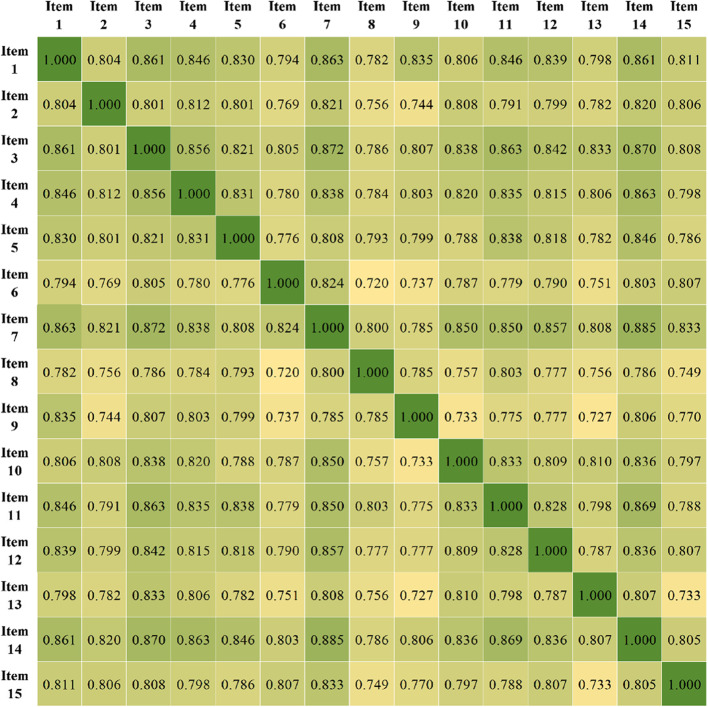
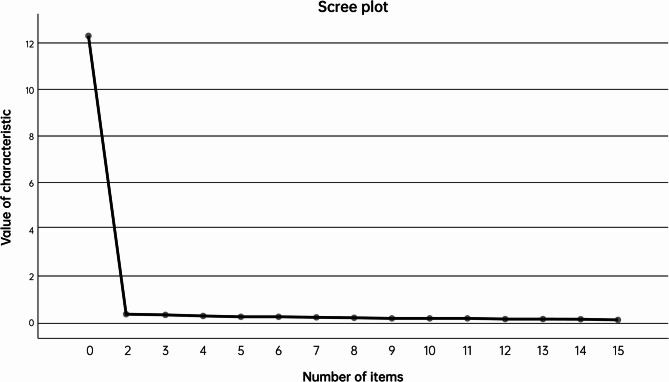
Results: The Chinese version of MMSP consists of 15 items. The correlation coefficients between the scores of each item and the total score of the scale range from 0.873 to 0.935 (P < 0.05), and the critical ratios of each item range from 12.363 to 14.758 (P < 0.05). Exploratory factor analysis extracted one common factor with a cumulative variance contribution rate of 82.007%. The scale's item-level content validity index (I-CVI) ranges from 0.83 to 1, and the scale's average content validity index (S-CVI/Ave) is 0.93. Using the Chinese version of the Edinburgh Postnatal Depression Scale as the criterion, the criterion-related validity of MMSP is 0.972 (P < 0.05). The Cronbach's α coefficient of the Chinese version of MMSP is 0.984, and the split-half reliability is 0.988.
Conclusion: The Chinese version of MMSP has good reliability and validity, which can be used to effectively evaluate the depression status of postpartum women in clinical practice and help medical staff identify and intervene in potential depressive symptoms early.
Keywords: Cross-cultural adaptation; Parent rating scale; Postpartum depression; Reliability; Validity.
© 2025. The Author(s).
Conflict of interest statement
Declarations. Ethics approval and consent to participate: All methods were performed in accordance with the relevant guidelines and regulations or in accordance with the Declaration of Helsinki. The Ethics Committee of the First Affiliated Hospital of Henan university, Henan University, approved this study (Approval ID: HUSOM2024-526). Participants received oral information about the study, and verbal informed consent was obtained from all postpartum women and their parents before the start of the study, and all participants completed informed written consent after being informed of the aim of the research. Consent for publication: Not applicable. Competing interests: The authors declare no competing interests.
Figures
References
-
- Qi W, Wang Y, Li C, He K, Wang Y, Huang S, et al. Predictive models for predicting the risk of maternal postpartum depression: a systematic review and evaluation. J Affect Disord. 2023;333:107–20. - PubMed
Publication types
MeSH terms
Grants and funding
- 2023-7-1/Collaborative Research Project between doctors and Nurses
- 2023-7-1/Collaborative Research Project between doctors and Nurses
- 2023-7-1/Collaborative Research Project between doctors and Nurses
- 2023-7-1/Collaborative Research Project between doctors and Nurses
- 2023-7-1/Collaborative Research Project between doctors and Nurses
LinkOut - more resources
Full Text Sources
Medical
