


GSK-3β and mTOR Phosphorylation Mediate the Reversible Regulation of Hypomagnetic Field on Adult Neural Stem Cell Proliferation
- PMID: 40676806
- PMCID: PMC12271677
- DOI: 10.1111/ejn.70202
GSK-3β and mTOR Phosphorylation Mediate the Reversible Regulation of Hypomagnetic Field on Adult Neural Stem Cell Proliferation
Abstract
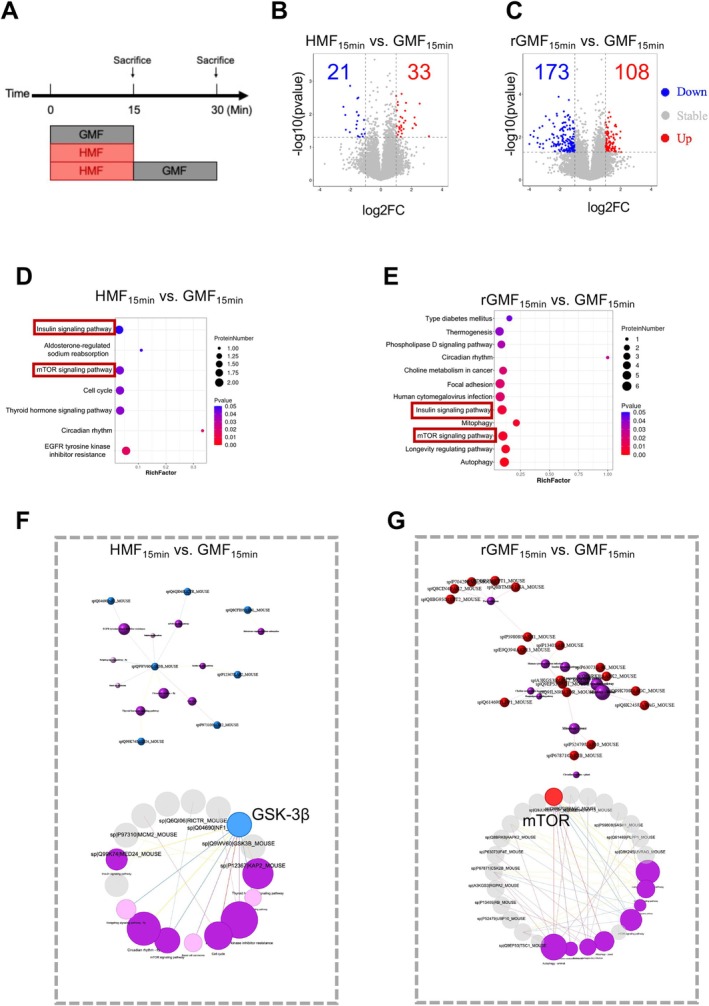
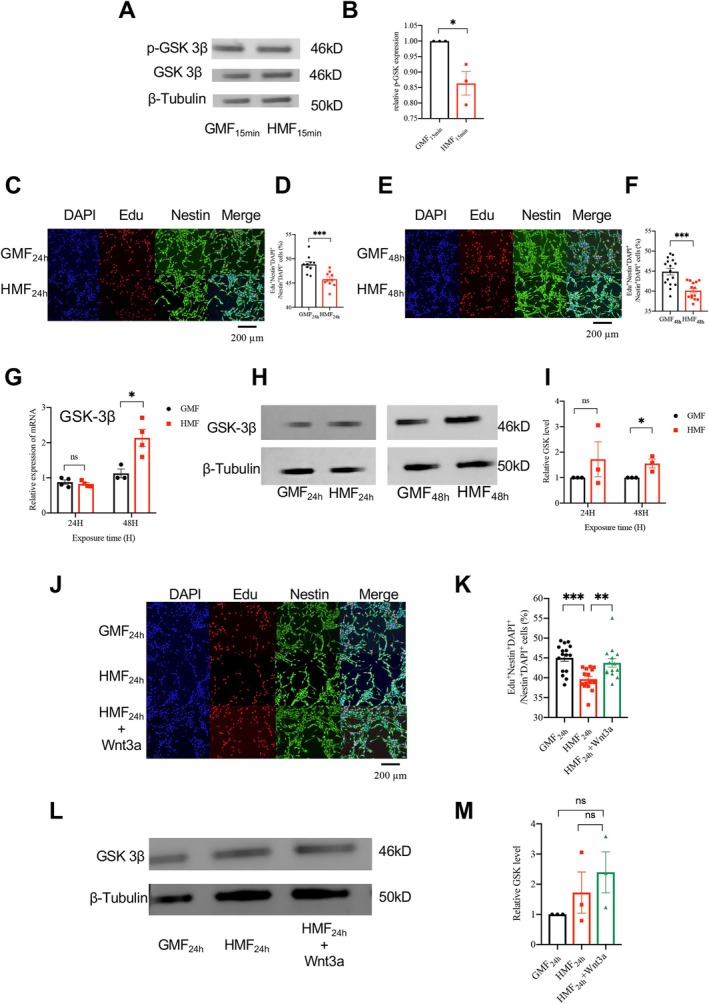
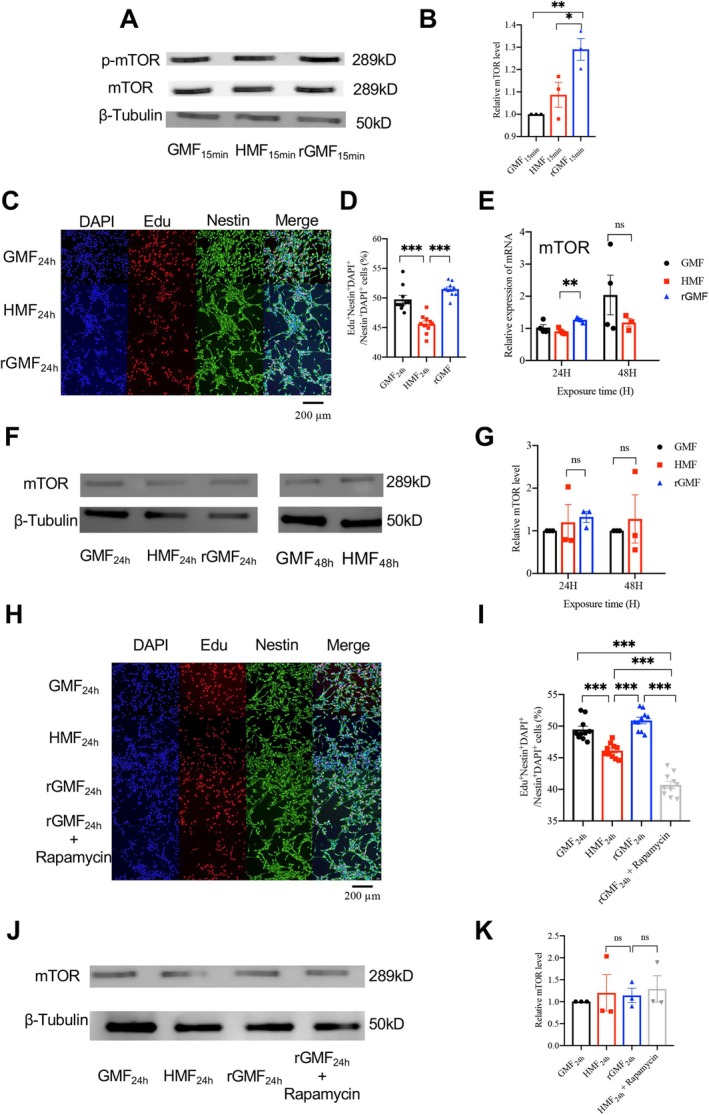
Exposure to hypomagnetic field (HMF) of < 5 μT has been demonstrated to impair cognitive behaviors in mammals by disrupting neurogenesis. This process could potentially be modulated by the protein phosphorylation of adult neural stem cells (aNSCs) that are highly sensitive to environmental changes. However, the effects of HMF on aNSCs protein phosphorylation remain unclear. Here, we found that HMF reversibly regulates the effects on aNSC proliferation by modulating protein phosphorylation in aNSCs. Specifically, HMF inhibits aNSCs proliferation by reducing glycogen synthase kinase 3β (GSK-3β) phosphorylation, and when aNSCs are returned from HMF to the geomagnetic field (rGMF), rGMF activates mammalian target of rapamycin (mTOR) phosphorylation to restore their proliferation. These findings not only advance our understanding of the molecular basis of HMF-induced biological effects but also illuminate potential therapeutic targets for maintaining neural homeostasis in extreme environments.
Keywords: GSK‐3β; adult neural stem cells; hypomagnetic field; mTOR; protein phosphorylation.
© 2025 The Author(s). European Journal of Neuroscience published by Federation of European Neuroscience Societies and John Wiley & Sons Ltd.
Conflict of interest statement
The authors declare no conflicts of interest.
Figures
References
MeSH terms
Substances
Grants and funding
LinkOut - more resources
Full Text Sources
Miscellaneous
