


Radiotherapy and immune microenvironment crosstalk in pancreatic cancer: a comprehensive review of current insights and future directions
- PMID: 40677710
- PMCID: PMC12267160
- DOI: 10.3389/fimmu.2025.1619946
Radiotherapy and immune microenvironment crosstalk in pancreatic cancer: a comprehensive review of current insights and future directions
Abstract
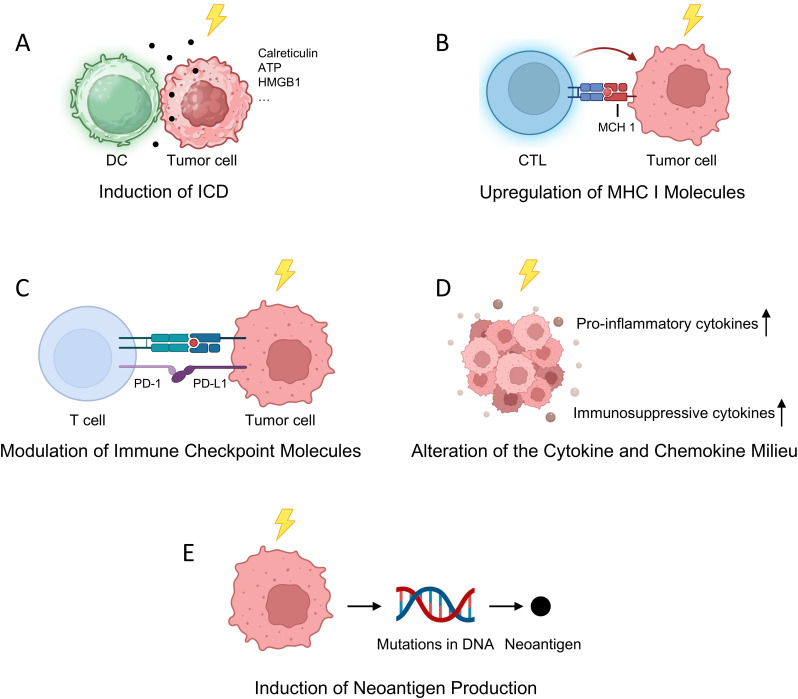
Pancreatic ductal adenocarcinoma (PDAC) remains one of the most lethal malignancies, largely due to its profoundly immunosuppressive tumor microenvironment (TME) and intrinsic resistance to conventional therapies. Radiotherapy (RT), traditionally valued for its cytotoxic effects, has recently been recognized for its immunomodulatory potential. This mini-review explores the multifaceted interactions between RT and the PDAC immune microenvironment, highlighting mechanisms such as induction of immunogenic cell death, enhancement of antigen presentation, modulation of cytokine and chemokine profiles, and upregulation of immune checkpoint molecules. These effects may transform immunologically "cold" tumors into "hot" ones, providing a rationale for combination strategies with immunotherapy. However, the dense desmoplastic stroma, abundance of regulatory T cells, and myeloid-derived suppressor cells within PDAC present substantial challenges that hinder effective immune activation. Advances in single-cell and spatial transcriptomic technologies offer new opportunities to better characterize the TME and guide personalized treatment strategies. By synthesizing mechanistic insights and clinical evidence, this review underscores the potential of integrating RT with immunotherapy to overcome resistance mechanisms and improve therapeutic outcomes in PDAC.
Keywords: immune modulation; immunotherapy; pancreatic ductal adenocarcinoma (PDAC); radiotherapy (RT); tumor microenvironment (TME).
Copyright © 2025 Xu, Chen, Qiu and Du.
Conflict of interest statement
The authors declare that the research was conducted in the absence of any commercial or financial relationships that could be construed as a potential conflict of interest.
Figures
References
Publication types
MeSH terms
LinkOut - more resources
Full Text Sources
Medical
