


A Cross-Lagged Panel Analysis of Cortisol Levels and Internalizing Behaviors in Children Born Very Preterm Across Early Childhood: Associations Differ for Boys and Girls at Age 1.5 Years
- PMID: 40686286
- PMCID: PMC12278196
- DOI: 10.1002/dev.70064
A Cross-Lagged Panel Analysis of Cortisol Levels and Internalizing Behaviors in Children Born Very Preterm Across Early Childhood: Associations Differ for Boys and Girls at Age 1.5 Years
Abstract
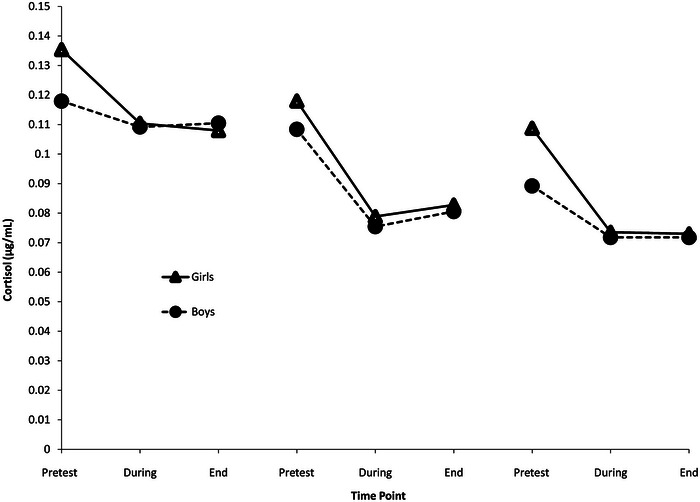
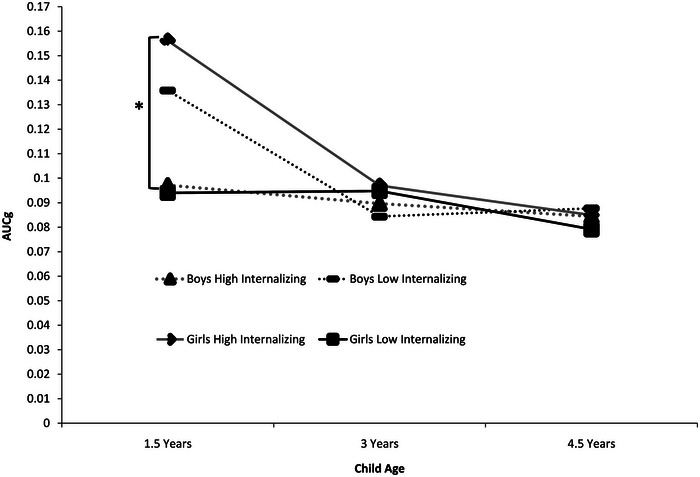
Children born very preterm (≤32 weeks' gestation) are exposed to considerable stress in the neonatal period that, in turn, is associated long-term with altered physiological stress reactivity and regulation, as well as increased internalizing (anxiety and depressive) behaviors. Whether cortisol levels are related to evolving internalizing behaviors in this population has not been evaluated to our knowledge. The present study investigated the association between cortisol reactivity to a cognitive assessment in a novel clinic environment and parent-reported internalizing behaviors both concurrently and across ages in children born very preterm and examined whether relationships differed by biological sex at birth. Total cortisol output (AUCg) and reactivity (AUCi) were calculated from saliva assayed across age-appropriate cognitive tasks, and parents reported on their child's behavior at ages 1.5, 3, and 4.5 years. Valid cortisol data at one or more assessment points were available from 174 participants. Random-intercept cross-lagged panel models showed no longitudinal relationships between internalizing behaviors and cortisol output (AUCg, AUCi). Follow-up multilevel models revealed that the relationship between cortisol AUCg and internalizing behaviors was specific to girls at age 1.5 years. Findings highlight the importance of examining sex differences in biobehavioral relationships across development. Future research should consider factors that may attenuate these relationships across development.
Keywords: HPA axis; child sex; cortisol; internalizing behaviors; preterm.
© 2025 The Author(s). Developmental Psychobiology published by Wiley Periodicals LLC.
Conflict of interest statement
The authors declare no conflicts of interest.
Figures
References
-
- Achenbach, T. M. , and Rescorla L.. 2000. Manual for the ASEBA Preschool Form & Profiles. University of Vermont, Research Center for Children, Youth and Families.
-
- Bayley, N. 2005. Manual for the Bayley Scales of Infant Development (BSID‐III). 3rd ed. T. P. Corporation.
MeSH terms
Substances
Grants and funding
LinkOut - more resources
Full Text Sources
Medical
