


Understanding ozone variability in spatial responses to emissions and meteorology in China using interpretable machine learning
- PMID: 40686609
- PMCID: PMC12275952
- DOI: 10.1016/j.isci.2025.113036
Understanding ozone variability in spatial responses to emissions and meteorology in China using interpretable machine learning
Abstract
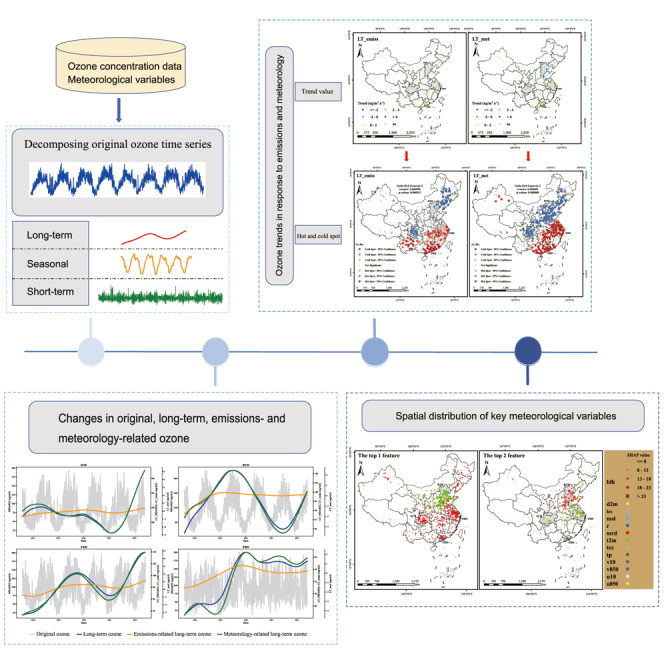
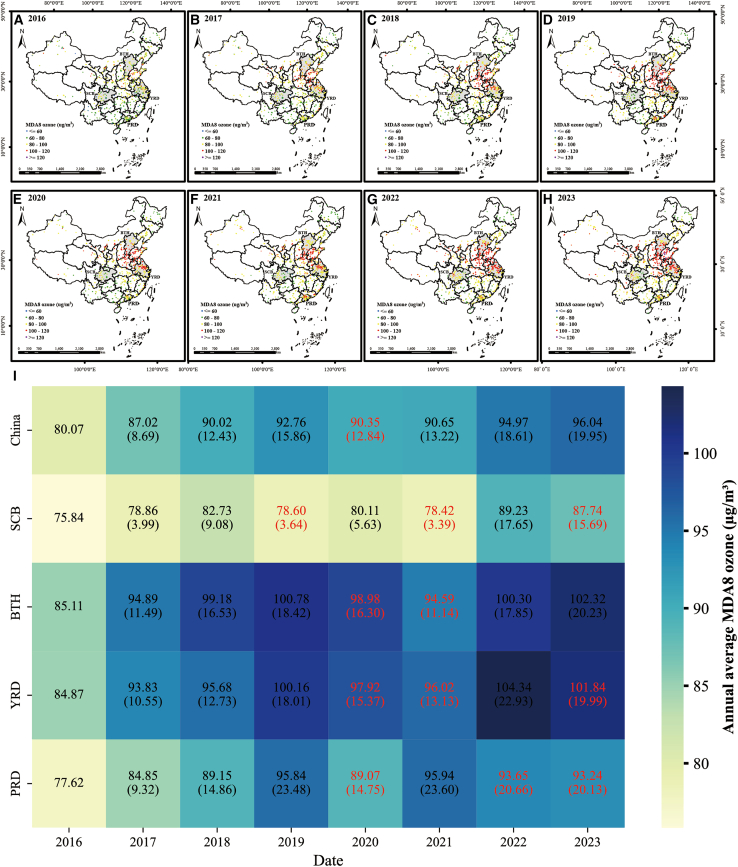
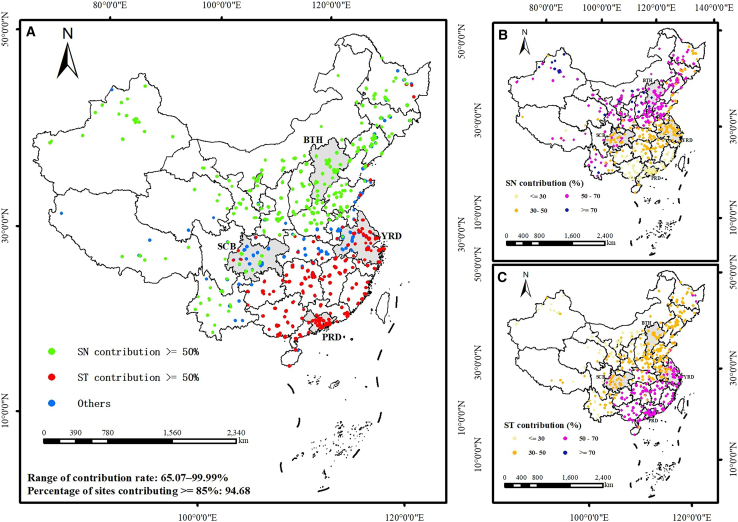
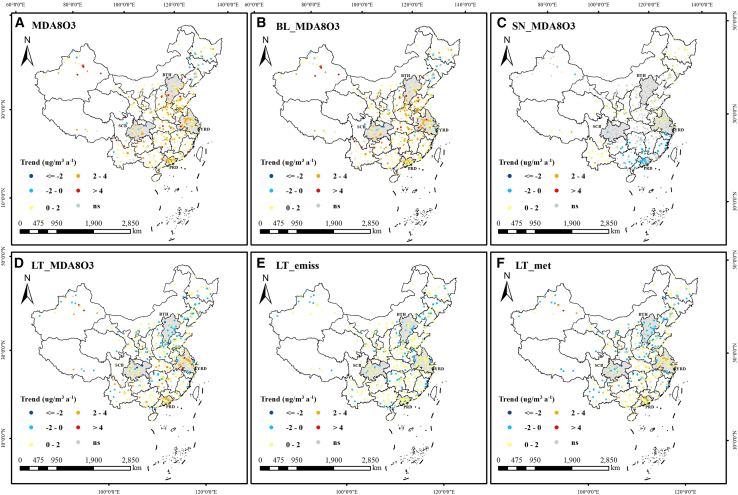
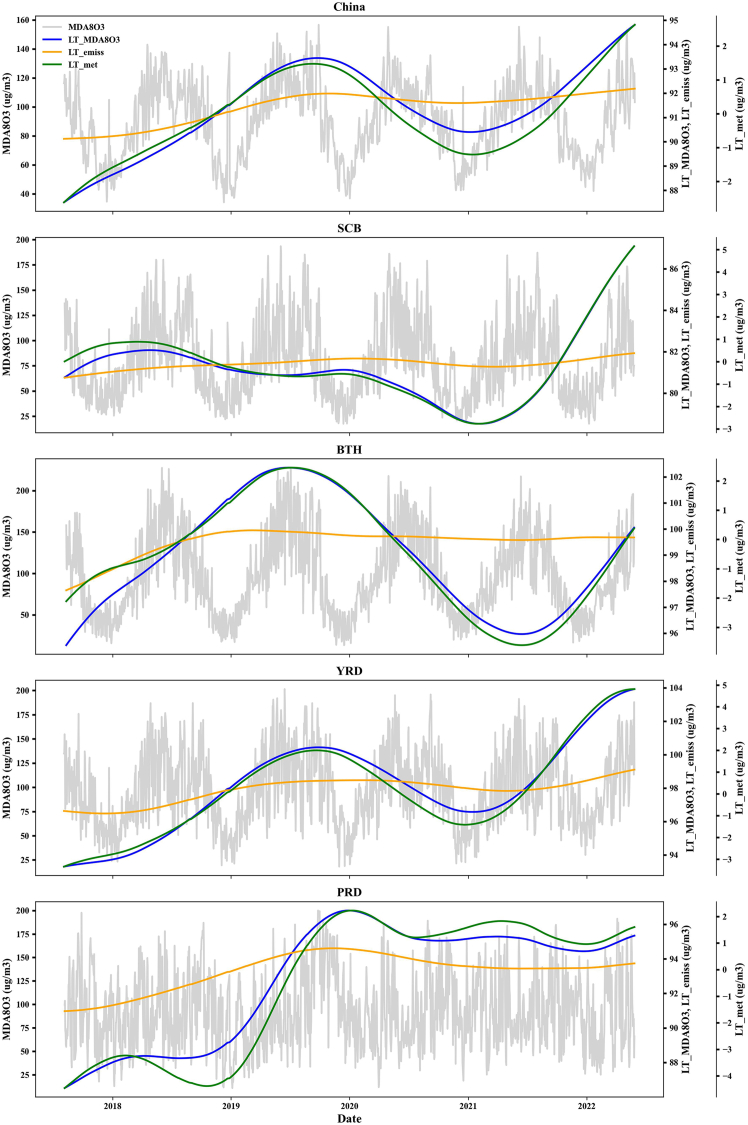
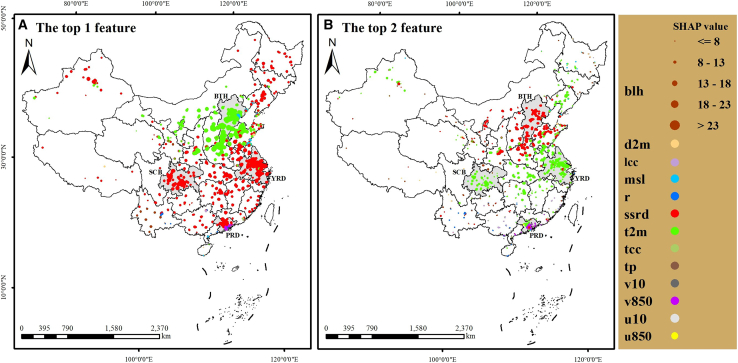
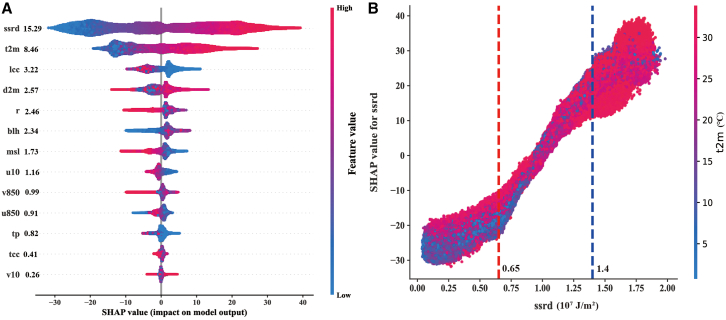
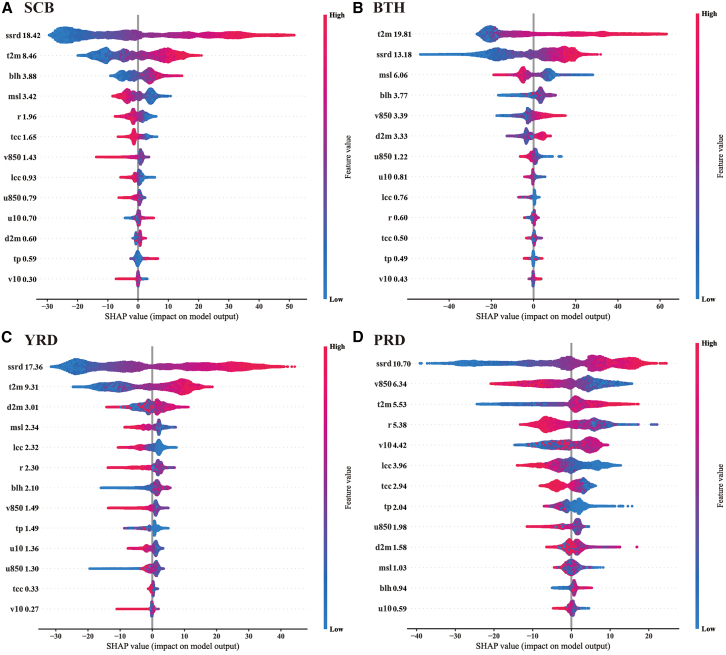
To effectively control regional ozone pollution, it is crucial to investigate ozone variability in spatial responses to emissions and meteorology. Using ozone data from monitoring stations across mainland China (2016-2023) and applying statistical methods alongside interpretable machine learning, the study finds that ozone variation is driven by seasonal cycles in the north and short-term fluctuations in the south. The increase in ozone levels driven by emissions has slowed, with an average trend of 0.41 μg/m3 a-1 across China. Meteorological impacts vary regionally, leading to decreased ozone concentrations in the Beijing-Tianjin-Hebei and Sichuan Basin, and elevated concentrations in the Yangtze River Delta and Pearl River Delta. Temperature is the main factor influencing ozone variability in the North China region, while solar radiation dominates in other regions, with an interaction between them. Under moderate radiation, temperature has a greater impact on ozone; otherwise, solar radiation is dominant.
Keywords: atmospheric chemistry; atmospheric observation; atmospheric science; machine learning; meteorology.
© 2025 The Author(s).
Conflict of interest statement
The authors declare no competing interests.
Figures
References
-
- Anenberg S.C., Schwartz J., Shindell D., Amann M., Faluvegi G., Klimont Z., Janssens-Maenhout G., Pozzoli L., Van Dingenen R., Vignati E., et al. Global Air Quality and Health Co-benefits of Mitigating Near-Term Climate Change through Methane and Black Carbon Emission Controls. Environ. Health Perspect. 2012;120:831–839. doi: 10.1289/ehp.1104301. - DOI - PMC - PubMed
-
- Yue X., Unger N., Harper K., Xia X., Liao H., Zhu T., Xiao J., Feng Z., Li J. Ozone and haze pollution weakens net primary productivity in China. Atmos. Chem. Phys. 2017;17:6073–6089. doi: 10.5194/acp-17-6073-2017. - DOI
-
- Unger N., Zheng Y., Yue X., Harper K.L. Mitigation of ozone damage to the world’s land ecosystems by source sector. Nat. Clim. Chang. 2020;10:134–137. doi: 10.1038/s41558-019-0678-3. - DOI
LinkOut - more resources
Full Text Sources
