


Osteofibrous dysplasia, osteofibrous Dysplasia-Like adamantinoma, and adamantinoma: A Single-center retrospective analysis
- PMID: 40689013
- PMCID: PMC12271915
- DOI: 10.1016/j.jbo.2025.100700
Osteofibrous dysplasia, osteofibrous Dysplasia-Like adamantinoma, and adamantinoma: A Single-center retrospective analysis
Abstract
Objective: This study aimed to comprehensively investigate and contrast the imaging manifestations, pathological features, surgical interventions, and prognostic outcomes of Osteofibrous Dysplasia(OFD), Osteofibrous Dysplasia-Like Adamantinoma(OFD-AD), and Adamantinoma(AD). By synthesizing disease profiles and exploring their evolutionary relationships, we sought to identify more effective diagnostic and therapeutic strategies for these conditions.
Methods: A retrospective analysis was conducted on patients diagnosed with OFD, OFD-AD, or AD at our institution between 2015 and 2022. The analysis included a detailed comparison of clinical presentations, imaging findings, and pathological characteristics. We also evaluated the impact of different diagnostic and treatment modalities on patient prognosis and explored potential disease evolution and transformation patterns.
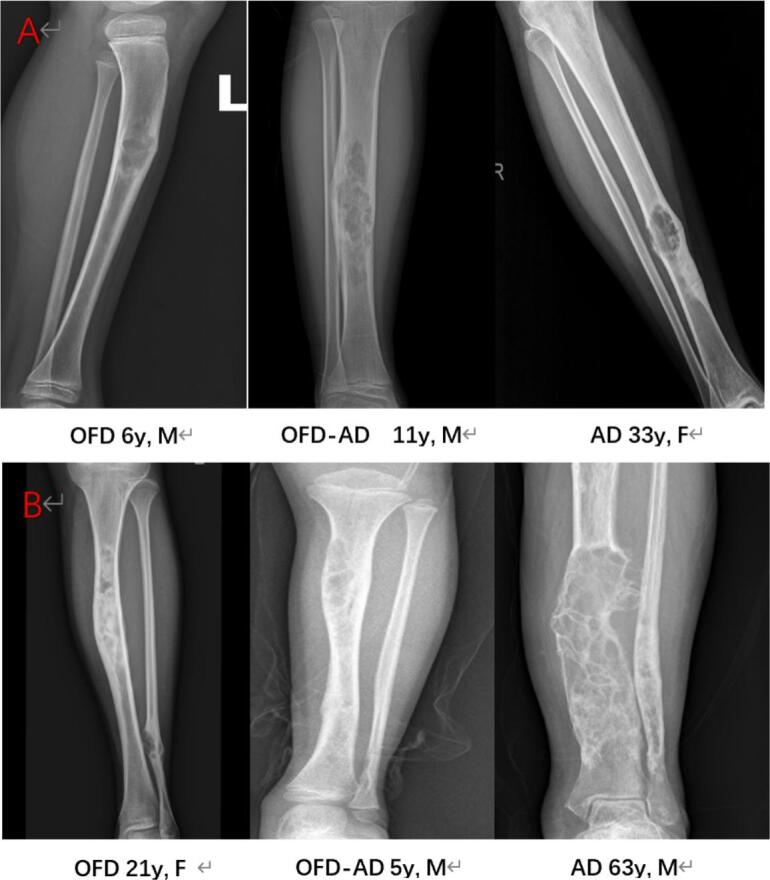
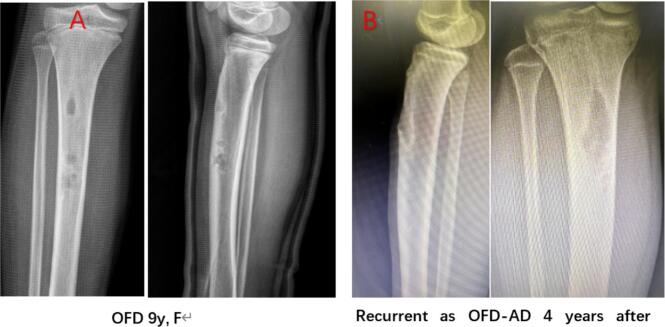
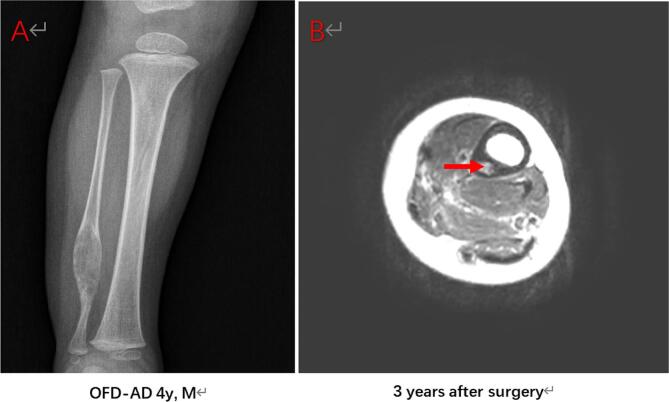
Results: Fifty patients were included in this study: 16 with OFD, 27 with OFD-AD, and 7 with AD. The median age of onset was 14 years for OFD, 6 years for OFD-AD, and 33 years for AD. All diagnoses were confirmed through a combination of clinical evaluation, imaging (X-rays and MRI), and pathological examination. Among the patients, 2 (both with OFD-AD) were managed with observation only. Thirty-seven patients underwent intralesional resection (16 OFD, 20 OFD-AD, and 1 AD), and 11 patients had complete resection (5 OFD-AD and 6 AD). After a minimum follow-up of 24 months (range: 24---90 months, median: 56 months), 12 patients experienced tumor recurrence (OFD: 2/16, 12.5 %; OFD-AD: 9/25, 36 %; AD: 1/6, 17 %). One patient had concurrent OFD-AD in the fibula and AD in the tibia. In another case, an OFD-AD recurrence 4 years after surgery was later diagnosed as OFD, and an OFD recurrence 2 years after surgery was reclassified as OFD-AD. No distant metastases were observed in any patient.
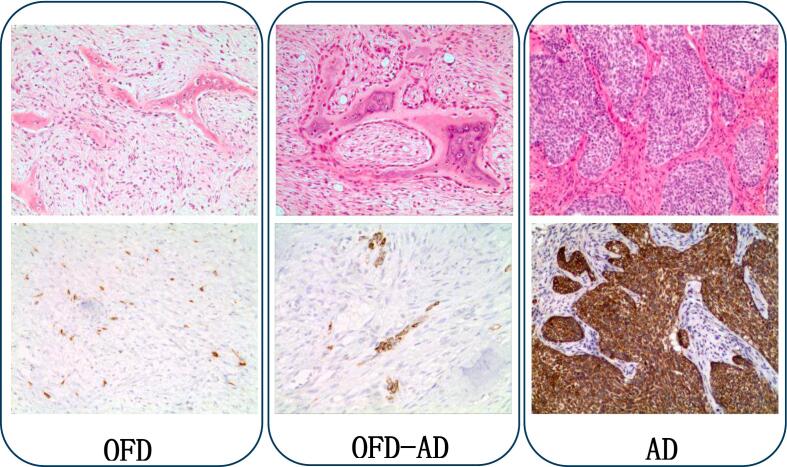
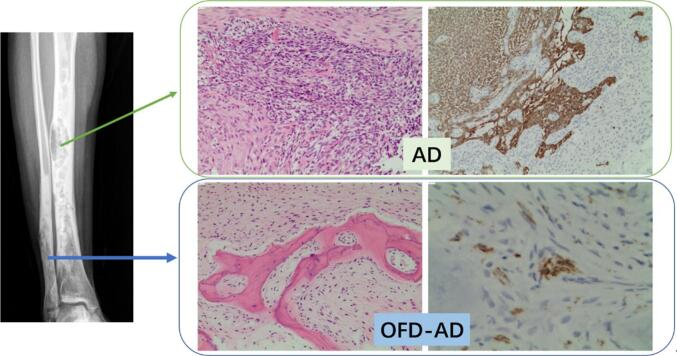
Conclusion: OFD, OFD-AD, and AD exhibit similarities in clinical and imaging presentations, and their pathological features may represent different stages of a common lesion's evolution. These diseases have distinct age - related onset patterns and variable recurrence risks. Thus, accurate diagnosis and personalized treatment strategies based on patient characteristics are crucial for effective disease management.
Keywords: Adamantinoma; Differential diagnosis; Osteofibrous Dysplasia; Osteofibrous Dysplasia-Like Adamantinoma; Therapeutic strategy.
© 2025 The Author(s).
Conflict of interest statement
The authors declare that they have no known competing financial interests or personal relationships that could have appeared to influence the work reported in this paper.
Figures
References
-
- Campanacci M., Laus M. Osteofibrous dysplasia of the tibia and fibula. J. Bone Joint Surg. Am. 1981;63(3):367–375. - PubMed
-
- Board. WCoTE WHO classification of tumours of soft tissue and bone 2020. Fifth Ed. 2020
-
- Khanna M., Delaney D., Tirabosco R., Saifuddin A. Osteofibrous dysplasia, osteofibrous dysplasia-like adamantinoma and adamantinoma: correlation of radiological imaging features with surgical histology and assessment of the use of radiology in contributing to needle biopsy diagnosis. Skeletal Radiol. 2008;37(12):1077–1084. - PubMed
-
- Ali N.M., Niada S., Morris M.R., Brini A.T., Huen D., Sumathi V., et al. Comprehensive molecular characterization of adamantinoma and OFD-like adamantinoma bone tumors. Am. J. Surg. Pathol. 2019;43(7):965–974. - PubMed
LinkOut - more resources
Full Text Sources
