


Prevalence and characterization of gastrointestinal and ectoparasites in long-tailed macaques (Macaca fascicularis) from ecotourism regions of Aceh, Indonesia
- PMID: 40689178
- PMCID: PMC12269951
- DOI: 10.14202/vetworld.2025.1527-1539
Prevalence and characterization of gastrointestinal and ectoparasites in long-tailed macaques (Macaca fascicularis) from ecotourism regions of Aceh, Indonesia
Abstract
Background and aim: Long-tailed macaques (Macaca fascicularis) serve as critical sentinels for zoonotic disease surveillance due to their ecological proximity to human populations. Understanding their parasitic burden is vital for conservation and public health, particularly in ecotourism areas where human-primate interactions are frequent. This study aimed to investigate the prevalence, diversity, and morphological characteristics of gastrointestinal (GI) and ectoparasites in M. fascicularis across four natural habitats in Aceh Province, Indonesia.
Materials and methods: A total of 100 fecal samples were collected from wild macaques at four sites: Pulau Weh Sabang Nature Tourism Park, Kuala Langsa Mangrove Forest, Saree (Aceh Besar), and Aceh Jaya. The parasitological examination involved the centrifugation method, lactophenol staining, and scanning electron microscopy (SEM). Parasites were identified based on egg morphology and adult worm anatomy.
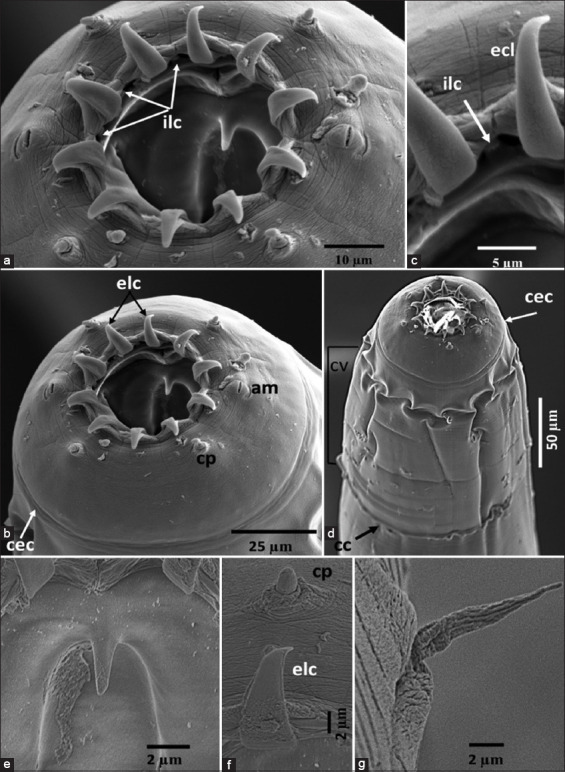
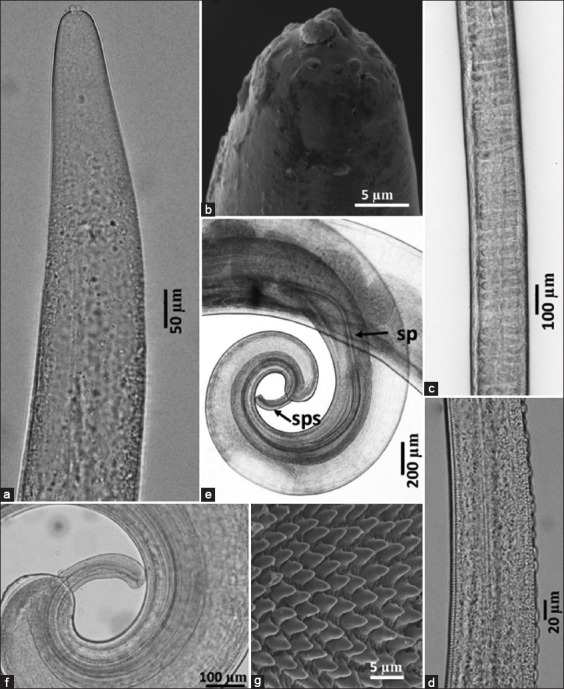
Results: Of the 100 samples analyzed, 45% tested positive for GI parasites. Nematode prevalence was highest (80%), followed by protozoa (10%) and ectoparasites (10%). Identified nematodes included Ancylostoma spp. (70%), Oesophagostomum spp. (50%), Strongyloides spp. (40%), Ascaris spp. (30%), Enterobius spp. (20%), and Trichuris spp. (10%). Protozoan (Balantidium spp.) and ectoparasitic (Psoroptes spp.) infections were less common. Mixed infections were more frequent (70%) than single infections (30%). Adult worms examined through SEM and lactophenol staining were confirmed to be two nematode species: Oesophagostomum (Conoweberia) bifurcum and Trichuris trichiura, both with zoonotic potential.
Conclusion: The high prevalence of nematodes, particularly zoonotic species, underscores the importance of monitoring parasitic infections in M. fascicularis residing in tourist-exposed areas. This study highlights the utility of combining traditional and advanced diagnostic techniques to enhance parasite surveillance. Integrating health assessments of wild primate populations into conservation programs is recommended to mitigate zoonotic risk and support One Health objectives.
Keywords: Aceh; Macaca fascicularis; Oesophagostomum bifurcum; Trichuris trichiura; ecotourism; gastrointestinal parasites; scanning electron microscopy; zoonosis.
Copyright: © Hanafiah, et al.
Conflict of interest statement
The authors declare that they have no competing interests.
Figures
References
-
- Utari E, Wahyuni I, Fadhilah R.N. Diversity of large mammals in Ujung Kulon National Park. Indones. J. Biol. Educ. 2022;5(2):19–31.
-
- Chantika M.N, Syaputra M.M, Ichsan A.C. The habitat characteristics and mapping of the roaming area of long-tailed macaques (Macaca fascicularis) were studied in the utilization block of the Manggelewa Kilo BKPH Tambora May Resort. Ulin J. Hut. Trop. 2023;7(1):82–95.
-
- Falah N, Sabri M. Primate species in the Pocut Meurah Intan Forest Park Area (Tahura PMI) Aceh Province, Indonesia. Proc. Nat. Bio. Sem. 2022;8(1):69–70.
LinkOut - more resources
Full Text Sources
Miscellaneous