


A scoping review of community knowledge in malaria prevention and control programmes
- PMID: 40690438
- PMCID: PMC12279157
- DOI: 10.1371/journal.pone.0328703
A scoping review of community knowledge in malaria prevention and control programmes
Abstract
Background: Malaria remains a significant global health challenge, particularly in sub-Saharan Africa and Southeast Asia. Despite considerable progress through biomedical interventions, persistent transmission underscores the need to examine additional influencing factors. This scoping review maps existing evidence on community knowledge in malaria prevention and control strategies, aiming to inform more targeted and culturally adapted interventions.
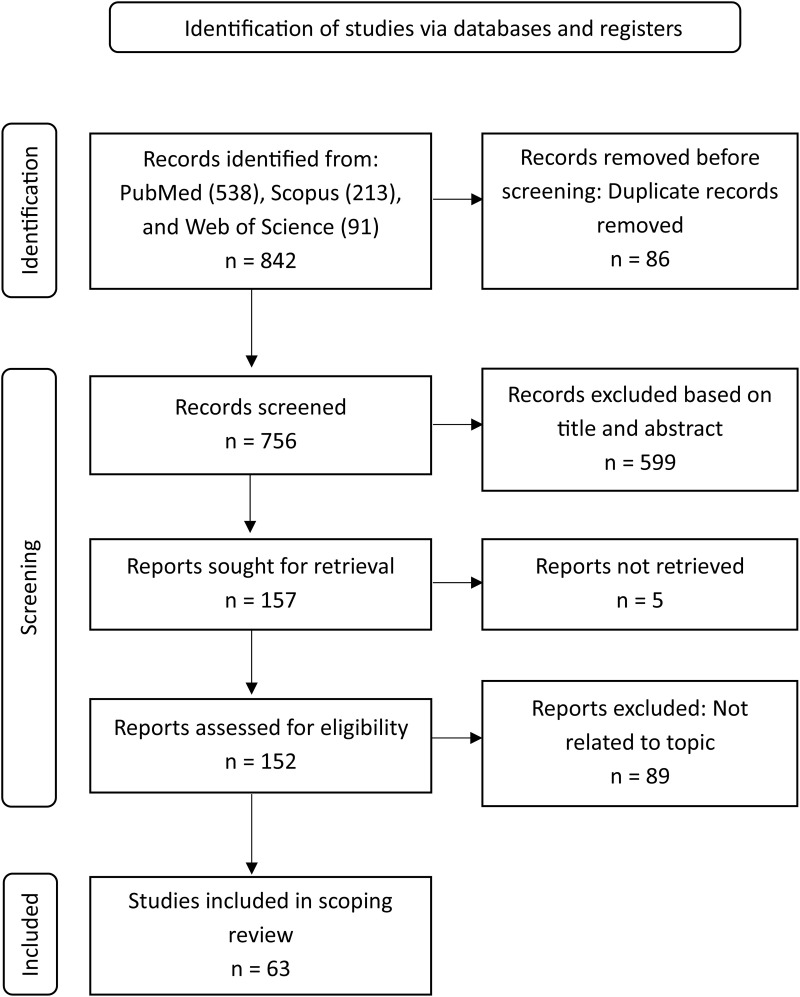
Methods: Adhering to the Preferred Reporting Items for Systematic Reviews and Meta-Analyses Extension for Scoping Reviews (PRISMA-ScR) guidelines, a comprehensive search was conducted across Scopus, PubMed, and Web of Science for peer-reviewed, English-language studies published between 2000 and 2024. Eligible studies focused on community knowledge related to malaria prevention, control, and elimination among non-specific populations. Two independent reviewers screened the literature, while a third reviewer resolved any discrepancies. Data were extracted using a standardised framework and analysed systematically in Microsoft Excel.
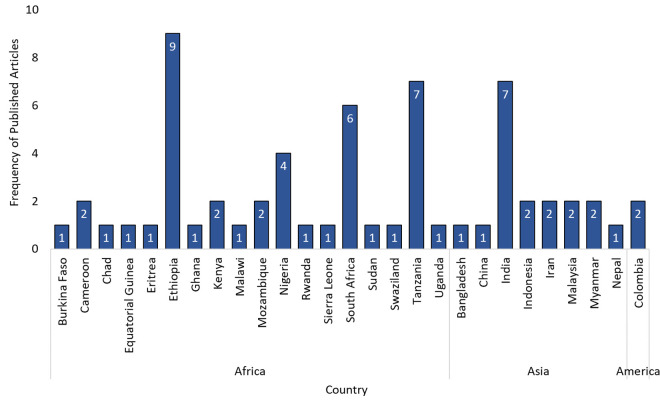
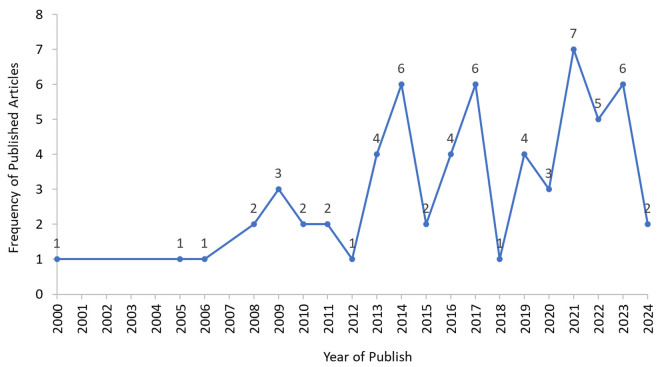
Results: The review included 63 studies from 27 countries, predominantly from Africa (68.3%) and Asia (28.6%), with a notable increase in publications in 2021. The findings revealed significant regional variations in community knowledge of malaria transmission, symptoms, and prevention. Higher levels of awareness were consistently linked with better preventive practices and earlier treatment-seeking behaviour. However, critical knowledge gaps persisted, particularly concerning environmental risk factors and vector control, highlighting the need for context-specific health education programmes.
Conclusion: Community knowledge is a pivotal determinant of malaria prevention success, yet disparities persist across endemic regions. To optimise control efforts, it is essential to prioritise locally tailored, evidence-based education that addresses knowledge gaps and strengthens community engagement. Integrating local perspectives into intervention design will be essential for achieving sustainable malaria elimination.
Copyright: © 2025 Abdul Rahim et al. This is an open access article distributed under the terms of the Creative Commons Attribution License, which permits unrestricted use, distribution, and reproduction in any medium, provided the original author and source are credited.
Conflict of interest statement
The authors have declared that no competing interests exist.
Figures
References
-
- Kogan F. Malaria Burden. Remote Sensing for Malaria: Monitoring and Predicting Malaria from Operational Satellites. Springer International Publishing; 2020. pp. 15–41. doi: 10.1007/978-3-030-46020-4_2 - DOI
-
- World Malaria Report 2023. Geneva: World Health Organization; 2023. https://www.who.int/teams/global-malaria-programme/reports/world-malaria...
-
- Global vector control response 2017-2030. Geneva: World Health Organization; 2017.
Publication types
MeSH terms
LinkOut - more resources
Full Text Sources
Medical
