. 2025 Jul 21;3(1):64.
doi: 10.1038/s44259-025-00127-x.

Epidemiological Genomics of Klebsiella pneumoniae isolates from hospitals across Colombia

Collaborators, Affiliations

Epidemiological Genomics of Klebsiella pneumoniae isolates from hospitals across Colombia

Victor A Medina et al. NPJ Antimicrob Resist. .

Abstract

Klebsiella pneumoniae is one of the most important nosocomial pathogens worldwide. In Colombia, K. pneumoniae has been identified as the second most frequent microbial etiologic agent of healthcare-associated infections. We conducted a prospective local study of 335 K. pneumoniae isolates in 26 nationwide hospitals from 2020 to 2021. We found that the spread of carbapenem resistance was mediated by successful clones belonging to sequence types (ST) such as ST11, ST1082, and ST307, related to intra-hospital infections. We observed that blaKPC remains the primary resistance mechanism to carbapenems and that, unlike other countries, ST11 strains commonly carry blaKPC-3. We identified the recent introduction and circulation of new sequence types with different resistance mechanisms and hypervirulence. Besides, we detected possible transmission events closely linked to carbapenemase-carrying strains, mainly in intensive care units. This study helps us understand how K. pneumoniae disseminates in Colombian hospitals and where to direct effective intervention measures.


Conflict of interest statement

Competing interests: The authors declare no competing interests.

Figures
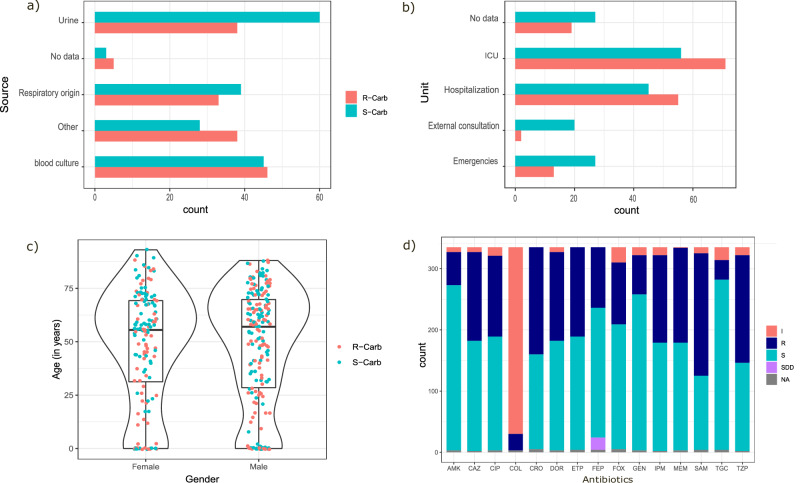
Fig. 1
Fig. 1. Characteristics of K. pneumoniae clinical isolates recovered from the 26 participating institutions.
a Frequency of CRKP (red) and CSKP (blue) isolates in different sample sources (b) and by hospital unit. c Age and gender distribution of patients from whom CRKP and CSKP were isolated. Dots indicate individual patients. d Relative frequency of phenotypic resistance by drug. (AMK amikacin, CAZ ceftazidime, CIP ciprofloxacin, COL colistin, CRO ceftriaxone, DOR doripenem, ETP ertapenem, FEP cefepime, FOX cefoxitin, GEN gentamicin, IPM imipenem, MEM meropenem, SAM ampicillin-sulbactam, TGC tigecycline, TZP tazobactam-piperacillin).
Fig. 2
Fig. 2. Phylogenetic tree, STs, and replicons found in the dataset.
The phylogenetic tree includes all the isolates (n = 335) with the ten most abundant CGs, the main STs of epidemiological clinical interest within each CG. Highlighted groups in the tree correspond to the most frequent STs. Terminal nodes are colored as resistant (CRKP) or susceptible (CSKP), correspondingly. Aligned we show the replicons found in the different isolates. The tree was organized by midpoint root in descending order.
Fig. 3
Fig. 3. Percentage of Beta-lactamase genes, by resistance and subgroup classification.
The figure includes the complete list of beta-lactamase genes detected in the study. Subgroups formed by functional properties according to the Bush classification: 2b, 2d. Capacity to hydrolyze penicillinases, 2be: extended-spectrum beta-lactamases, 2br: inhibitor-resistant beta-lactamases. Bar-length describes the percentage of a total of 160 CRKP (red) or 175 CSKP (green). Classification based on 10.1093/jac/dkaa513; 10.3389/fmicb.2016.01374.
Fig. 4
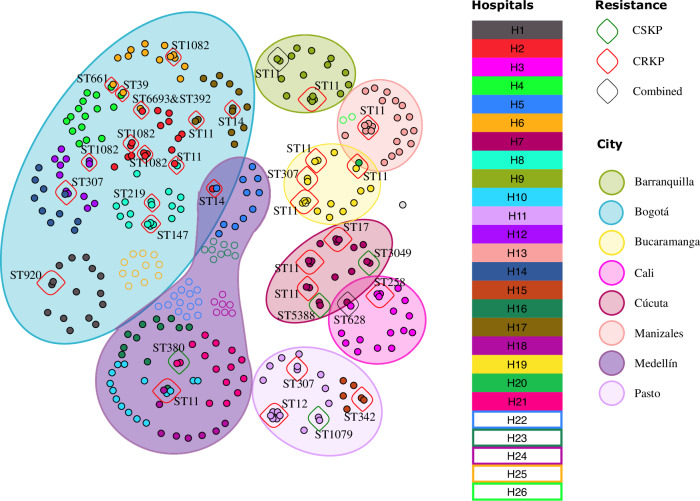
Fig. 4. PTGs – Possible transmission groups.
Each dot represents an isolate (n = 335), and the color corresponds to the hospital (H) it was isolated. Dots were assembled in space using a force-directed network that linked dots with less than 25 SNPs closer to PTGs and rearranged the layout by hospitals and city. PTGs are represented by rhomboids colored by resistance. Balloons represent each city and are colored accordingly. Most PTGs are of two or three isolates that share identical or nearly identical AMR genes (data not shown). PTGs shared between cities could not be traced to unveil the underlying transmission mechanism, which could be geographical, patient-transfer, or others. H1: Hospital 1, H2: Hospital 2, H3: Hospital 3, H4: Hospital 4, H5: Hospital 5, H6: Hospital 6, H7: Hospital 7, H8: Hospital 8, H9: H9, H10: Hospital 10, H11: Hospital 11, H12: Hospital 13, H14: Hospital 14, H15: Hospital 16, H17: Hospital 17, H18: Hospital 18, H19: Hospital 19, H20: Hospital 20, H21: Hospital 21, H22: Hospital 22, H23: Hospital 23, H24: Hospital 24, H25: Hospital 25, H26: Hospital 26.

References

    1. Ludden, C. et al. A one health study of the genetic relatedness of Klebsiella pneumoniae and their mobile elements in the East of England. Clin. Infect. Dis.70, 219–226 (2020). - PMC - PubMed
    1. Ramatla, T. et al. One health” perspective on prevalence of co-existing extended-spectrum β-lactamase (ESBL)-producing Escherichia coli and Klebsiella pneumoniae: a comprehensive systematic review and meta-analysis. Ann. Clin. Microbiol. Antimicrob.22, 88 (2023). - PMC - PubMed
    1. Roach, D. J., Sridhar, S. & Oliver, E. Clinical and genomic characterization of a cohort of patients with Klebsiella pneumoniae bloodstream infection. Clin. Infect. Dis.78, 31–39 (2024). - PMC - PubMed
    1. Snitkin, E. S., Won, S. & Pirani, A. Integrated genomic and interfacility patient-transfer data reveal the transmission pathways of multidrug-resistant Klebsiella pneumoniae in a regional outbreak. Sci. Transl. Med.9, eaan0093 (2017). - PubMed
    1. Pendleton, J. N., Gorman, S. P. & Gilmore, B. F. Clinical relevance of the ESKAPE pathogens. Expert Rev. Anti Infect. Ther.11, 297–308 (2013). - PubMed

LinkOut - more resources