


Intersection of ferroptosis and nanomaterials brings benefits to breast cancer
- PMID: 40691737
- PMCID: PMC12279609
- DOI: 10.1007/s10565-025-10067-x
Intersection of ferroptosis and nanomaterials brings benefits to breast cancer
Abstract
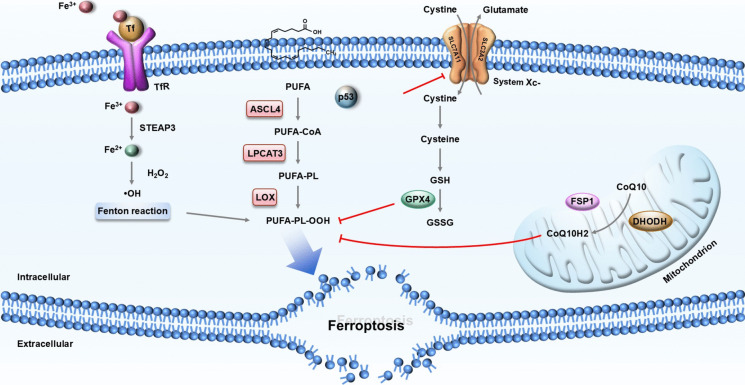
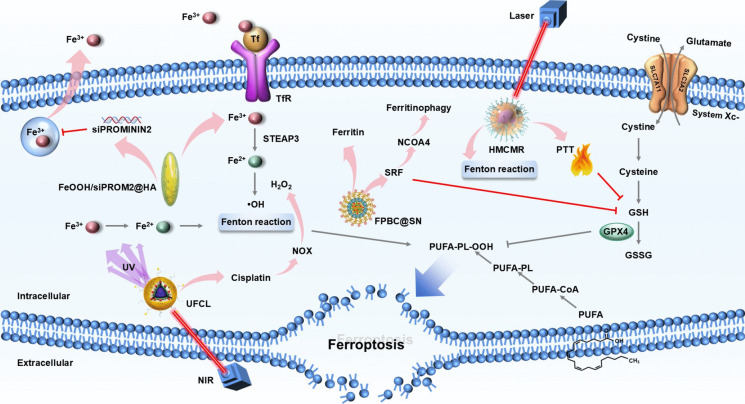
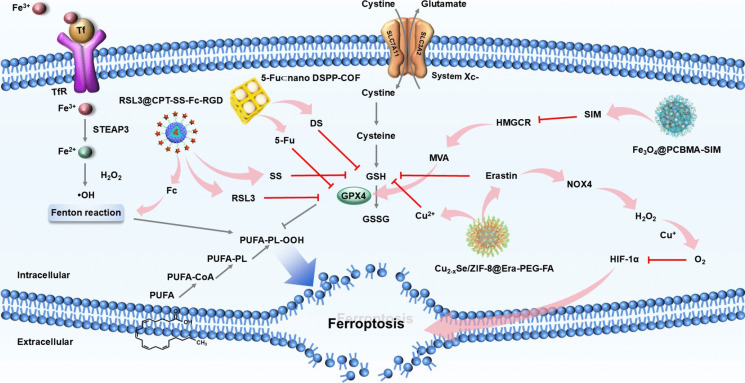
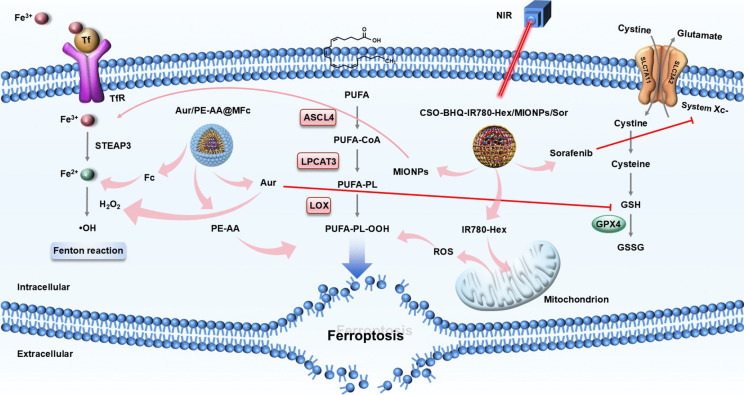
Breast cancer (BC) is the most frequently diagnosed malignancy among women worldwide, with a high incidence and mortality rate. Despite advances in treatment, approximately 10%-15% of patients with BC still face recurrence. Therefore, improving BC therapy remains a significant challenge. In this article, we provide a detailed overview, categorizing and elaborating the developments of current research progress on nanodrug delivery systems based on ferroptosis for BC treatment. By increasing the iron content in BC cells and inhibiting the defense system against ferroptosis, the accumulation of lipid peroxides is promoted, and ferroptosis is induced in BC cells. In addition to directly targeting tumor cells, nanodrug delivery systems can remodel the tumor microenvironment, inhibit BC primary growth, and prevent distant metastasis. These nanomaterials, after drug loading and modification, possess characteristics such as smart activation, controlled release, specific targeting, good biocompatibility, and long circulation time, thereby enhancing the efficacy of BC treatment. We also classify and discuss the mechanisms and advantages of different types of nanomaterials. Finally, we discuss how multifunctional nanosystems can sensitize ferroptosis when combined with radiotherapy, chemotherapy, immunotherapy, and phototherapy to achieve synergistic effects in BC treatment. This work reveals the potential of ferroptosis-based nanomaterials in overcoming BC, analyzes the limitations of the clinical application and proposes possible solutions, offering a promising direction for future treatment strategies.
Keywords: Breast Cancer; Ferroptosis; Molecular Mechanisms; Nanomaterials; Treatment.
© 2025. The Author(s).
Conflict of interest statement
Declarations. Ethical Approval: Not applicable. Competing interests: The authors declare no competing interests.
Figures
References
-
- Abu-Serie MM, Abdelfattah EZA. Anti-Metastatic Breast Cancer Potential of Novel Nanocomplexes of Diethyldithiocarbamate and Green Chemically Synthesized Iron Oxide Nanoparticles. Int J Pharm. 2022;627:122208. - PubMed
-
- Alamdari SG, et al. Recent Advances in Nanoparticle-Based Photothermal Therapy for Breast Cancer. J Control Release. 2022;349:269–303. - PubMed
-
- Alim I, et al. Selenium Drives a Transcriptional Adaptive Program to Block Ferroptosis and Treat Stroke. Cell. 2019;177(5):1262-1279.e25. - PubMed
Publication types
MeSH terms
Substances
LinkOut - more resources
Full Text Sources
Medical
