


Time series prediction for monitoring cardiovascular health in autistic patients
- PMID: 40692649
- PMCID: PMC12278423
- DOI: 10.3389/fpsyt.2025.1623986
Time series prediction for monitoring cardiovascular health in autistic patients
Abstract
Introduction: Monitoring cardiovascular health in autistic patients presents unique challenges due to atypical sensory profiles, altered autonomic regulation, and communication difficulties. As cardiovascular comorbidities rise in this population, there is an urgent need for tailored computational strategies to enable continuous monitoring and predictive care planning. Traditional time series methods-including statistical autoregressive models and recurrent neural networks-are constrained by opaque decision processes, limited personalization, and insufficient handling of multimodal data, restricting their utility where transparency and individualized modeling are critical.
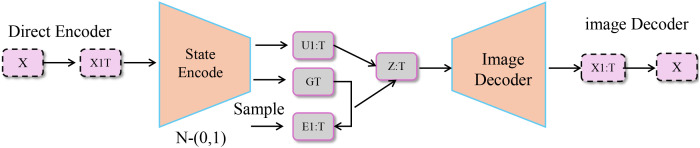
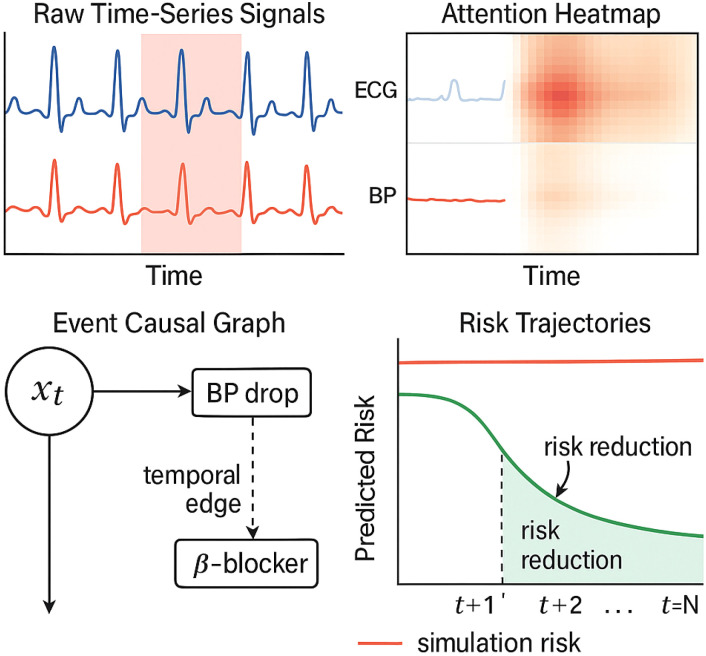
Methods: We introduce a structurally-aware, semantically-grounded framework for time series prediction tailored to cardiovascular trajectories in autistic patients. Our approach departs from black-box modeling by integrating symbolic clinical abstractions, causal event dynamics, and intervention-response coupling within a graph-based paradigm. Central to our method is the CardioGraph Synaptic Encoder (CGSE), a generative model that fuses multimodal data-such as ECG waveforms, blood pressure signals, and structured clinical annotations-into a unified latent space. The CGSE employs dual-level temporal attention to capture patient-specific micro-patterns and population-level structures. To improve generalization and robustness, we propose the Dynamic Cardiovascular Trajectory Alignment (DCTA), which combines task-adaptive curriculum learning with multi-resolution consistency loss.
Results: Our approach effectively addresses challenges such as scarcity of labeled data and clinical heterogeneity common in autistic populations. Experimental results demonstrate that our system significantly outperforms baselines in predictive accuracy, temporal coherence, and interpretability.
Discussion: This work offers a novel, clinically-aligned pipeline for real-time cardiovascular risk monitoring in autistic individuals. By advancing personalized and interpretable healthcare analytics, our method has the potential to support more accurate and transparent decision-making in cardiovascular care pathways for this vulnerable population.
Keywords: autistic patients; cardiovascular health monitoring; graph neural networks; symbolic modeling; time series prediction.
Copyright © 2025 Ma and Lei.
Conflict of interest statement
The authors declare that the research was conducted in the absence of any commercial or financial relationships that could be construed as a potential conflict of interest.
Figures
References
-
- Zhou H, Zhang S, Peng J, Zhang S, Li J, Xiong H, et al. Informer: Beyond efficient transformer for long sequence time-series forecasting. AAAI Conf Artif Intell. (2020) 35(12):11106–1115.
-
- Angelopoulos AN, Candès E, Tibshirani R. Conformal pid control for time series prediction. Neural Inf Process Syst. (2023) 36:23047.
-
- Shen L, Kwok J. Non-autoregressive conditional diffusion models for time series prediction. Int Conf Mach Learn. (2023) 31016–29.
-
- Wen X, Li W. Time series prediction based on lstm-attention-lstm model. IEEE Access. (2023) 11:48322–311.
LinkOut - more resources
Full Text Sources
Research Materials
