


Lending a hand: supportive exercise therapy for cancer treatment-induced polyneuropathy of the upper extremity-VISCIPH A
- PMID: 40694173
- PMCID: PMC12283904
- DOI: 10.1007/s00520-025-09712-2
Lending a hand: supportive exercise therapy for cancer treatment-induced polyneuropathy of the upper extremity-VISCIPH A
Abstract
Purpose: Chemotherapy- and immunotherapy-induced peripheral neuropathies (PNP) are common and often dose-limiting side effects of cancer treatment. Patients often experience pain, numbness, and tingling in their extremities. Pharmacological options such as duloxetine, which is recommended for chemotherapy-induced PNP (CIPN), offer limited relief [1]. Consequently, neuromuscular training incorporating sensorimotor elements is a promising non-pharmacological alternative. However, its effect on symptoms in the upper extremities remains unexplored. This study investigates the feasibility of combined sensorimotor and vibration training for the upper extremities before and during cancer treatment.
Methods: The VISCIPH A study is a two-arm, prospective, randomized controlled proof-of-principle trial. Within the overarching VISCIPH A/B research framework, this is an independently designed sub-study. The primary outcome was feasibility; secondary outcomes included patient-reported outcome measures (PROMs). Participants were randomized to either a sensorimotor and vibration training group (PNPEX) or a moderate resistance exercise group (MREX). Both interventions were supervised and performed twice weekly over 12 weeks. Fine motor skills, depth sensitivity, and temperature sensation were assessed pre- and post-intervention. PROMs (EORTC-QLQ-C30, FACT/GOG-Ntx, NRS (pain)) were collected at baseline, week 4, week 8, and week 12.
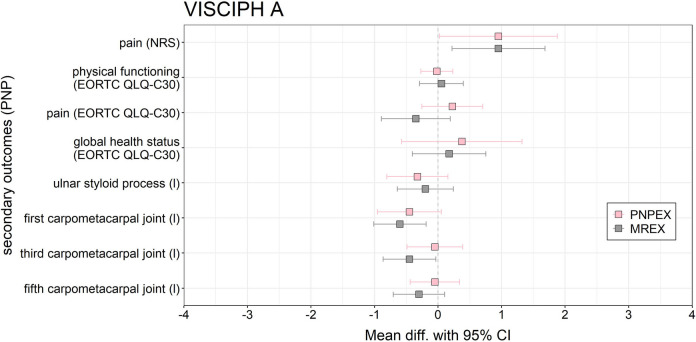
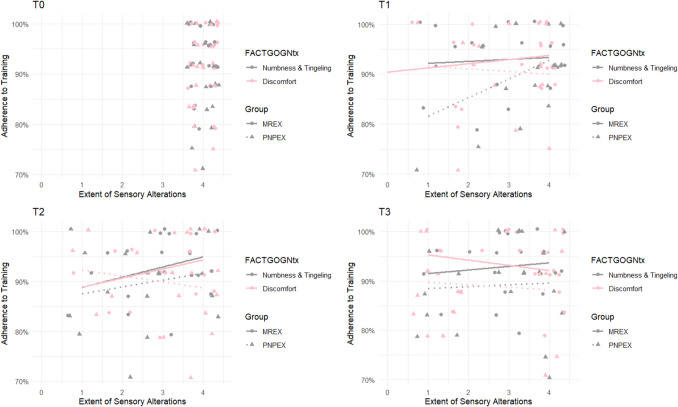
Results: Of 50 enrolled cancer patients, 40 completed the study (32.5% male; mean age = 50.8 years). A total of 874 out of 960 planned sessions (91%) were completed. The dropout rate was 20%, with high patient adherence (98%) and successful implementation of the extensive test battery, exhibit feasibility of the study (proof of principle). Thirteen participants reported no numbness or tingling in the hands, and 18 reported no discomfort over the 12-week period. Both groups showed significant improvements in global health status (EORTC-QLQ-C30) at T3 (p = 0.001). However, the MREX group showed significant deterioration in depth sensitivity at 2 of 4 bone points after 12 weeks (I CP: p = 0.01; III CP: p = 0.046), whereas PNPEX outcomes remained stable.
Conclusion: While prior research has mainly focused on lower extremities, this study demonstrates the feasibility and potential protective effects of a combined vibration and sensorimotor training protocol for the upper limbs during neurotoxic cancer therapy. Given the limited efficacy of current pharmacological approaches, further research is warranted to explore the therapeutic potential of structured exercise interventions in the management of PNP.
Keywords: Feasibility; Neuropathy-induced symptoms; Prevention; Sensorimotor and vibration; Upper extremities.
© 2025. The Author(s).
Conflict of interest statement
Declarations. Ethical approval: The study was approved by the Ethics Commission of the German Sport University Cologne (reference number 43/2015) as well as the Ethics Commission of Cologne University’s Faculty of Medicine (reference number 17–157) and has been registered in the German Clinical Trials Register on 10/15/2020 (DRKS-ID: DRKS00023287). Statement of consent: During the course of the study, personal data, treatment data, and information about the disease from all participants, who provided written consent, were collected. This data, specifically diagnostic findings, is bound to professional discretion as well as data protection rules. A legal basis for working with the collected data comes from within the General Data Protection Regulations (GDPR), the Declaration of Helsinki, and the Good Clinical Practice Guidelines. Participation in this study is voluntary and refusing to participate did not have any disadvantages for the patient. Conflict of interest: The authors declare no competing interests.
Figures

References
-
- Loprinzi CL, Lacchetti C, Bleeker J et al (2020) Prevention and management of chemotherapy-induced peripheral neuropathy in survivors of adult cancers: ASCO guideline update. J Clin Oncol 38:3325–3348 - PubMed
-
- Christensen JF, Simonsen C, Hojman P (2018) Exercise training in cancer control and treatment. Compr Physiol 9:165–205 - PubMed
Publication types
MeSH terms
Substances
Grants and funding
LinkOut - more resources
Full Text Sources
Medical
Miscellaneous
