


Underdetection of neurocognitive disorders in Southern Italy: Evidence from the Salento region
- PMID: 40695678
- PMCID: PMC12413710
- DOI: 10.1016/j.tjpad.2025.100295
Underdetection of neurocognitive disorders in Southern Italy: Evidence from the Salento region
Abstract
Background: Neurocognitive disorders, including dementia and mild cognitive impairment, are increasingly prevalent, demanding efficient detection and management strategies.
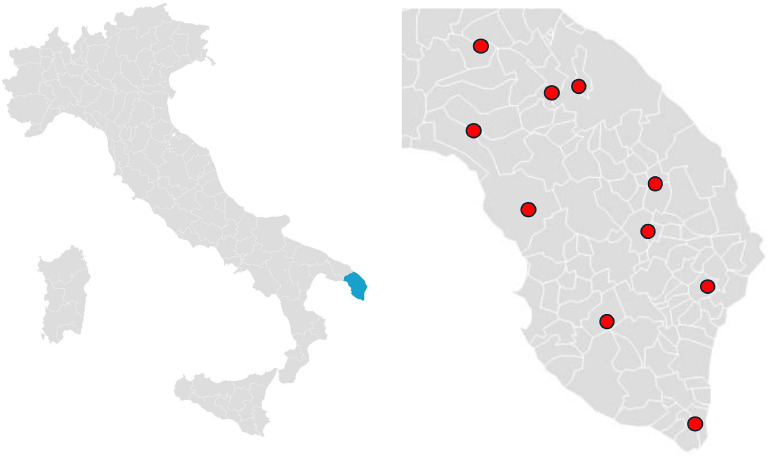
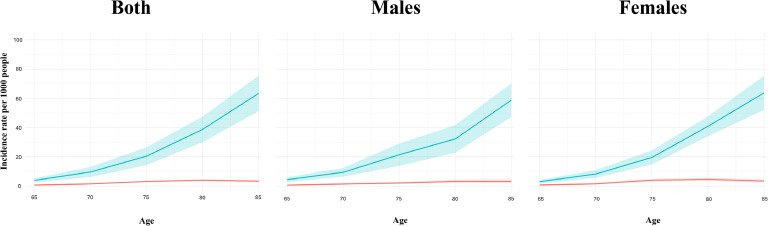
Objectives: This study is part of the Puglia Region's initiative under the Italian Dementia National Plan (DNP) and aimed to assess the capacity of the Lecce province healthcare system to identify new neurocognitive disorders cases by comparing observed cases with expected rates derived from meta-analyses and Global Burden of Disease estimates.
Design: Using complete case ascertainment across 10 hospital-based and community centers, a total of 857 incident cases were identified in one year, including 441 Minor neurocognitive disorders (51.46 %) and 416 major neurocognitive disorders cases (48.54 %).
Setting: Public Centers for Cognitive Disorders and Dementia (CCDDs) across hospital and community services in the Lecce province, Southern Italy.
Participants: Eligible participants included all individuals aged between 65 and 89 residing in the Lecce province who received a diagnosis of neurocognitive disorder. 857 participants were enrolled (519 females - 338 males).
Measurements: Incident cases of neurocognitive disorder, both minor and major, accordingly to DSM-5 criteria.
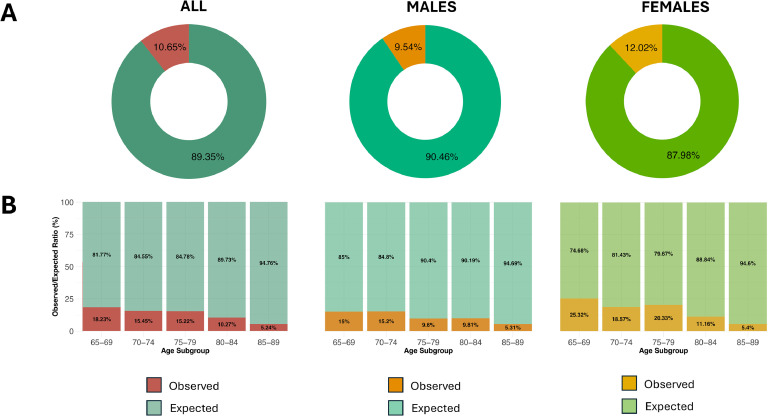
Results: Only 10.65 % of expected major neurocognitive disorders and 7.24 % of expected minor neurocognitive disorders cases were detected, with significant age and sex disparities, with higher underdetection rates in females. Detection rates declined with advancing age, with the observed-to-expected ratio for major neurocognitive disorders falling from 18.23 % in individuals aged 65-69 years to just 5.24 % in those aged 85-89 years. These findings were validated against Global Burden of Disease estimates.
Conclusions: This study highlights the critical gaps in detecting neurocognitive disorders, particularly in older adults and prodromal stages such as minor neurocognitive disorders, where early intervention could yield the greatest benefits. The findings underscore the urgent need for targeted reforms to improve e diagnostic pathways and better align healthcare systems with emerging disease-modifying therapies and preventive strategies.
Keywords: Cognitive impairment; Dementia; Healthcare system; Incidence.
Copyright © 2025. Published by Elsevier Masson SAS.
Conflict of interest statement
Declaration of competing interest The authors declare that they have no known competing financial interests or personal relationships that could have appeared to influence the work reported in this paper.
Figures

References
-
- United Nations DoE, Social Affairs PD. World Population Prospects 2019. 2019.
-
- Istituto Nazionale di S. Rapporto annuale 2014: la situazione del Paese: ISTAT; 2014.
-
- Di Fiandra T., Canevelli M., Di Pucchio A., Vanacore N. The Italian dementia national plan. Annali dell'Istituto Superiore di Sanità. 2015;51:261–264. - PubMed
MeSH terms
LinkOut - more resources
Full Text Sources
Medical
