


Trans-kingdom conservation of mechanism between bacterial actifensin and eukaryotic defensins
- PMID: 40695989
- PMCID: PMC12284004
- DOI: 10.1038/s44259-025-00135-x
Trans-kingdom conservation of mechanism between bacterial actifensin and eukaryotic defensins
Abstract
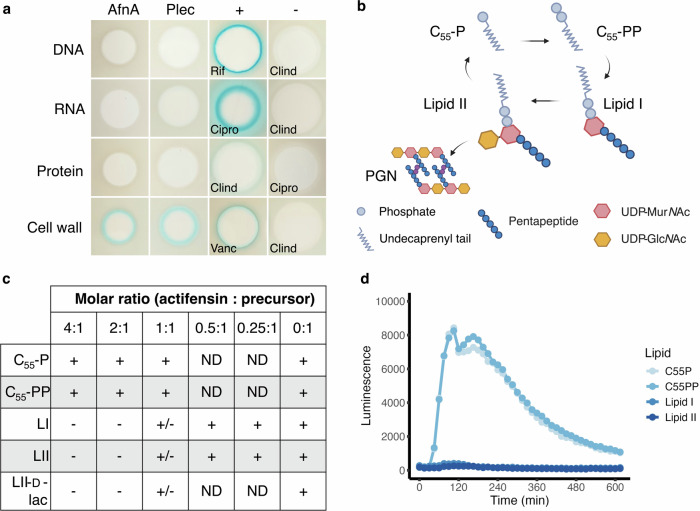
Antimicrobial peptides are defense molecules found across all domains of life holding promise for developing therapies against drug-resistant pathogens. Actifensin, from Actinomyces ruminicola DPC7226, exhibits potent activity against gram-positive bacteria and shares structural similarities with eukaryotic defensins. This study characterized actifensin's mechanism of action and therapeutic potential. The findings revealed that actifensin inhibits peptidoglycan synthesis by binding lipid II (Kd = 30 ± 20 nM). Unlike defensins, it also binds lipid I (Kd = 24 ± 27 nM) without significant difference, suggesting the N-acetyl glucosamine moiety of lipid II is not required for complexation. Membrane disruption was not observed with DiSC3(5) fluorescence, or synthetic unilamellar liposomes, indicating indirect cell death via cell wall weakening, visualised by phase contrast microscopy. Actifensin showed no haemolytic activity or toxicity up to 128 µg/ml in human erythrocytes and Hep G2 cells. The peptide was not immunogenic, demonstrating no induction of LDH release in PBMCs or any effect on TLR-mediated signalling. Structural motif analysis identified actifensin as part of a conserved trans-kingdom defensin subfamily, GXGCP, distinct from XTCD peptides in more recently evolved arthropods. These findings emphasise the conserved structure-function relationship of antimicrobials across kingdoms, suggesting a shared evolutionary history of defensins and highlight the therapeutic potential for them or their variants.
© 2025. The Author(s).
Conflict of interest statement
Competing interests: The authors declare no competing interests.
Figures


References
-
- Shafee, T. M., Lay, F. T., Hulett, M. D. & Anderson, M. A. The defensins consist of two independent, convergent protein superfamilies. Mol. Biol. Evol.33, 2345–2356 (2016). - PubMed
-
- Schneider, T. et al. Plectasin, a fungal defensin, targets the bacterial cell wall precursor Lipid II. Science328, 1168–1172 (2010). - PubMed
-
- Gueguen, Y. et al. Characterization of a defensin from the oyster Crassostrea gigas. Recombinant production, folding, solution structure, antimicrobial activities, and gene expression. J. Biol. Chem.281, 313–323 (2006). - PubMed
-
- Takeuchi, K. et al. Channel-forming membrane permeabilization by an antibacterial protein, sapecin. J. Biol. Chem.279, 4981–4987 (2004). - PubMed
Grants and funding
LinkOut - more resources
Full Text Sources
