


Sarcocystis species: molecular identification and seroprevalence in water buffaloes (Bubalus bubalis)
- PMID: 40696429
- PMCID: PMC12281994
- DOI: 10.1186/s12917-025-04933-3
Sarcocystis species: molecular identification and seroprevalence in water buffaloes (Bubalus bubalis)
Abstract
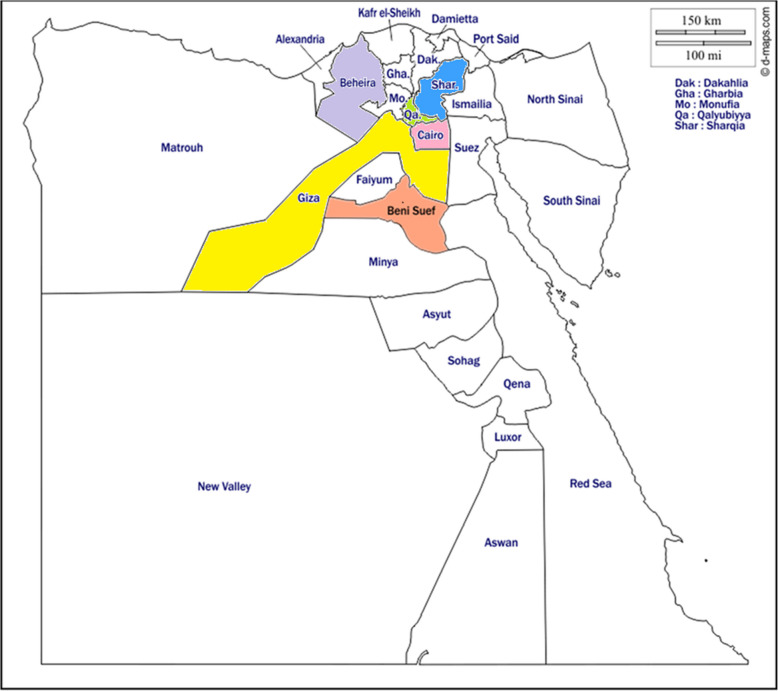
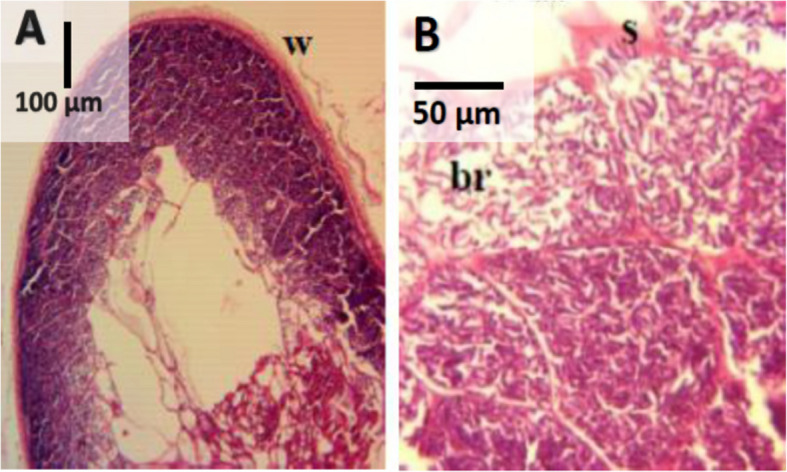
Meat infection with the coccidian protozoan zoonotic Sarcocystis spp. causes public health hazards and high economic loss. The current study aimed to investigate molecular identification, cyst histological examination and seroprevalence of Sarcocystis spp. in water buffaloes slaughtered in the main abattoirs of 6 Egyptian Governorates; Cairo, Giza, Beni-suef, Al-Sharqia, Qalyubia, and El-Beheira. Each buffalo was visually inspected for the presence of Sarcocystis macrocysts and blood samples were collected. Out of 900 examined water buffaloes (Bubalus bubalis), 246 (27.3%) were found to be infected based on macroscopic examination. Histological examination of the macrocyst revealed metrocytes close to the cyst's edge and elongated curving basophilic bradyzoites occupying most of the cyst. Depending on age, we categorized naturally infected buffaloes into 3 groups: young (< 2 y.), adult (2-5 y.) and old (5-10 y.). The highest infection rate was observed in older buffaloes aged 5-10 years, meanwhile female animals exhibited a higher prevalence of infection compared to males. The esophagus had the highest presence of Sarcocystis compared to other organs. Using PCR based on 18S rRNA gene and sequencing, we isolated 3 Sarcocystis species from infected tissues: S. buffalonis, S. fusiformis and S. hirsuta-like. The prepared whole cyst antigen of S. fusiformis was characterized by 9 major polypeptides (140, 120, 78, 66, 53, 39, 32, 24 and 19 kDa) on 10% SDS-PAGE. Using western blotting, we identified 2 common immunogenic reactive bands (66 and 32 kDa) against naturally infected buffalo sera and hyperimmune rat sera. Additionally, sarcocystosis positive seroprevalence rate was 46.4% (418/900) with a sensitivity of 97.6% and specificity of 100% using indirect ELISA based on S. fusiformis whole cyst antigen. In conclusion, this study highlights the molecular identification, cyst histological examination and seroprevalence of Sarcocystis sp. among buffaloes in Egypt. ELISA using the S. fusiformis whole cyst antigen could be adapted to detect antibodies to Sarcocystis sp., in live animals, with an acceptable specificity and sensitivity.
Keywords: Sarcocystis; Buffaloes; ELISA; Molecular Analysis; SDS-PAGE; Western blot.
© 2025. The Author(s).
Conflict of interest statement
Declarations. Ethics approval and consent to participate: This study’s protocol and experimental procedures were approved by the International Animal Ethics Committee and Institutional Guidelines of the National Research Centre Animal Research Committee under the number (13010124–3). We confirm that all methods and experiments were performed in accordance with the relevant guidelines and regulations under the above-mentioned approval and in accordance with ARRIVE guidelines. Consent for publication: Not applicable. Competing interests: The authors have no relevant financial or non-financial interest to disclose.
Figures




References
-
- Abu-Elwafa SA, Al-Araby MA, Abbas IEA. Comparative ultrastructure of two types of Sarcocystis spp. of water buffaloes (Bubalus bubalis) from Egypt. Proc. of the 5th Animal Wealth Research Conf. in the Middle East & North Africa, 2012.
MeSH terms
Grants and funding
LinkOut - more resources
Full Text Sources
Miscellaneous
