


Identification of tickborne pathogens in cattle and sheep ticks from Kyrgyzstan using next-generation sequencing
- PMID: 40696435
- PMCID: PMC12285077
- DOI: 10.1186/s13071-025-06919-4
Identification of tickborne pathogens in cattle and sheep ticks from Kyrgyzstan using next-generation sequencing
Abstract
Background: Various tickborne diseases and pathogens in livestock have been reported in Kyrgyzstan; however, comprehensive molecular analyses from ticks and their tickborne pathogen diversity in the region are lacking. This study aimed to identify tick species and bacterial pathogens infesting cattle and sheep across Kyrgyzstan using amplicon-based next-generation sequencing (NGS).
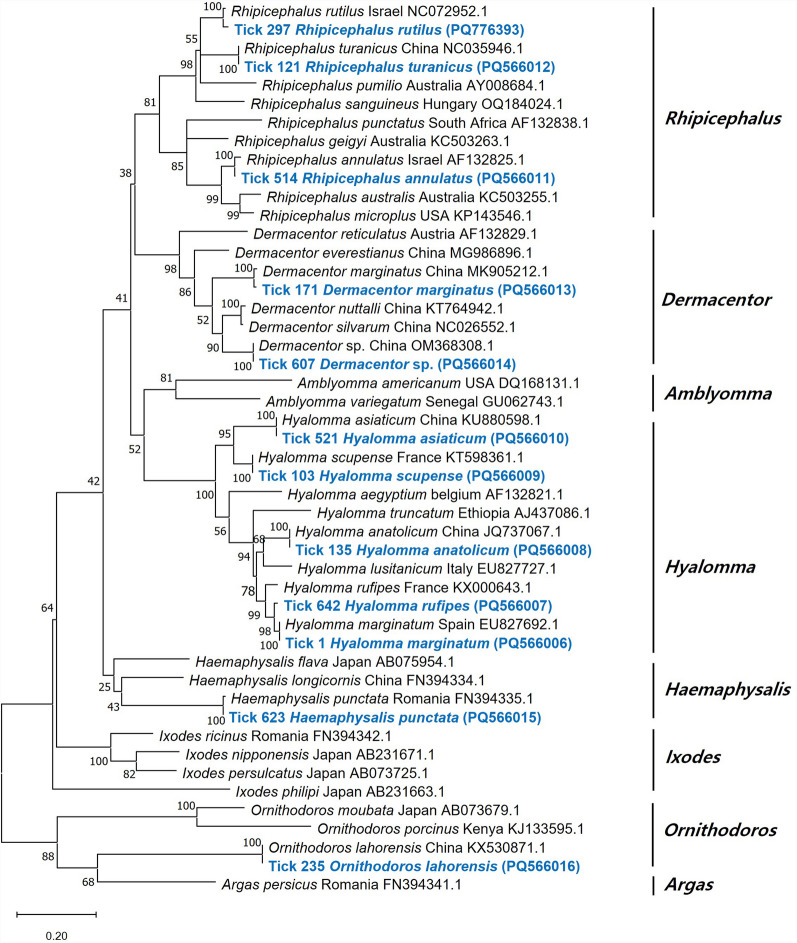
Methods: In 2022, ticks were collected from livestock across seven provinces and subjected to molecular analyses. Genomic DNA was extracted from ticks for species identification based on cytochrome c oxidase I (COI) gene sequence analyses. Pathogens were screened using amplicon NGS targeting the V3-V4 region of the 16S rRNA gene, followed by confirmation using polymerase chain reaction (PCR) and Sanger sequencing.
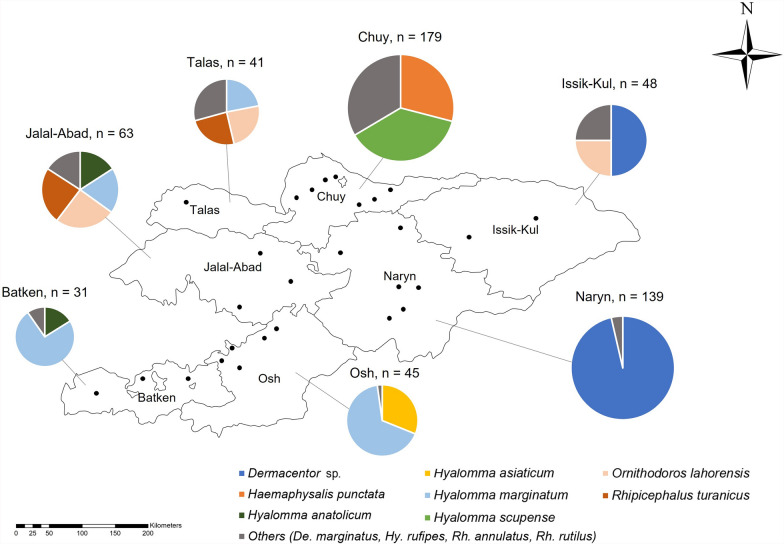
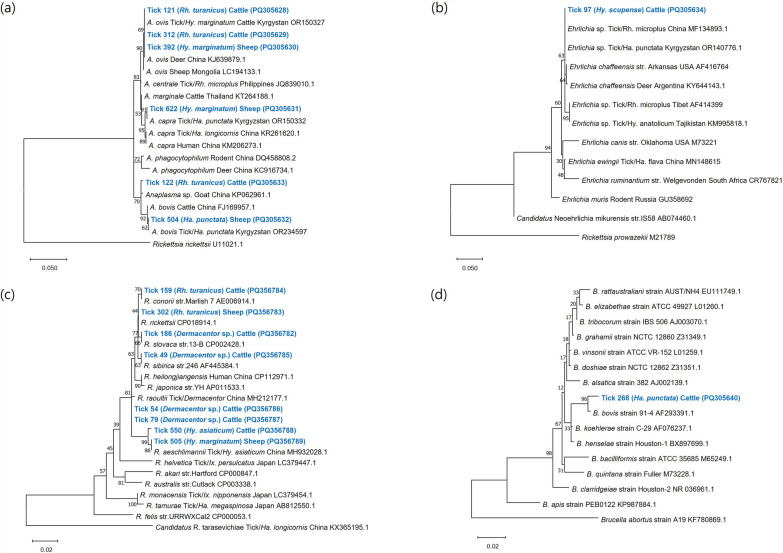
Results: A total of 546 ticks belonging to two families, five genera, and 12 species were identified. The dominant species were Dermacentor spp. (30.2%), Hyalomma marginatum (17.2%), Hyalomma scupense (13.4%), and Haemaphysalis punctata (11.7%). Furthermore, 11.7% of ticks tested positive for bacterial pathogens, including spotted fever group Rickettsiae (8.6%), Anaplasma (2.7%), Ehrlichia (0.2%), and Bartonella (0.2%). Coxiella burnetii and Francisella tularensis were not detected.
Conclusions: This is the first nationwide study on bacterial pathogens in ticks in Kyrgyzstan and the first reports of spotted fever group Rickettsiae and Bartonella in the country. These findings improve our understanding of tickborne disease epidemiology and highlight the utility of NGS as an efficient screening method for capturing pathogen diversity in arthropod vectors.
Keywords: Anaplasma; Bartonella; Ehrlichia; Next-generation sequencing; Spotted fever group Rickettsiae; Tick; Tickborne pathogen.
© 2025. The Author(s).
Conflict of interest statement
Declarations. Ethics approval and consent to participate: Ethical approval was not required for the present study. The owners of the cattle and sheep provided oral consent for the collection of tick samples from their animals. Consent for publication: Not applicable. Competing interests: The authors declare no competing interests.
Figures
References
-
- Yang J, Wang Y, Zhang H, Su Y, Wu X, Yan S, et al. Impact of socio-economic and environmental factors on livestock production in Kyrgyzstan. Front Environ Sci. 2022;10:1049187. 10.3389/fenvs.2022.1049187. - DOI
-
- Mitchell L. Kyrgyzstan. Brant Travel Guides, 2019.
-
- Monthly bulletin of SESiZN. https://dgsen.kg/category/deyatelnost/upravlenie-profilaktiki-infekcionn...; Accessed 16 Dec 2024.
MeSH terms
Substances
Grants and funding
LinkOut - more resources
Full Text Sources
Medical
Miscellaneous
