


Multilayered Epigenetic Analysis Identifies a Molecular Portrait for Psychological Resilience in Patients With Breast Cancer
- PMID: 40697488
- PMCID: PMC12281357
- DOI: 10.1016/j.bpsgos.2025.100545
Multilayered Epigenetic Analysis Identifies a Molecular Portrait for Psychological Resilience in Patients With Breast Cancer
Abstract
Background: Psychological resilience refers to a person's positive adaptation when faced with adversities, such as a breast cancer (BC) diagnosis. Highly resilient patients are more likely to regain stability and be protected from health conditions such as depression, anxiety, and posttraumatic stress disorder. We aimed to identify epigenetic markers that distinguish high- and low-resilient patients in a BC cohort at time of diagnosis.
Methods: Genome-wide DNA methylation was determined in participants selected from a prospectively collected cohort of 1040 newly diagnosed BC patients with known resilience status. DNA methylation of those displaying the highest and lowest scores (n = 425), as measured by the Connor-Davidson Resilience Scale, was analyzed in whole blood, using a multilayered bioinformatic approach. Sample subsets were created to identify differentially methylated probes (DMPs) and differentially methylated regions (DMRs), and fold change and area size were used to estimate the strength of methylation differences. The key regions associated with psychological resilience allowed us to build a classifier, using a random forest model, which was validated using an independent cohort (n = 80).
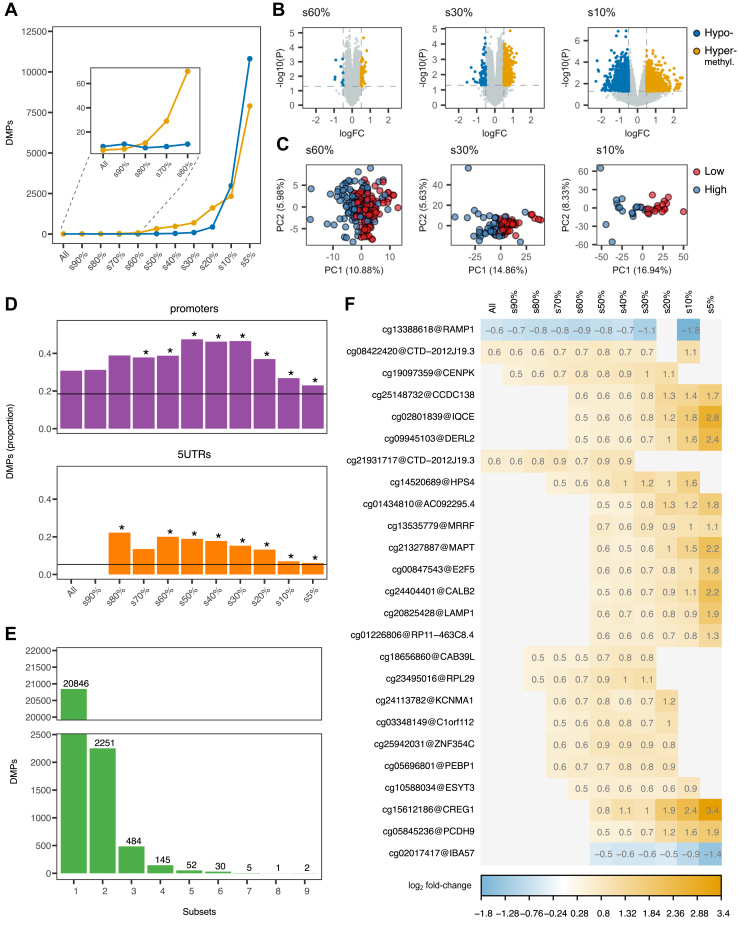
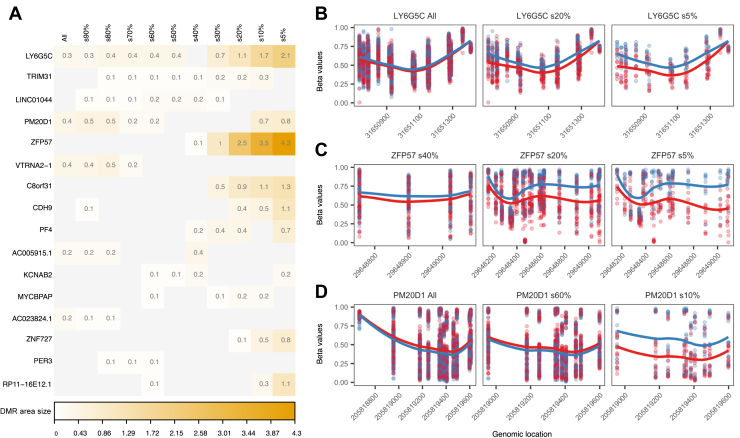
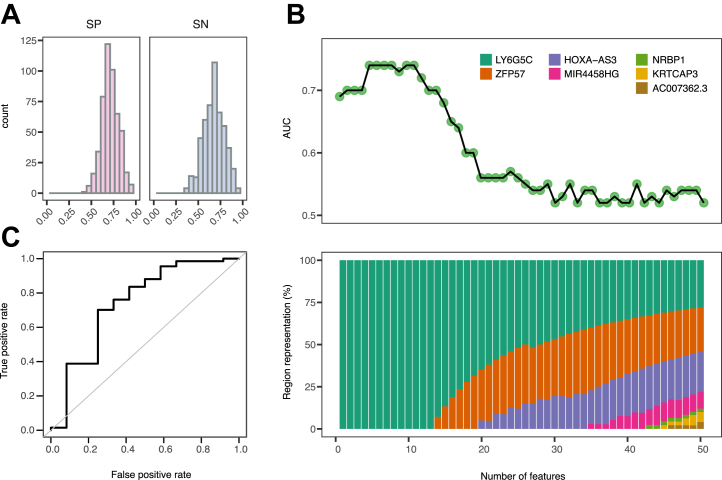
Results: DMPs and DMRs that consistently distinguished samples derived from high- and low-resilient patients were identified, and methylation differences followed a dose-response pattern related to resilience levels. DMRs included LY6G5C, ZFP57, CDH9, ZNF727, and C8orf31, where LY6G5C was found to be the most consistent DMR. Psychological resilience status could be predicted in the independent cohort with an area under the curve of 0.74 and a sensitivity and specificity of 0.67 and 0.72, respectively.
Conclusions: LY6G5C was identified as a novel marker for psychological resilience, paving the way for a more conceptual and comprehensive molecular understanding.
Keywords: Bioinformatics; Biomarker; Breast cancer; DNA methylation; Epigenetics; Psychological resilience.
Plain language summary
Psychological resilience is a personal characteristic that helps preserve stability and QoL when confronted with trauma such as breast cancer (BC) and where highly resilient patients show improved disease outcome. The study explored how DNA methylation was linked to psychological resilience in 425 patients with BC. Key differences were found in methylation patterns, especially in the LY6G5C gene, between high- and low-resilient individuals, and a model was built to accurately predict resilience. Findings suggest that LY6G5C could be a key biological marker, providing new insights into the association of genetics with psychological resilience and ultimately helping the development of treatments to amend detrimental outcomes.
© 2025 The Authors.
Figures

References
-
- Herrman H., Stewart D.E., Diaz-Granados N., Berger E.L., Jackson B., Yuen T. What is resilience? Can J Psychiatry. 2011;56:258–265. - PubMed
LinkOut - more resources
Full Text Sources
