


Chronic Neurobehavioral and Neuropathological Consequences of Repeated Blast Exposure in P301S Transgenic Tau Rats
- PMID: 40697807
- PMCID: PMC12281117
- DOI: 10.1089/neur.2024.0168
Chronic Neurobehavioral and Neuropathological Consequences of Repeated Blast Exposure in P301S Transgenic Tau Rats
Abstract
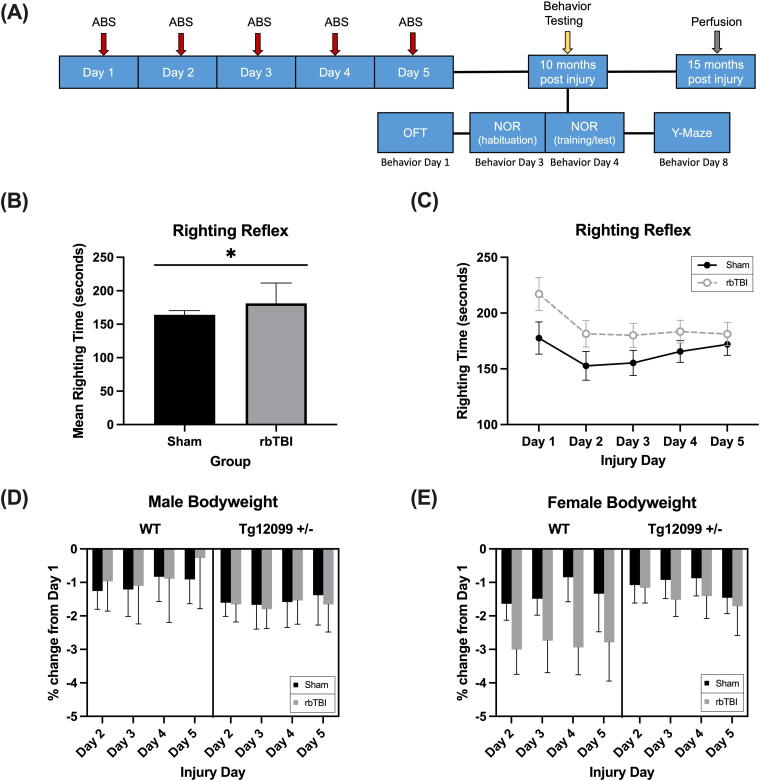
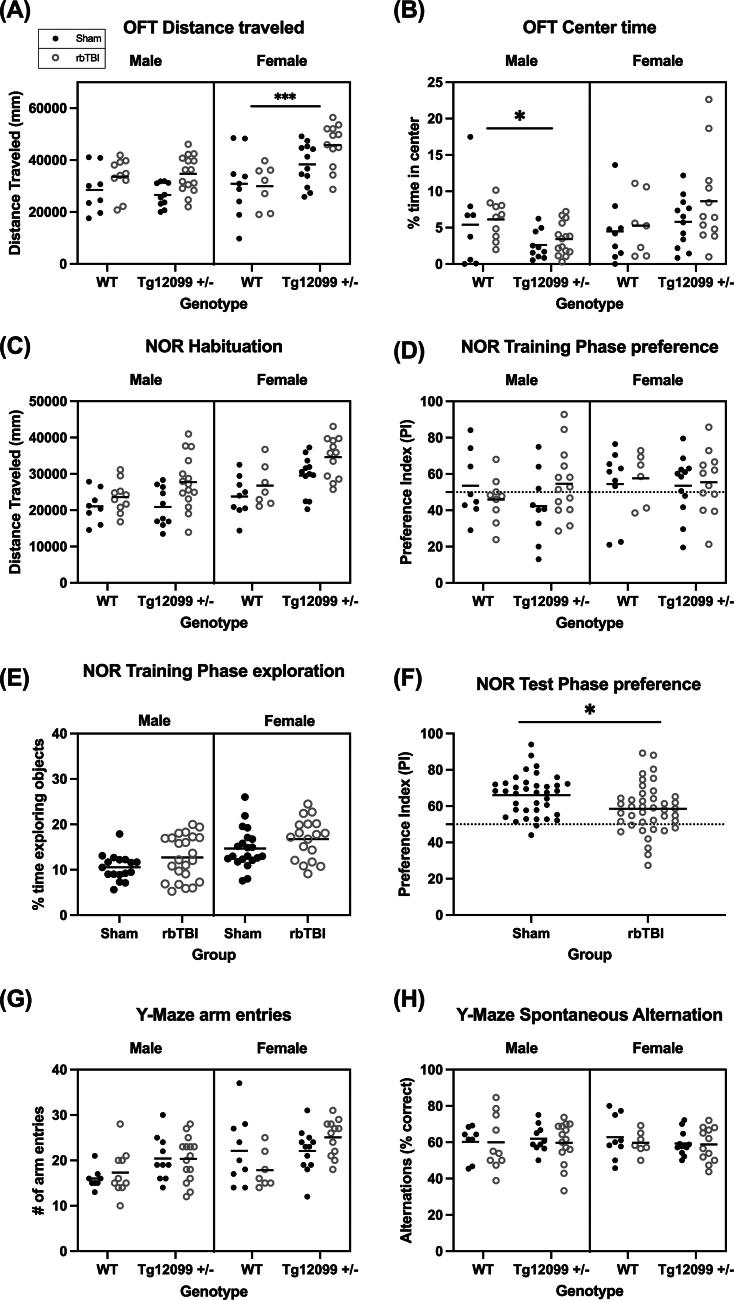
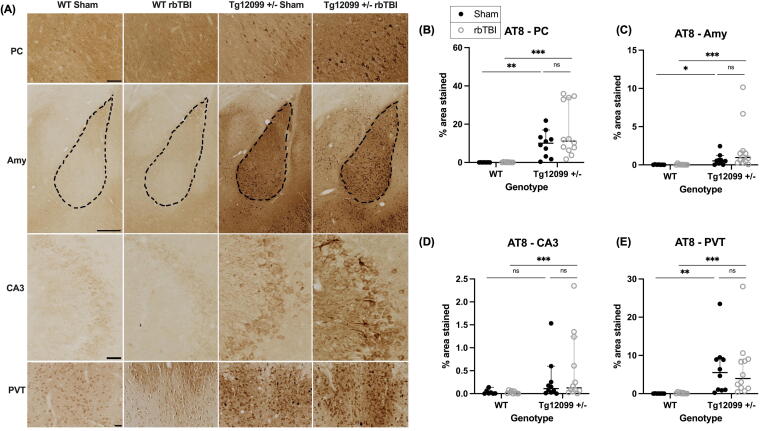
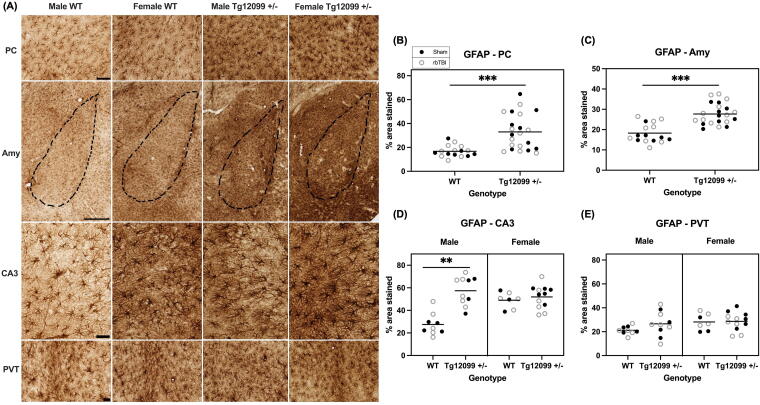
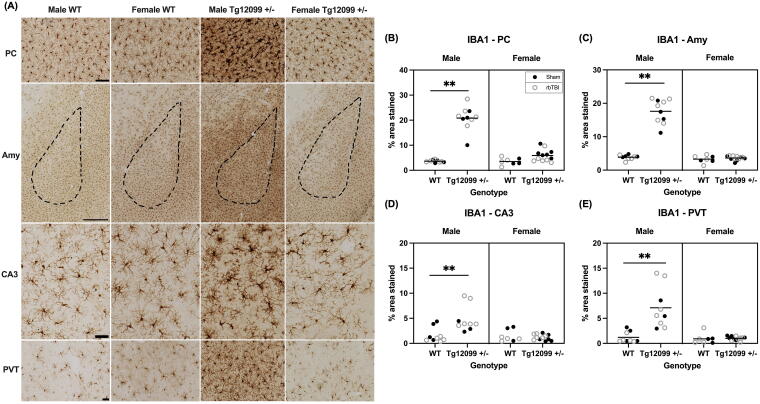
Repeated blast traumatic brain injury (rbTBI) is linked to dementia risk, potentially due to abnormal tau accumulation, although a definitive causal relationship remains elusive. This study aims to develop a model of rbTBI-induced tauopathy. We utilized wild-type (WT) rats and rats that are heterozygous for the mutated P301S human tau gene (Tg12099 +/-), the presence of which increases the propensity to develop tau neuropathology. At 2-3 months of age, rats were exposed to five blasts using the Advanced Blast Simulator or sham procedures. Behavioral and histological outcomes were evaluated at 10 and 15 months post-injury, respectively. The open field test revealed increased activity in blast-injured animals compared with sham. Tg12099 +/- females exhibited greater travel distances than WT females, while male activity levels did not differ by genotype. The novel object recognition test indicated impaired recognition memory in blast-injured animals, which was unrelated to genotype. There was a greater accumulation of phosphorylated tau in several brain regions of Tg12099 +/- rats compared with WT rats, yet no observable blast injury effect. Blast did not alter astro- and microgliosis, but increased astrogliosis was observed in Tg12099 +/- rats compared with WT rats in a region-dependent manner. We observed sex-dependent changes in microgliosis within the Tg12099 +/- group, with male Tg12099 +/- rats exhibiting increased IBA1 immunostaining compared with females. No such sex difference was observed in WT rats. Our findings suggest that while rbTBI can induce persistent behavioral deficits in rats, it does not exacerbate neuropathology in Tg12099 rats.
Keywords: aging; behavior; neuropathology; sex differences; tau; traumatic brain injury.
© The Author(s) 2025. Published by Mary Ann Liebert, Inc.
Figures
References
-
- Brenner LA, Ivins BJ, Schwab K, et al. Traumatic brain injury, posttraumatic stress disorder, and postconcussive symptom reporting among troops returning from Iraq. J Head Trauma Rehabil 2010;25(5):307–312. - PubMed
LinkOut - more resources
Full Text Sources
Research Materials