


Anthranilate at the interface of tryptophan and specialized metabolite biosynthesis
- PMID: 40697869
- PMCID: PMC12279710
- DOI: 10.3389/fpls.2025.1625337
Anthranilate at the interface of tryptophan and specialized metabolite biosynthesis
Abstract
Plants synthesize a diverse array of specialized metabolites that contribute to plant development, growth, protection from biotic and abiotic stressors, and attracting pollinators and seed dispersers. Specialized metabolites are often derived from primary metabolites, such as amino acids, but also can be redirected from intermediates in primary metabolic pathways. In the L-tryptophan (Trp) biosynthetic pathway, the intermediate anthranilate is siphoned away to synthesize volatiles and specialized metabolites. Methyltransferases can produce the O-methyl ester of anthranilate, a grape aroma volatile produced in species such as grapevine, strawberry, citrus, maize, and soybean. O-Methyl anthranilate serves context-dependent roles in attracting insects and deterring herbivores. Methylation at the amine generates N-methyl anthranilate, a precursor for N-methyl anthranilate esters in citrus and antimicrobial avenacins in black oat. This Mini Review explores the regulation of anthranilate within the context of the Trp pathway and its contributions to the biosynthesis of anthranilate-containing volatiles and specialized metabolites. Also highlighted are the roles of anthranilates in plant defensive metabolism and the substrate specificity of anthranilate-using enzymes, as well as unanswered questions about the synthesis, transport, and physiological role of anthranilates.
Keywords: anthranilate; plant defense; specialized metabolism; tryptophan; volatiles.
Copyright © 2025 Holland, Watson and Chiang.
Conflict of interest statement
The authors declare that the research was conducted in the absence of any commercial or financial relationships that could be construed as a potential conflict of interest.
Figures
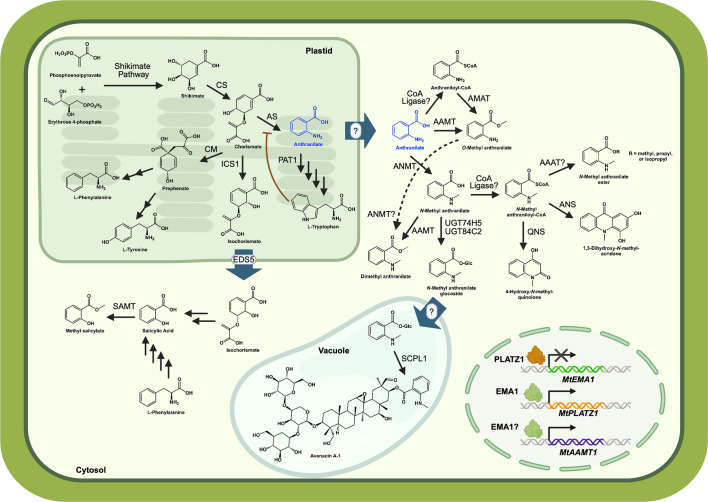
References
-
- Avery M. L., Decker D. G., Humphrey J. S., Aronov E., Linscombe S. D., Way M. (1995). Methyl anthranilate as a rice seed treatment to deter birds. J. wildlife Manage. 59 (1), 50–56. doi: 10.2307/3809115 - DOI
-
- Bohlmann J., Lins T., Martin W., Eilert U. (1996). Anthranilate synthase from Ruta graveolens. Duplicated AS alpha genes encode tryptophan-sensitive and tryptophan-insensitive isoenzymes specific to amino acid and alkaloid biosynthesis. Plant Physiol. 111, 507–514. doi: 10.1104/pp.111.2.507, PMID: - DOI - PMC - PubMed
-
- Bracker L. B., Gong X., Schmid C., Dawid C., Ulrich D., Phung T., et al. (2020). A strawberry accession with elevated methyl anthranilate fruit concentration is naturally resistant to the pest fly Drosophila suzukii. PLoS One 15, e0234040. doi: 10.1371/journal.pone.0234040, PMID: - DOI - PMC - PubMed
-
- Caligiuri M. G., Bauerle R. (1991). Identification of amino acid residues involved in feedback regulation of the anthranilate synthase complex from Salmonella typhimurium. Evidence for an amino-terminal regulatory site. J. Biol. Chem. 266, 8328–8335. doi: 10.1016/S0021-9258(18)92979-0, PMID: - DOI - PubMed
Publication types
LinkOut - more resources
Full Text Sources
