


Eco-Emotions, Mental Ill-Health Symptoms and Climate Action Among Australian Adolescents: The Protective Role of Connectedness to Nature
- PMID: 40698445
- PMCID: PMC12284748
- DOI: 10.1002/ijop.70084
Eco-Emotions, Mental Ill-Health Symptoms and Climate Action Among Australian Adolescents: The Protective Role of Connectedness to Nature
Abstract
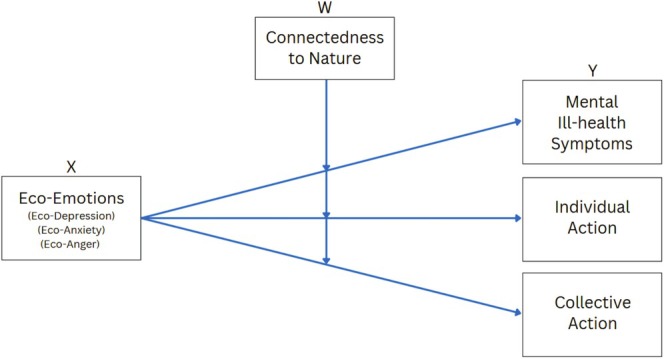
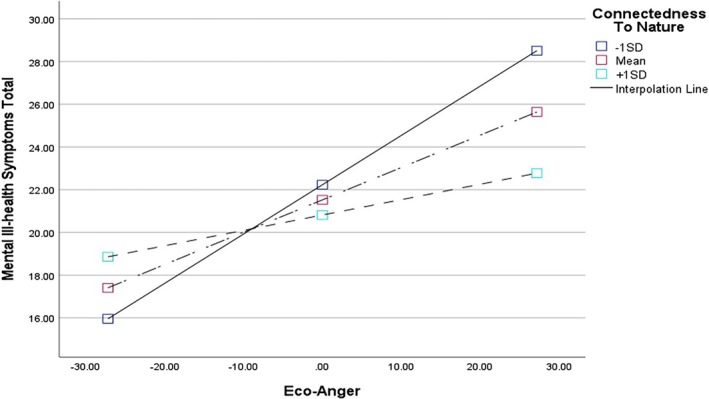
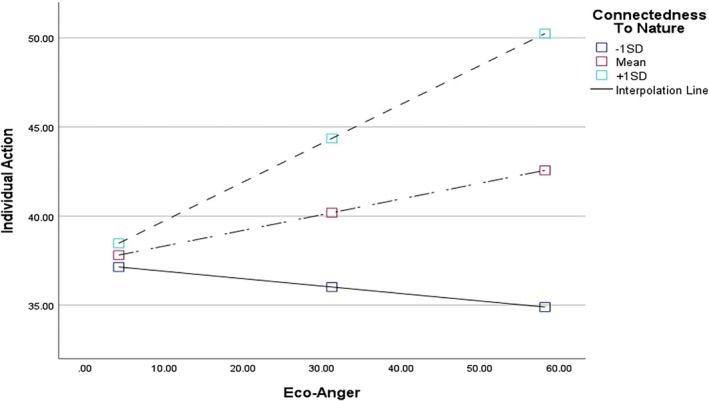
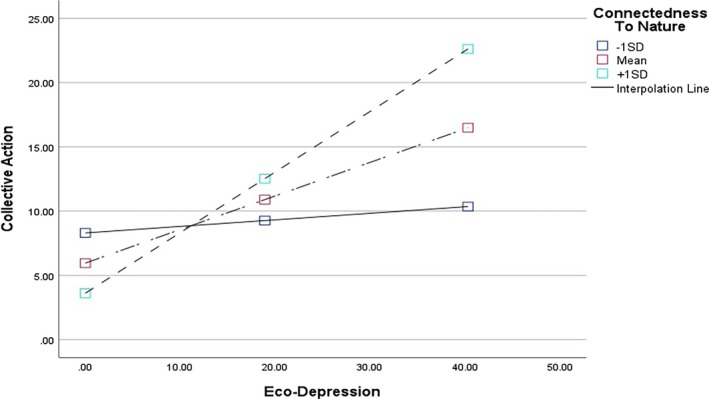
This study addresses a gap in understanding the relationship between eco-emotions, mental health and pro-climate actions among adolescents living in rural Australia. A mixed methods approach was used to triangulate survey data (N = 145, mean age = 13.09 years, SD = 0.73) and photo-elicitation focus groups (n = 21, mean age = 12.95 years, SD = 0.58). Bivariate and moderation analyses of the survey revealed that a stronger connection to nature moderated the relationship between eco-anger and mental ill-health symptoms and pro-climate actions, respectively. Thematic analysis of the focus group data provided deeper insights, showing that participants with a connection to nature felt a sense of responsibility and willingness to engage in pro-climate actions. Triangulation of the data revealed a gap between awareness and action. While survey data indicated low levels of individual and collective action, qualitative findings provided an explanation that although many participants expressed a desire to be involved in climate action, they identified a need for more practical support and guidance from adults. The study provides insights into the need for practical, targeted interventions that support mental health and encourage constructive climate-related behaviours, particularly by leveraging the protective role of connectedness to nature.
Keywords: adolescents; climate change; eco‐emotions; mental health; pro‐climate action.
© 2025 The Author(s). International Journal of Psychology published by John Wiley & Sons Ltd on behalf of International Union of Psychological Science.
Conflict of interest statement
The authors declare no conflicts of interest.
Figures
References
-
- Austin, E. K. , Rich J. L., Kiem A. S., Handley T., Perkins D., and Kelly B. J.. 2020. “Concerns About Climate Change Among Rural Residents in Australia.” Journal of Rural Studies 75: 98–109. 10.1016/j.jrurstud.2020.01.010. - DOI
-
- Baker, C. , Clayton S., and Bragg E.. 2021. “Educating for Resilience: Parent and Teacher Perceptions of Children's Emotional Needs in Response to Climate Change.” Environmental Education Research 27, no. 5: 687–705. 10.1080/13504622.2020.1828288. - DOI
-
- Bassett, R. , Beagan B. L., Ristovski‐Slijepcevic S., and Chapman G. E.. 2008. “Tough Teens: The Methodological Challenges of Interviewing Teenagers as Research Participants.” Journal of Adolescent Research 23, no. 2: 119–131. 10.1177/0743558407310733. - DOI
-
- Boluda‐Verdú, I. , Senent‐Valero M., Casas‐Escolano M., Matijasevich A., and Pastor‐Valero M.. 2022. “Fear for the Future: Eco‐Anxiety and Health Implications, a Systematic Review.” Journal of Environmental Psychology 84: 101904. 10.1016/j.jenvp.2022.101904. - DOI
MeSH terms
LinkOut - more resources
Full Text Sources
Medical
Miscellaneous
