


As2S2 Mediates the ROS/P38 MAPK Signaling Pathway to Induce Apoptosis and S-Phase Arrest in Myelodysplastic Syndrome Cells
- PMID: 40699652
- PMCID: PMC12025865
- DOI: 10.3390/cimb47040253
As2S2 Mediates the ROS/P38 MAPK Signaling Pathway to Induce Apoptosis and S-Phase Arrest in Myelodysplastic Syndrome Cells
Abstract
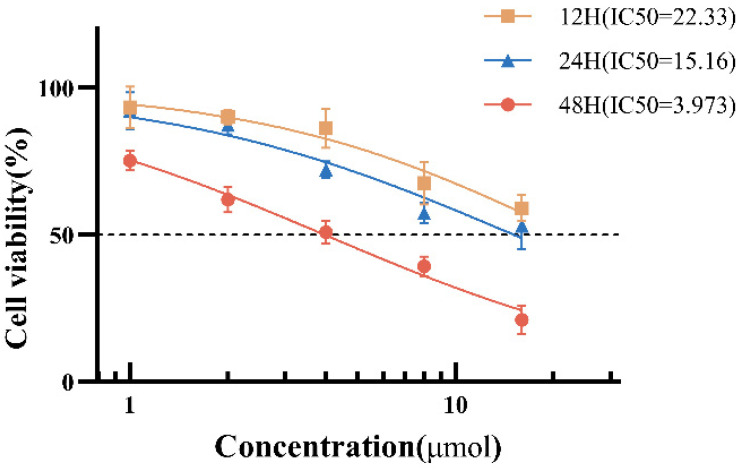
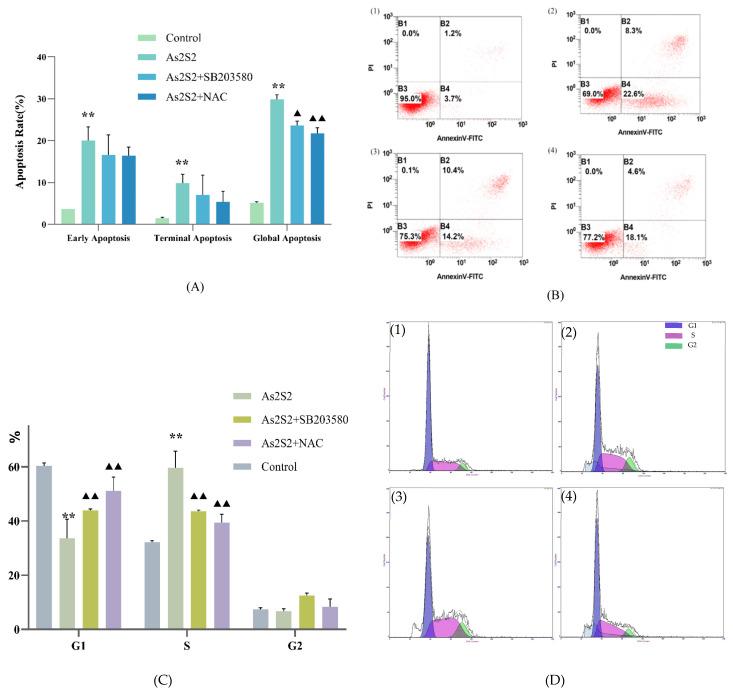
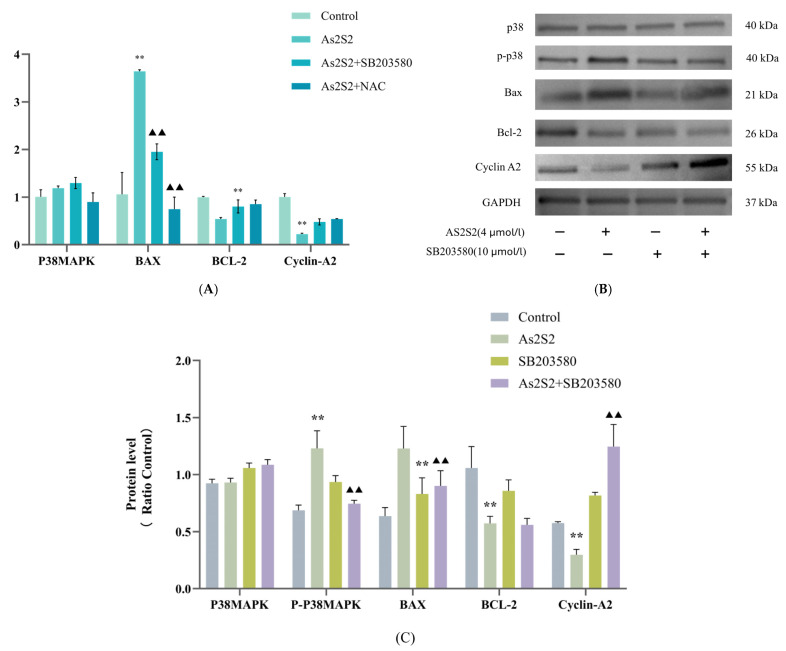
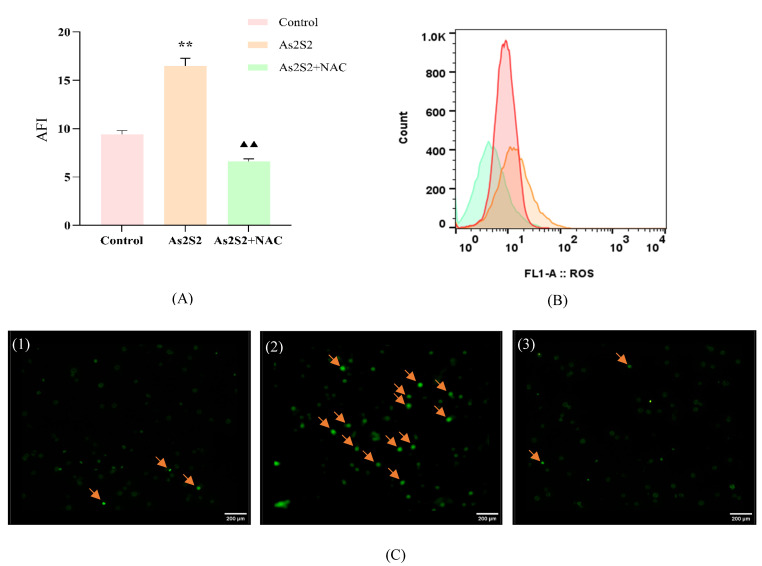
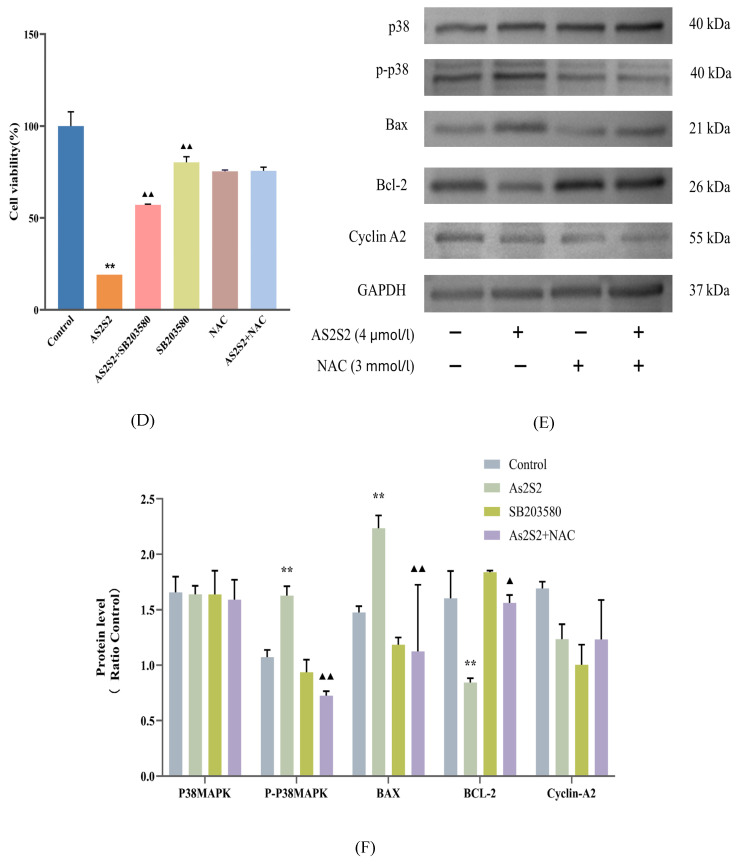
Myelodysplastic syndrome (MDS) is a heterogeneous myeloid clonal disorder that represents a significant threat to human health. As2S2, a natural compound, has been shown to exert therapeutic effects on various malignant tumors, including acute myeloid leukemia (AML), breast cancer, and osteosarcoma, based on extensive clinical experience. In this study, we investigated the mechanism by which As2S2 inhibits the proliferation of the myelodysplastic syndrome (MDS) SKM-1 cell line. Our findings revealed that As2S2 inhibited the proliferation of SKM-1 cells in a time- and dose-dependent manner. Flow cytometry, protein immunoblotting, and real-time fluorescence quantitative PCR analyses demonstrated that As2S2 promotes the phosphorylation of P38 MAPK, thereby activating the MAPK signaling pathway. Additionally, it promotes apoptosis by increasing the BAX/Bcl-2 ratio and induces S-phase arrest through the downregulation of the cell cycle-related protein cyclin A2. Further studies demonstrated that As2S2-treated cells exhibited ROS accumulation under fluorescence microscopy, along with activation of the P38 MAPK signaling pathway, increased apoptosis, and S-phase arrest in the cell cycle. This process could be partially reversed by the ROS inhibitor N-acetylcysteine. Therefore, the results of the present study suggest that As2S2 induces ROS accumulation in SKM-1 cells, which contributes to the activation of the P38 MAPK signaling pathway, promoting apoptosis and S-phase arrest in the cell cycle. Additionally, As2S2 may serve as a potent therapeutic agent for the treatment of myelodysplastic syndromes, with ROS acting as one of the key therapeutic targets.
Keywords: As2S2; P38 MAPK; ROS; apoptosis; myelodysplastic syndrome.
Conflict of interest statement
The authors declare no conflicts of interest.
Figures
References
-
- Arber D.A., Orazi A., Hasserjian R., Thiele J., Borowitz M.J., Le Beau M.M., Bloomfield C.D., Cazzola M., Vardiman J.W. The 2016 revision to the World Health Organization classification of myeloid neoplasms and acute leukemia. Blood J. Am. Soc. Hematol. 2016;127:2391–2405. doi: 10.1182/blood-2016-03-643544. - DOI - PubMed
-
- Hu X.-M., Yuan B., Tanaka S., Song M.-M., Onda K., Tohyama K., Zhou A.-X., Toyoda H., Hirano T. Arsenic disulfide-triggered apoptosis and erythroid differentiation in myelodysplastic syndrome and acute myeloid leukemia cell lines. Hematology. 2013;19:352–360. doi: 10.1179/1607845413y.0000000138. - DOI - PubMed
Grants and funding
LinkOut - more resources
Full Text Sources
Research Materials
Miscellaneous
