


CRISPR-Cas9 in the Tailoring of Genetically Engineered Animals
- PMID: 40699729
- PMCID: PMC12109904
- DOI: 10.3390/cimb47050330
CRISPR-Cas9 in the Tailoring of Genetically Engineered Animals
Abstract
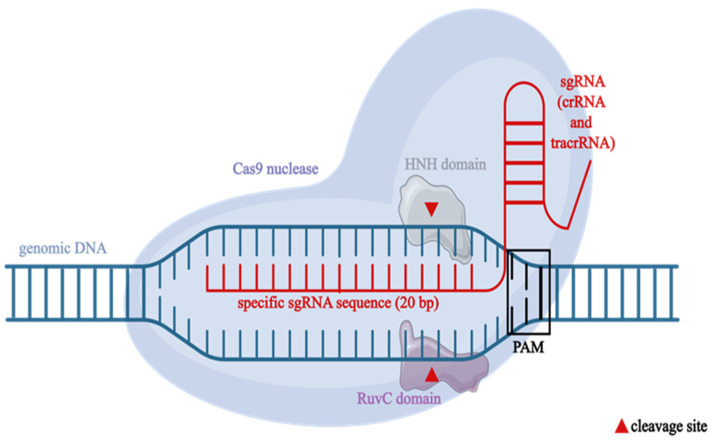
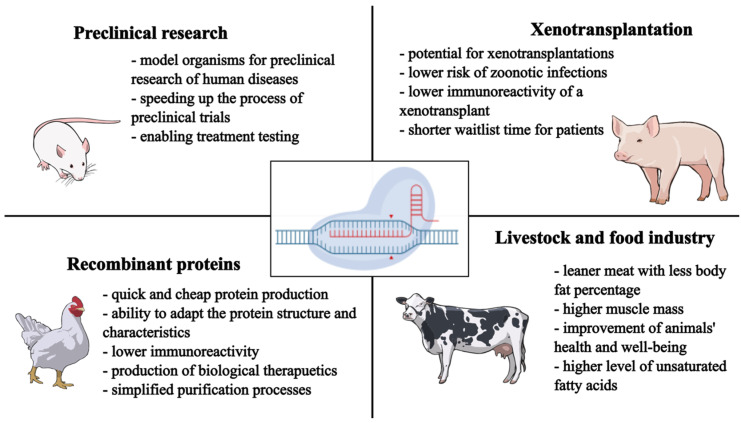
CRISPR-Cas9 enables targeted genome editing and has become a pivotal tool in biomedical research and animal genome engineering. This review highlights its application in generating genetically modified animals used as preclinical disease models, bioreactors for recombinant protein production, and potential sources of xenotransplantation organs. We also discuss its role in improving livestock traits, welfare, and breeding efficiency. The benefits and limitations of CRISPR-Cas9 are examined, emphasizing its transformative potential in research and agricultural biotechnology.
Keywords: CRISPR-Cas9; genetically engineered animals; genome editing; model organisms; xenotransplantation.
Conflict of interest statement
The authors declare no conflicts of interest.
Figures
References
-
- Ishino Y., Shinagawa H., Makino K., Amemura M., Nakata A. Nucleotide Sequence of the Iap Gene, Responsible for Alkaline Phosphatase Isozyme Conversion in Escherichia Coli, and Identification of the Gene Product. J. Bacteriol. 1987;169:5429–5433. doi: 10.1128/jb.169.12.5429-5433.1987. - DOI - PMC - PubMed
Publication types
LinkOut - more resources
Full Text Sources
