


Geographical patterns of tuberculosis notification rates and their association with socioeconomic factors in Nepal: a spatial cross-sectional study (2020-2023)
- PMID: 40701587
- PMCID: PMC12306248
- DOI: 10.1136/bmjopen-2024-093858
Geographical patterns of tuberculosis notification rates and their association with socioeconomic factors in Nepal: a spatial cross-sectional study (2020-2023)
Abstract
Objectives: To identify the patterns of tuberculosis (TB) notification rates and examine their relationship with social and economic determinants in Nepal between 2020 and 2023.
Design: Cross-sectional study.
Setting: Nepal.
Participants: All TB cases across all ages.
Primary outcome: Prevalence of TB cases.
Methods: This cross-sectional spatial analysis used the data set of the National Tuberculosis Control Centre, Nepal, covering the Fiscal Year (FY) 2020-2021 to 2022-2023. Moran's I and Local Indicators of Spatial Association were employed to detect the spatial autocorrelation between the prevalence of TB and associated social and demographic factors.
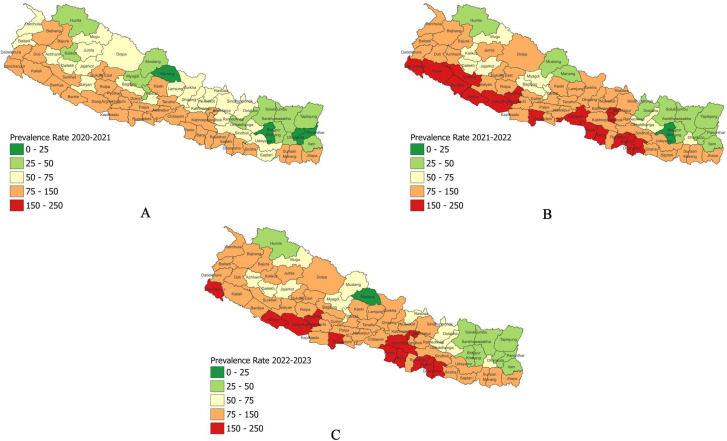
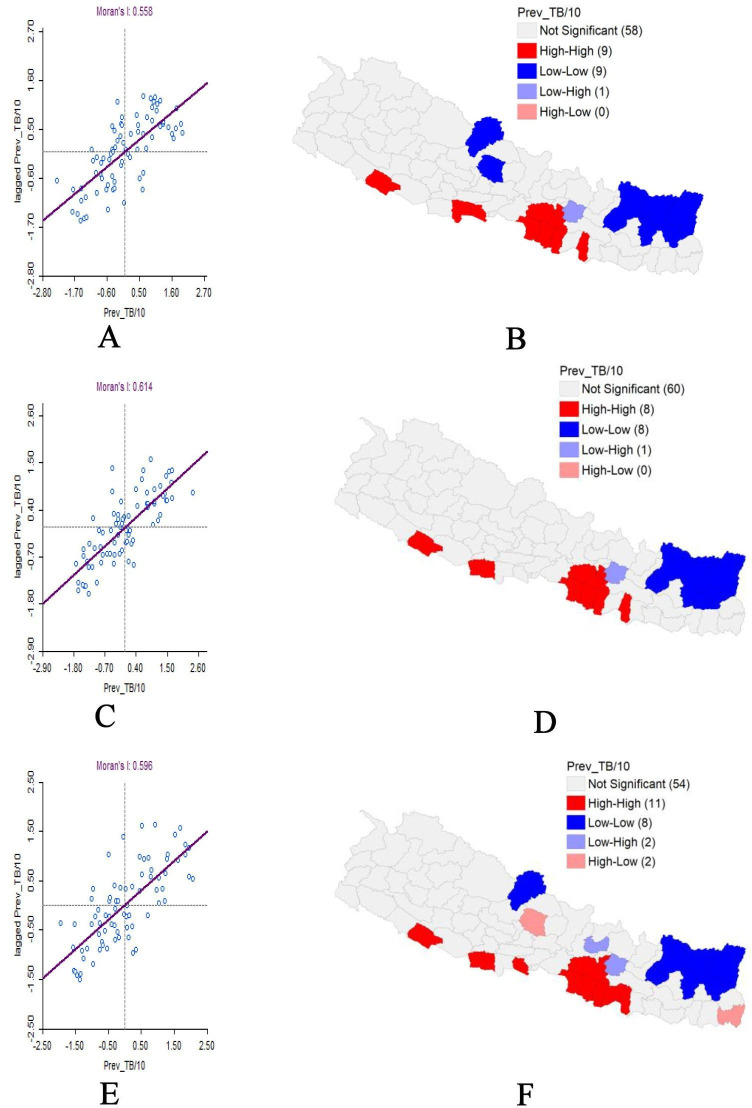
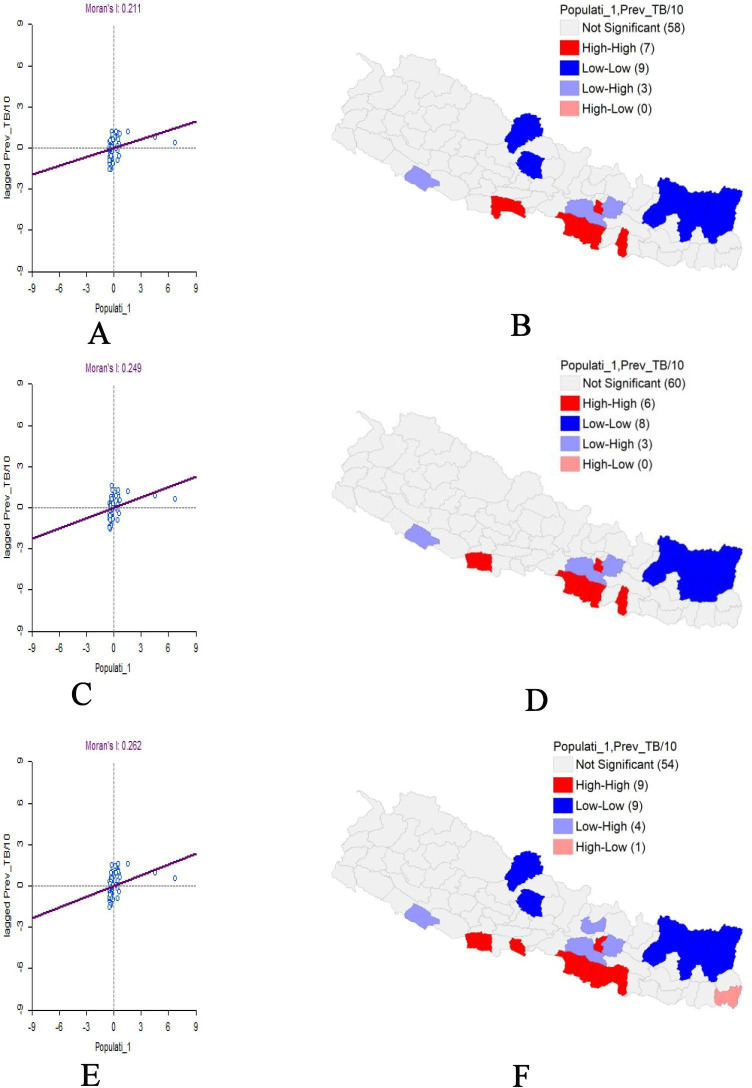
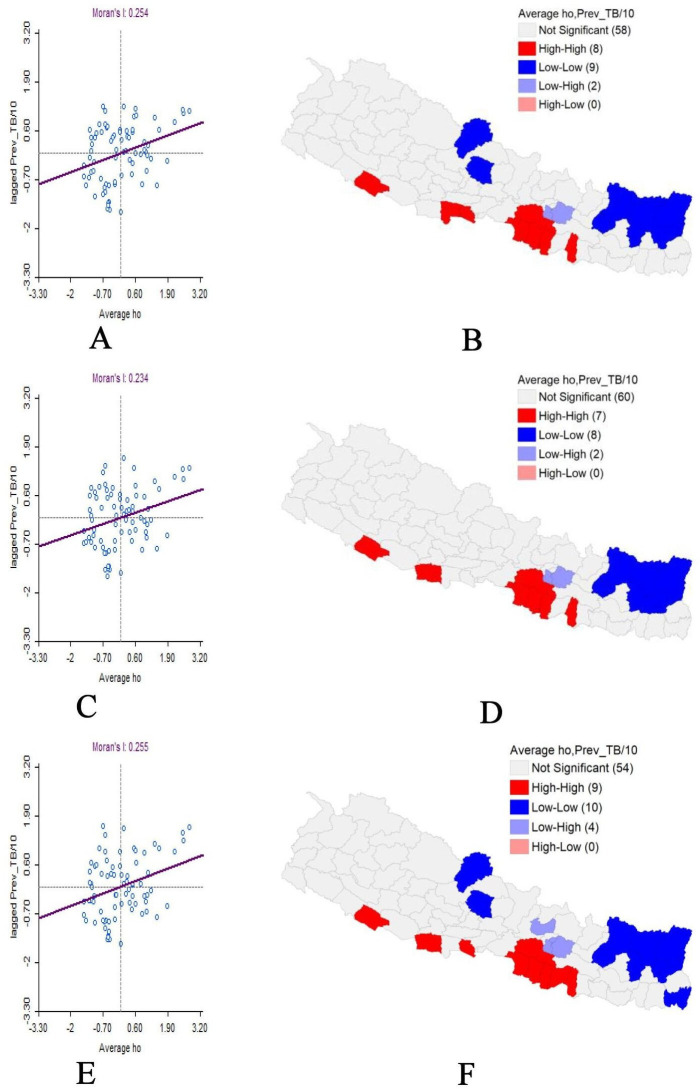
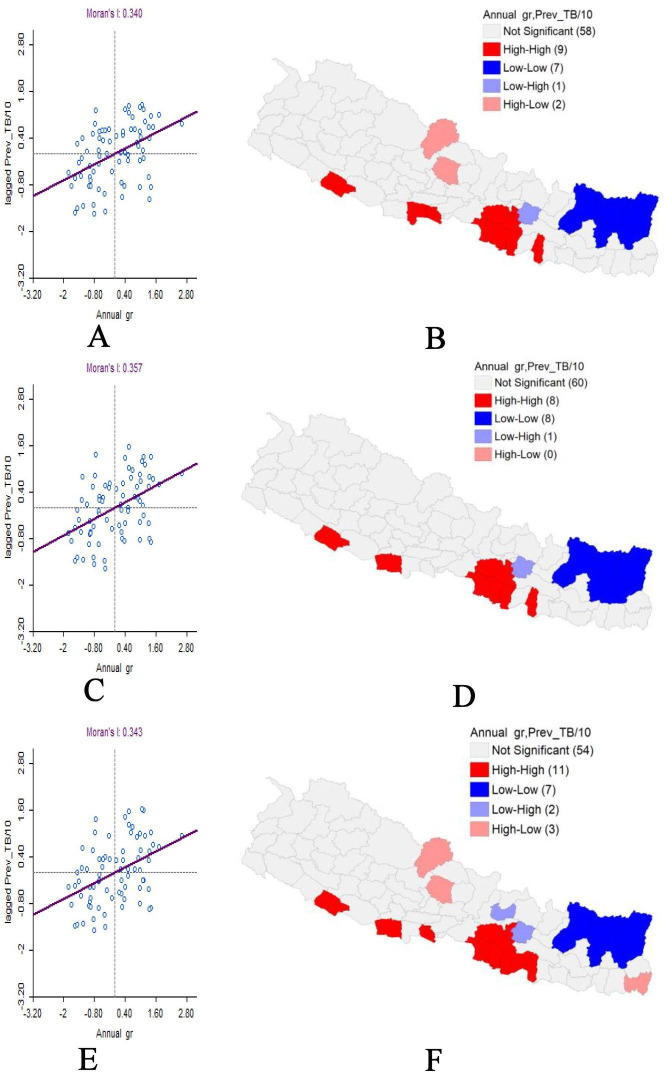
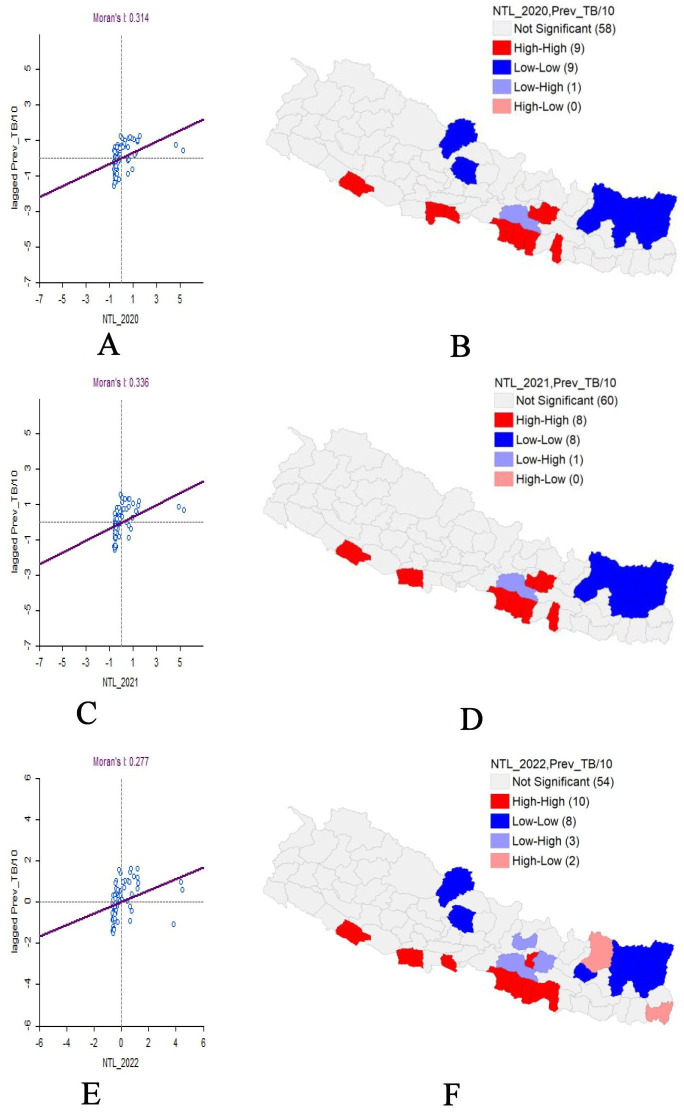
Results: The overall prevalence rate for TB in FY 2020-2021 was 98.08 per 100 000 population. This increased to 129.82 per 100 000 population in FY 2021-2022, followed by a slight decrease to 128.39 per 100 000 population in FY 2022-2023. The highest TB prevalence was observed in Kathmandu, with 146 cases per 100 000 population in 2020-2021, and in Dang district, the rate decreased from 215-191 per 100 000 population. We investigated the spatial patterns of TB prevalence and highlighted the geographic areas in each district in Nepal from 2021 to 2023 with Moran's I of 0.558, 0.614 and 0.596, respectively. The consistent identification of High-High clusters in specific districts like Banke, Kapilbastu and Parsa across all 3 years periods highlighted persistent high-risk areas for TB transmission in Nepal.
Conclusions: This study emphasised the strong spatial associations and the complex, diverse aspects of TB transmission shaped by demographic and socioeconomic factors. Our results highlighted the need for tailored public health approaches that account for specific social determinants to address TB effectively.
Keywords: Epidemiology; Nepal; Tuberculosis.
© Author(s) (or their employer(s)) 2025. Re-use permitted under CC BY-NC. No commercial re-use. See rights and permissions. Published by BMJ Group.
Conflict of interest statement
Competing interests: None declared.
Figures
References
-
- Sagavkar SR, Devkar SR. Tuberculosis: A Review. Asian Jour Pharmac Rese. 2018;8:191. doi: 10.5958/2231-5691.2018.00033.3. - DOI
-
- WHO Global tuberculosis report 2023. 2023.
-
- World Bank Tuberculosis case detection rate (%, all forms) 2023. https://data.worldbank.org/indicator/SH.TBS.DTEC.ZS Available.
-
- World Health Organization Country overview, Nepal. 2024. https://data.who.int/countries/524 Available.
MeSH terms
LinkOut - more resources
Full Text Sources
Medical
