


Professional and academic pre-qualifications, career preferences and aspirations in working as a rural doctor
- PMID: 40703274
- PMCID: PMC12284000
- DOI: 10.3389/fmed.2025.1566303
Professional and academic pre-qualifications, career preferences and aspirations in working as a rural doctor
Abstract
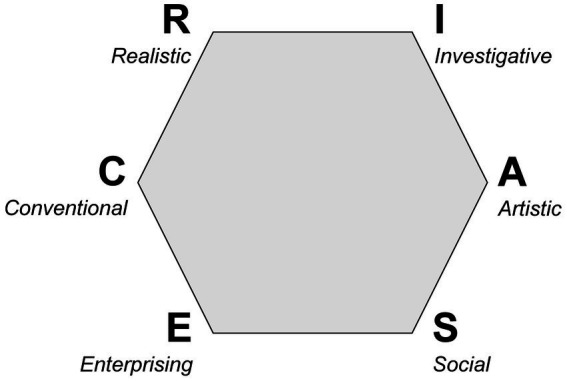
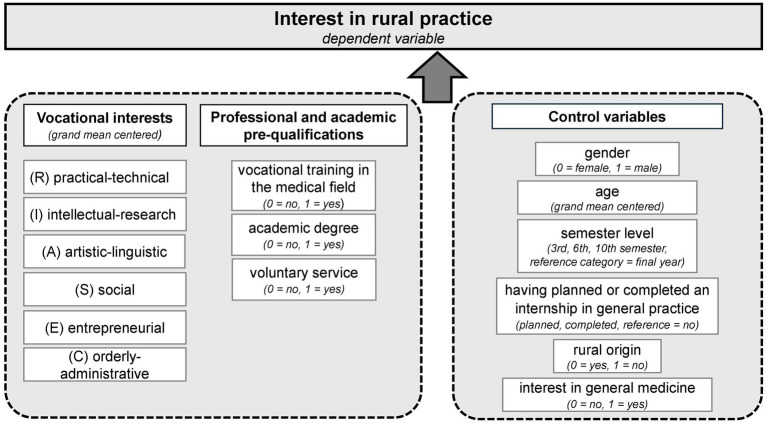
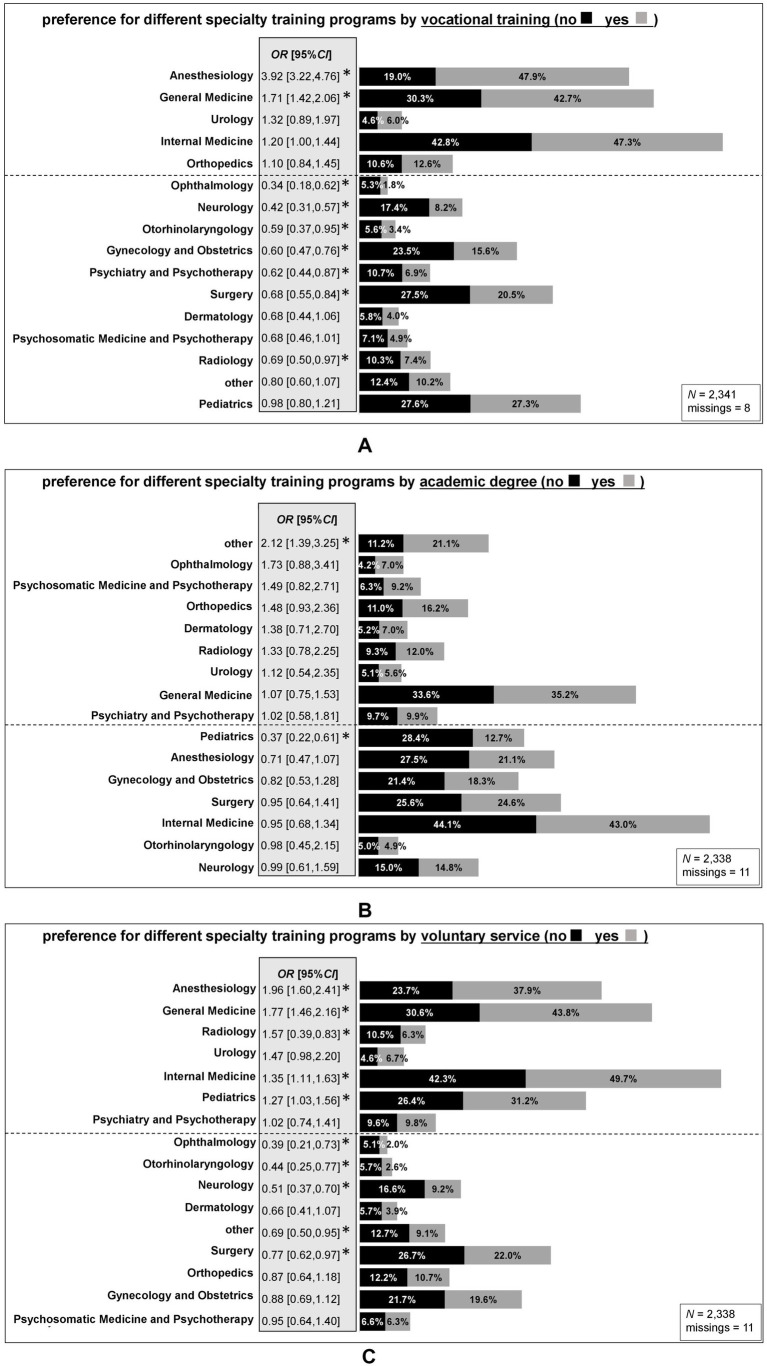
Introduction: Internationally, countries are struggling to provide health care in rural areas. In Germany, where the medical school's admissions system rewards prior experience, there are a significant number of students with professional experience (e.g., paramedics, nurses). To date, there has been little research on this pre-experienced subgroup. In a rather exploratory approach, preferences for specialty training were compared between students with and without pre-qualifications. The primary aim of the study was to analyze how pre-qualifications and career types according to Holland's RIASEC (acronym for realistic, investigative, artistic, social, enterprising, conventional) model contribute to interest in working as a rural doctor.
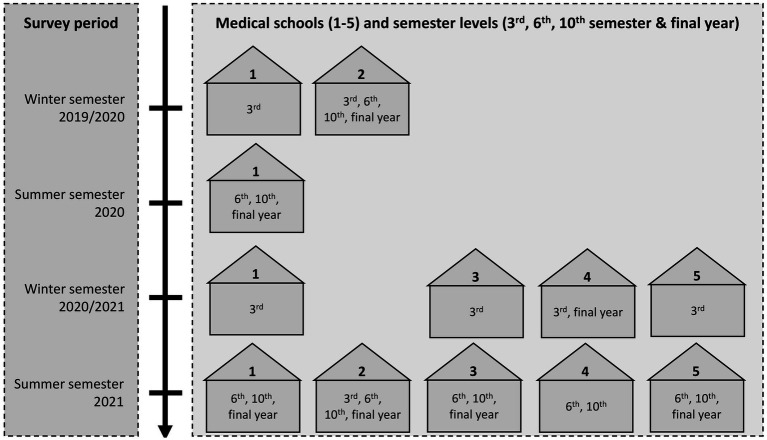
Methods: Overall, 2,370 medical students at different stages of their studies (i.e., 3rd, 6th, 10th semester, and final year) completed the questionnaire. Students indicated interest in working as a rural doctor on a 9-point scale, and expressed interest in up to three specialist training programs from a list of 16. In addition, students answered questions about professional and academic pre-qualifications (i.e., vocational training in the medical field, academic degree, voluntary service) and completed a 6-item questionnaire on vocational interests according to the RIASEC model. The study was a multicenter cross-sectional study conducted at all five medical schools in the federal state of Baden-Württemberg, Germany.
Results: Results show differences in career aspirations according to different pre-qualifications, especially for the pre-qualifications vocational training and voluntary service. The strongest association was found between having completed vocational training and interest in Anesthesiology, OR = 3.92 [3.22, 4.76]. A linear mixed model revealed that higher interest in practical-technical (realistic RIASEC type) or social activities (social RIASEC type), and lower interest in intellectual-research activities (investigative RIASEC type) predicted interest in rural practice, whereas pre-qualifications did not contribute significantly to the model.
Discussion: The findings contribute to a better understanding of the career preferences of medical students with pre-qualifications. Previous experience may lead to the formation of a professional identity and community of practice (CoP) before medical school, which may also influence career preferences. To promote interest in rural medicine, medical schools could encourage interest in social and practical-technical activities within the curriculum and strengthen the profile of general practice.
Keywords: RIASEC; professional and academic pre-qualifications; rural doctor; specialty choice; vocational interests.
Copyright © 2025 Schröpel, Festl-Wietek, Herrmann-Werner, Wittenberg, Pumptow, Herpertz, Heinzmann, Schüttpelz-Brauns, Boeckers, Zipfel and Erschens.
Conflict of interest statement
The authors declare that the research was conducted in the absence of any commercial or financial relationships that could be construed as a potential conflict of interest.
Figures
References
-
- Baeten R, Spasova S, Vanhercke B, Coster S. Inequalities in access to healthcare. A study of national policies European social policy network (ESPN). Brussels: European Commission; (2018).
-
- Ono T, Schoenstein M, Buchan J. Geographic imbalances in doctor supply and policy responses. Paris: OECD; (2014).
LinkOut - more resources
Full Text Sources
