


Dry eye-related tear biomarkers MMP-2, MMP-13, and IFN-γ: potential predictors of Type III acute acquired concomitant esotropia
- PMID: 40707963
- PMCID: PMC12288259
- DOI: 10.1186/s40001-025-02941-5
Dry eye-related tear biomarkers MMP-2, MMP-13, and IFN-γ: potential predictors of Type III acute acquired concomitant esotropia
Abstract
Background: Acute acquired concomitant esotropia (AACE) causes diplopia and asthenopia, severely affecting quality of life. This study aimed to explore the association between dry eye (DE) tear film biomarkers and Type III AACE.
Methods: We enrolled 52 patients (52 eyes) with Type III AACE and 50 controls (50 eyes). Assessments included tear meniscus height (TMH), tear film non-invasive break-up time (NIBUT), corneal fluorescein staining (CFS), Schirmer's test (ST), and the Dry Eye-Related Quality of Life Score (DEQS). Tear samples were analyzed for cytokine levels using a multiplex immunoassay. Logistic regression analyses identified risk factors, and a random forest classifier evaluated predictive performance.
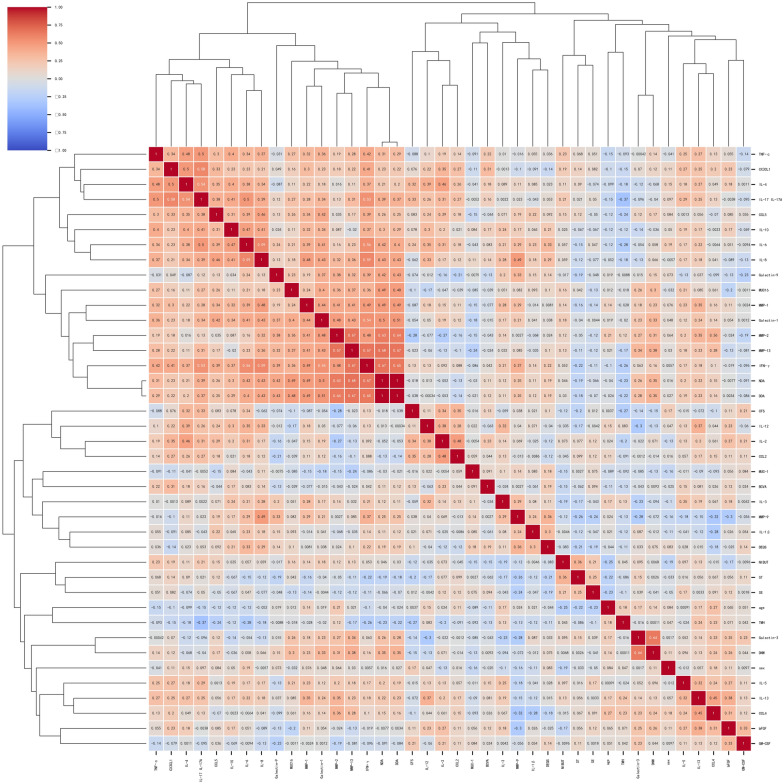
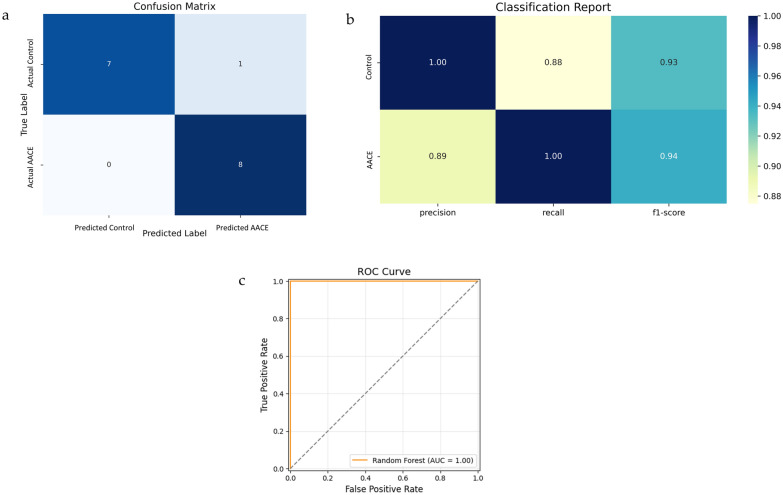
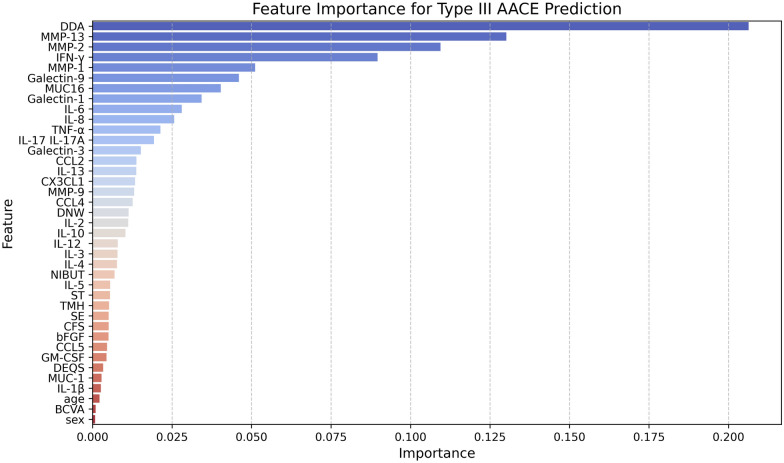
Results: Patients with Type III AACE without DE showed significantly reduced NIBUT and elevated levels of cytokines (e.g., MMP-2, MMP-13, and IFN-γ) compared to normal controls (all P < 0.05). Near-distance work duration showed a moderate positive correlation with Galectin-3 (r = 0.64, P < 0.05). MMP-2, MMP-13, and IFN-γ were identified as independent risk factors (arear under the curve (AUC): 0.91, 0.91, 0.94). The random forest model achieved an AUC of 1.00.
Conclusion: Elevated tear levels of MMP-2, MMP-13, and IFN-γ were strongly associated with Type III AACE, highlighting their potential as predictive biomarkers.
Keywords: Acute acquired concomitant esotropia; Dry eye; Random forest models; Risk factors; Tear film biomarkers.
© 2025. The Author(s).
Conflict of interest statement
Declarations. Ethics approval and consent to participate: The study was conducted in accordance with the Declaration of Helsinki and approved by the Institutional Review Board of Ethics Committee of The First Affiliated Hospital of Fujian Medical University’s approved study protocol (MRTCA, ECFAH of FMU [2022] 323). Informed consent was obtained from all the participants involved in the study. Consent for publication: Not applicable. Competing interests: The authors declare no competing interests.
Figures



References
-
- Burian HM, Miller JE. Comitant convergent strabismus with acute onset. Am J Ophthalmol. 1958;45:55–64. - PubMed
-
- Zhao S, Hao J, Liu J, Cao K, Fu J. Fusional vergence dysfunctions in acute acquired concomitant esotropia of adulthood with myopia. Ophthalmic Res. 2023;66:320–7. - PubMed
-
- Giannaccare G, Versura P, Sebastiani S, Fariselli C, Pellegrini M, Campos E. Dry eye disease in strabismus patients: does eye deviation harm ocular surface? Med Hypotheses. 2018;111:15–8. - PubMed
MeSH terms
Substances
Grants and funding
LinkOut - more resources
Full Text Sources
Medical
Miscellaneous
