


Diagnosis, evaluation, and management of cognitive disorders in Parkinson's disease: Consensus recommendations from a modified Delphi process
- PMID: 40708679
- PMCID: PMC12287750
- DOI: 10.1002/dad2.70152
Diagnosis, evaluation, and management of cognitive disorders in Parkinson's disease: Consensus recommendations from a modified Delphi process
Abstract
Introduction: Variations in clinical management of cognitive disorders in Parkinson's disease (PD) can delay diagnosis, treatment, and care. To harmonize clinical practice, we aimed to gain consensus on best practice recommendations for the diagnosis, evaluation, and management of cognitive disorders in PD.
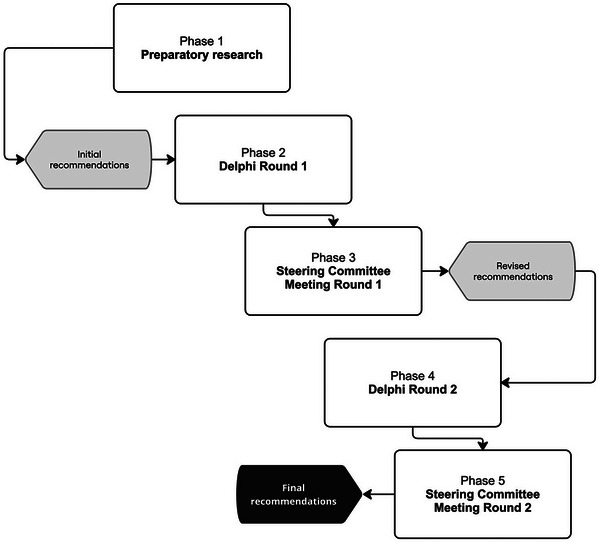
Method: Fifty-eight evidence-based recommendations were presented to an expert panel (N = 29) of Australian PD clinicians and researchers using a modified Delphi approach to gauge agreement. A 5-point Likert scale was used, with a median score > 4 and inter-quartile range < 1, indicating satisfactory agreement. Optional written feedback was also collected. A steering committee of clinicians, researchers, and lived experience experts (N = 13) revised recommendations based on panel feedback.
Results: Fifty-one evidence-based and expert-endorsed recommendations for the diagnosis, evaluation, and management of cognitive disorders in PD were produced.
Discussion: The recommendations serve as a foundational framework to guide clinical practice for cognitive disorders in PD and improve the provision of care.
Highlights: Recommendations for cognitive disorders in Parkinson's disease were developed.Diagnosis, evaluation, and management of cognitive disorders were explored.A modified Delphi approach was used.A panel of 29 Australian clinician and/or research experts provided input.Fifty-one evidence-based and expert-backed recommendations were developed.
Keywords: Parkinson's disease; cognitive impairment; dementia; guidelines.
© 2025 The Author(s). Alzheimer's & Dementia: Diagnosis, Assessment & Disease Monitoring published by Wiley Periodicals LLC on behalf of Alzheimer's Association.
Conflict of interest statement
The authors declare no conflicts of interest. All author disclosures are available in the supporting information.
References
LinkOut - more resources
Full Text Sources