


AI-Driven Comprehensive SERS-LFIA System: Improving Virus Automated Diagnostics Through SERS Image Recognition and Deep Learning
- PMID: 40710108
- PMCID: PMC12293542
- DOI: 10.3390/bios15070458
AI-Driven Comprehensive SERS-LFIA System: Improving Virus Automated Diagnostics Through SERS Image Recognition and Deep Learning
Abstract
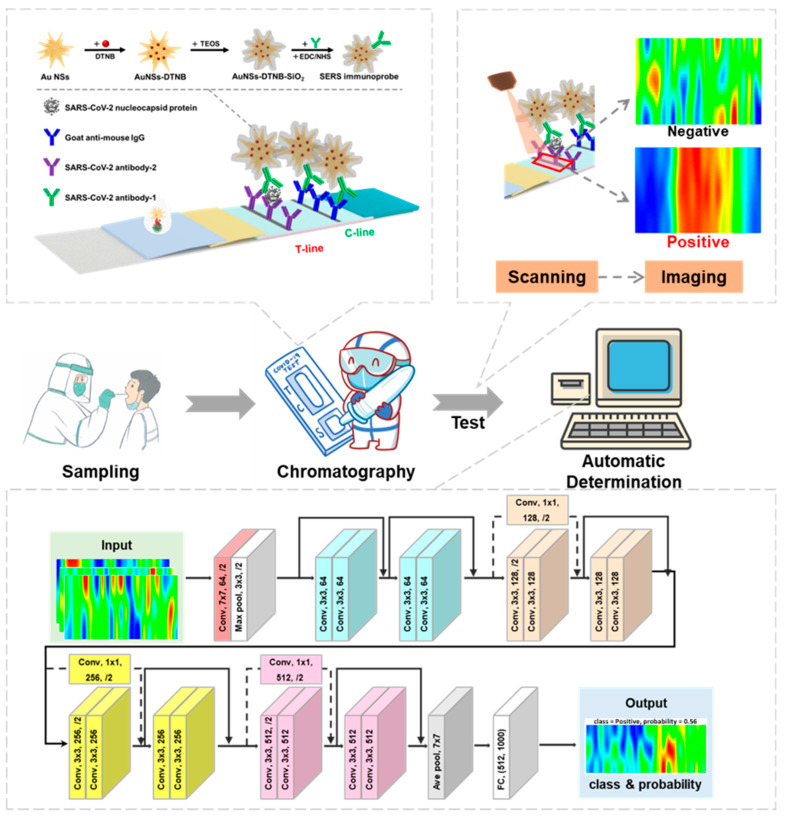
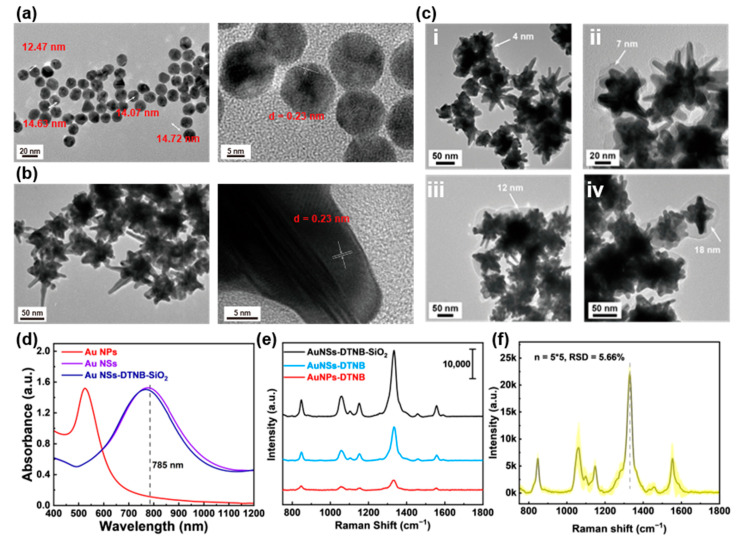
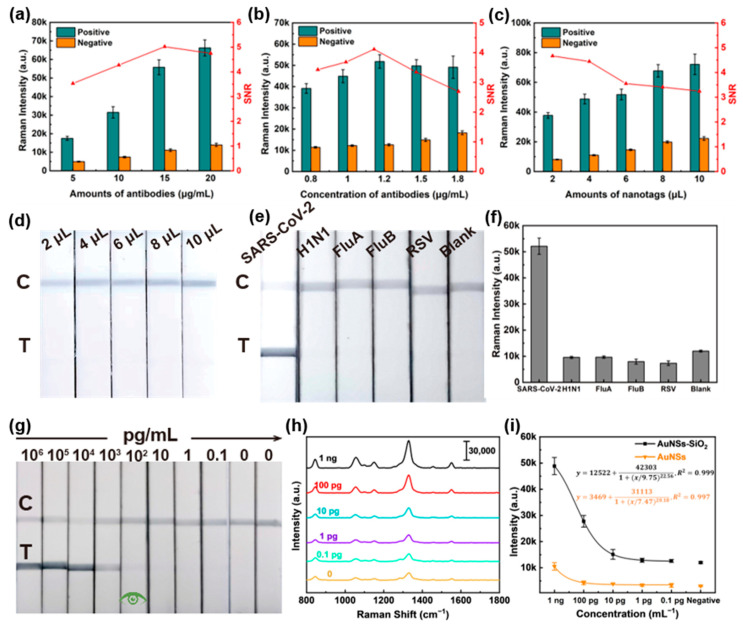
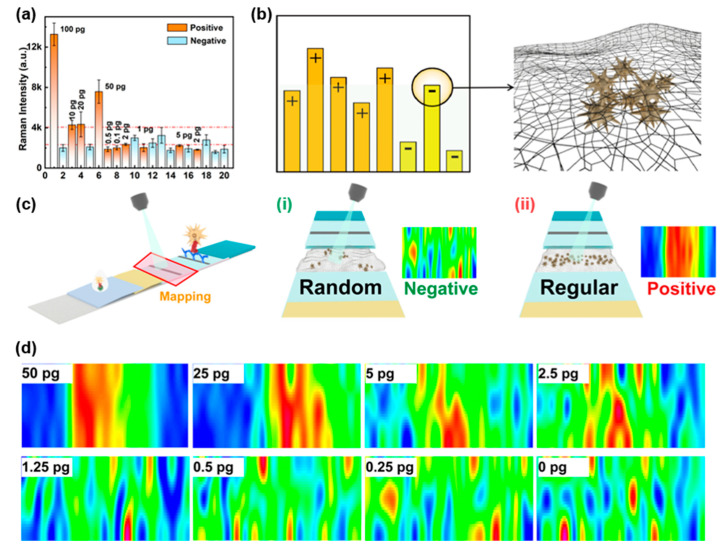
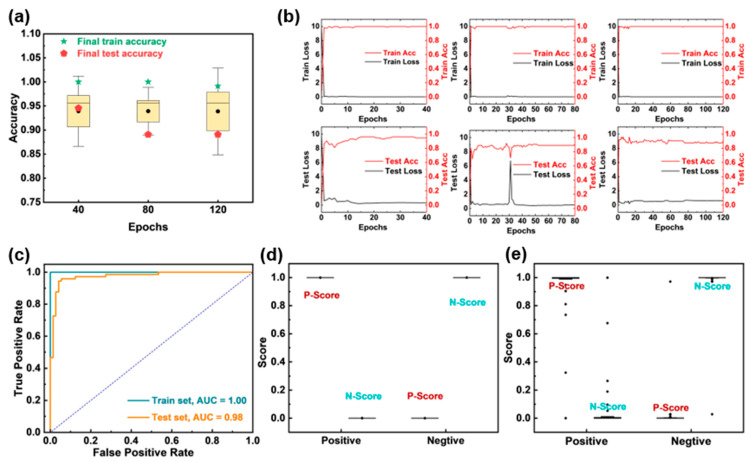
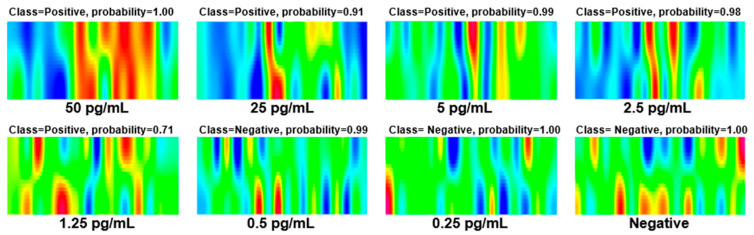
Highly infectious and pathogenic viruses seriously threaten global public health, underscoring the need for rapid and accurate diagnostic methods to effectively manage and control outbreaks. In this study, we developed a comprehensive Surface-Enhanced Raman Scattering-Lateral Flow Immunoassay (SERS-LFIA) detection system that integrates SERS scanning imaging with artificial intelligence (AI)-based result discrimination. This system was based on an ultra-sensitive SERS-LFIA strip with SiO2-Au NSs as the immunoprobe (with a theoretical limit of detection (LOD) of 1.8 pg/mL). On this basis, a negative-positive discrimination method combining SERS scanning imaging with a deep learning model (ResNet-18) was developed to analyze probe distribution patterns near the T line. The proposed machine learning method significantly reduced the interference of abnormal signals and achieved reliable detection at concentrations as low as 2.5 pg/mL, which was close to the theoretical Raman LOD. The accuracy of the proposed ResNet-18 image recognition model was 100% for the training set and 94.52% for the testing set, respectively. In summary, the proposed SERS-LFIA detection system that integrates detection, scanning, imaging, and AI automated result determination can achieve the simplification of detection process, elimination of the need for specialized personnel, reduction in test time, and improvement of diagnostic reliability, which exhibits great clinical potential and offers a robust technical foundation for detecting other highly pathogenic viruses, providing a versatile and highly sensitive detection method adaptable for future pandemic prevention.
Keywords: SARS-CoV-2; SERS-LFIA; automated detection system; deep learning; machine learning.
Conflict of interest statement
The authors declare that they have no known competing financial interests or personal relationships that could have appeared to influence the work reported in this paper.
Figures
References
-
- Tong H.Y., Cao C.Y., You M.L., Han S., Liu Z., Xiao Y., He W.H., Liu C., Peng P., Xue Z.R., et al. Artificial intelligence-assisted colorimetric lateral flow immunoassay for sensitive and quantitative detection of COVID-19 neutralizing antibody. Biosens. Bioelectron. 2022;213:114449. doi: 10.1016/j.bios.2022.114449. - DOI - PMC - PubMed
MeSH terms
Substances
Grants and funding
LinkOut - more resources
Full Text Sources
Miscellaneous
