


The influence of experience and environments on usability and user experience in a wheelchair simulator
- PMID: 40717044
- PMCID: PMC12302429
- DOI: 10.1080/07853890.2025.2537930
The influence of experience and environments on usability and user experience in a wheelchair simulator
Abstract
Background: The number of people who require a wheelchair is rising due to an increased number of injuries and the growing number of elderly. Training of new wheelchair users is mandatory to let them feel independent and safe. Virtual reality (VR)-based wheelchair simulators allow training wheelchair skills in a controlled, safe, and repeatable environment. Our group recently developed a wheelchair simulator for a motion platform in semi-immersive VR.
Objective: To assess the usability and user experience of two VR-based training environments in 20 participants considering the sense of presence, the cybersickness, the suitability of VR system, and the performance and to assess if these evaluations are influenced by the expertise in the use of a wheelchair.
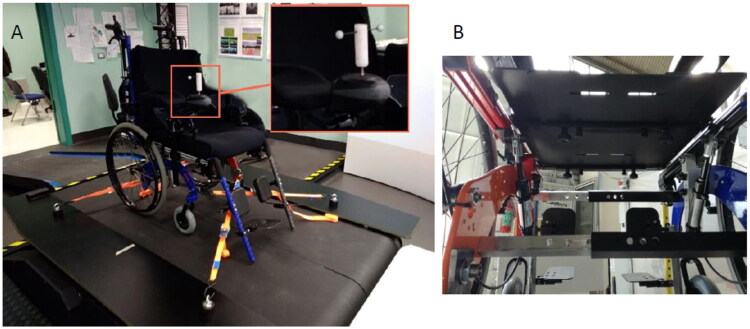
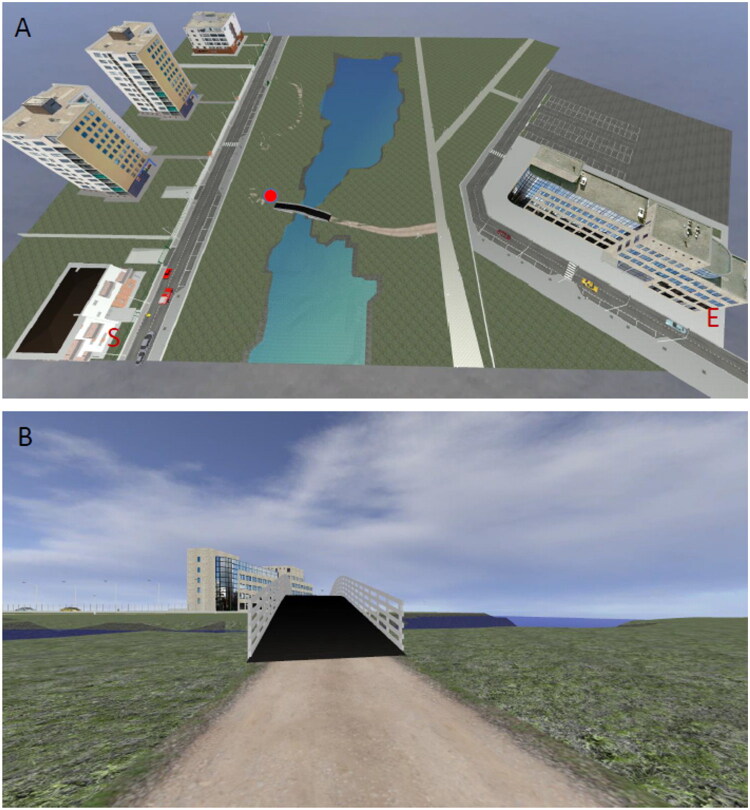
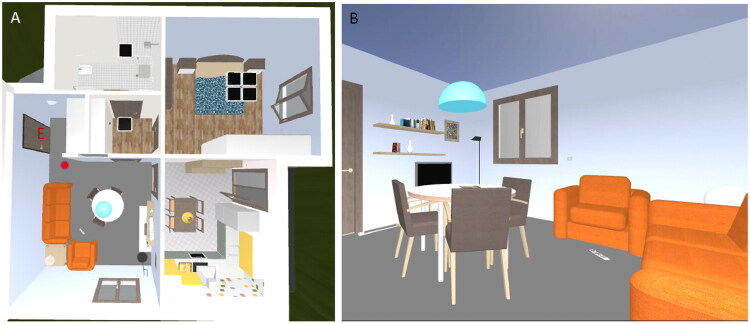
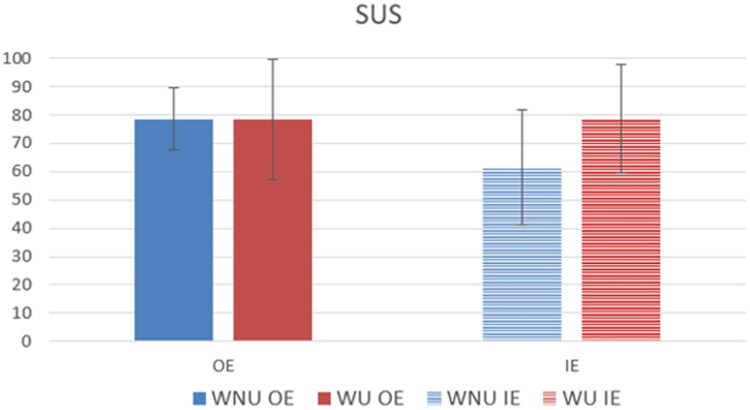
Materials and methods: The simulator was composed of a moving platform, an adaptable wheelchair, and two VR environments (one outdoor - OE, one indoor - IE) projected on a 180° screen. 10 able-bodied volunteers (wheelchair naïve-users, WNUs) and 10 expert wheelchair users (WUs) due to spinal cord injury were recruited. They performed one session during which they tested the indoor (IE) and the outdoor (OE) VR environment. Measures to assess user experience, such as the System Usability Scale, the Technological Acceptance Measure, and the Suitability Evaluation Questionnaire were administered.
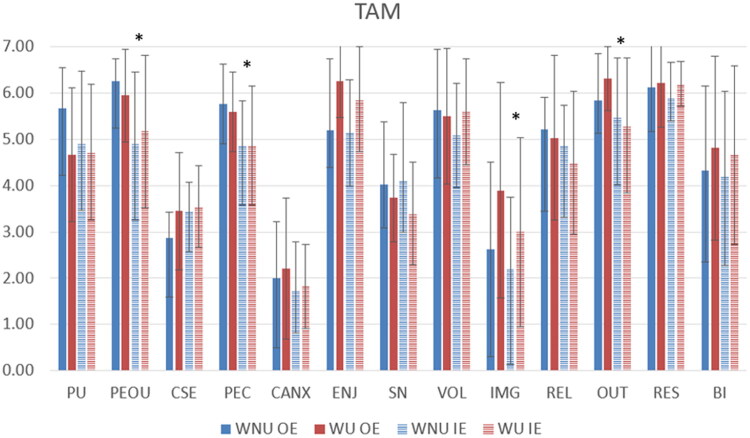
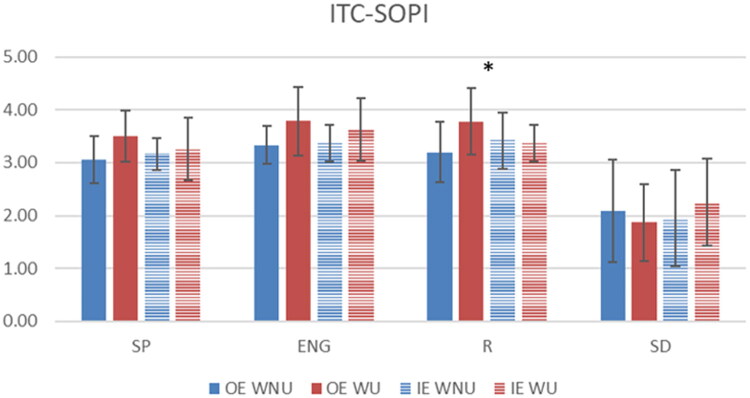
Results: The usability of WUs was high in both environments, while WNUs had some difficulties in IE navigation. Acceptance (TAM mean score) was significantly higher for the OE (p-value = 0.017) in both groups (WNU-OE: 5.11 ± 0.44; WU-OE: 5.18 ± 0.67; WNU-IE: 4.75 ± 0.47; WU-IE: 4.85 ± 0.62). Suitability was higher for OE and generally higher for WUs.
Conclusion: Our study focused on user experience during VR-powered wheelchair navigation in both WUs and naïve ones. The system proved to be engaging and caused low cybersickness effects. Future works will focus on longer training and will assess performance improvements longitudinally.
Keywords: User experience; training; virtual reality; wheelchair simulator.
Conflict of interest statement
No potential conflict of interest was reported by the author(s).
Figures


Similar articles
-
Measuring Stress and Perceptions for a Virtual Reality-Based Pericardiocentesis Procedure Simulation for Medical Training: Usability Study.JMIR Serious Games. 2025 May 7;13:e68515. doi: 10.2196/68515. JMIR Serious Games. 2025. PMID: 40338071 Free PMC article.
-
Exploring the Barriers to and Facilitators of Using Virtual Reality Relaxation for Patients With Psychiatric Problems: Qualitative Focus Group Study.J Med Internet Res. 2025 Jun 11;27:e65308. doi: 10.2196/65308. J Med Internet Res. 2025. PMID: 40497635 Free PMC article.
-
Protocol for evaluation of a virtual wheelchair simulator in assessing mobility skills and cognitive abilities in diverse populations: A multicentric mixed-methods pilot study.PLoS One. 2025 Jun 6;20(6):e0325186. doi: 10.1371/journal.pone.0325186. eCollection 2025. PLoS One. 2025. PMID: 40478823 Free PMC article.
-
Home treatment for mental health problems: a systematic review.Health Technol Assess. 2001;5(15):1-139. doi: 10.3310/hta5150. Health Technol Assess. 2001. PMID: 11532236
-
Virtual reality-based simulators for spine surgery: a systematic review.Spine J. 2017 Sep;17(9):1352-1363. doi: 10.1016/j.spinee.2017.05.016. Epub 2017 May 29. Spine J. 2017. PMID: 28571789
References
-
- Archambault PS, Tremblay S, Cachecho S, et al. Driving performance in a power wheelchair simulator. Disability and Rehabilitation: assistive Technology. 2012;7(3):226–233. - PubMed
-
- Singh H, Scovil CY, Yoshida K, et al. Factors that influence the risk of falling after spinal cord injury: a qualitative photo-elicitation study with individuals that use a wheelchair as their primary means of mobility. BMJ Open. 2020;10(2):e034279. doi: 10.1136/bmjopen-2019-034279. - DOI - PMC - PubMed
-
- Quilico EL, Harvey WJ, Caron JG, et al. Interpretative phenomenological analysis of community exercise experiences after severe traumatic brain injury. Qual Res Sport, Exer Health. 2021;13(5):800–815. doi: 10.1080/2159676X.2020.1778064. - DOI
MeSH terms
LinkOut - more resources
Full Text Sources
