Assessing the spatio-temporal risk of Aedes-borne arboviral diseases in non-endemic regions: The case of Northern Spain
- PMID: 40720537
- PMCID: PMC12313078
- DOI: 10.1371/journal.pntd.0013325
Assessing the spatio-temporal risk of Aedes-borne arboviral diseases in non-endemic regions: The case of Northern Spain
Abstract
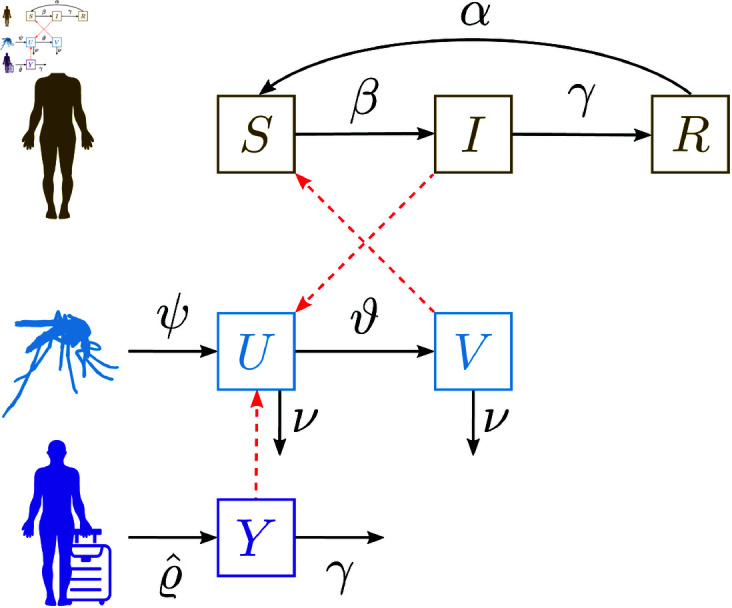
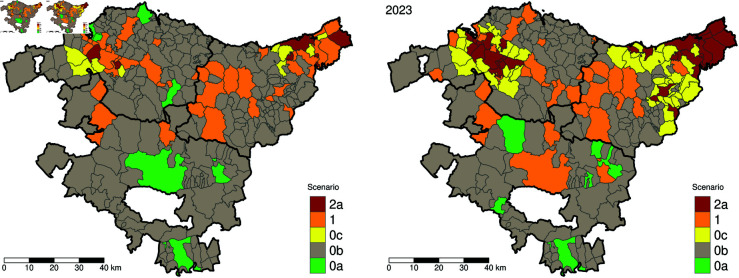
Arboviral diseases represent a growing global health challenge. While dengue cases surge in endemic regions, non-endemic areas in southern Europe are seeing a rise in imported cases of dengue, Zika, and chikungunya, along with the first autochthonous dengue transmissions. The expanding Aedes mosquito populations, influenced by climate change, and increased international travel introducing viremic cases further elevate the risk of outbreaks. These trends emphasize the urgent need for effective risk assessment and timely intervention strategies. We present a data-driven methodology to assess the spatio-temporal risk of Aedes-borne arboviral diseases in non-endemic settings, addressing key limitations of models developed primarily for endemic regions and challenges related to limited data availability. Our approach builds on the SIRUVY human-vector compartmental model and incorporates stochastic formulations to capture variability in imported cases and mosquito density - two critical drivers of autochthonous transmission and outbreak emergence. This framework improves risk estimation and offers insights into transmission dynamics in regions where outbreaks are rare and unpredictable, shaped by sporadic case importations and a non-persistent vector presence. Using data from the Basque Country (2019-2023), including Aedes mosquito egg counts as a proxy for vector abundance and records of imported cases, we mapped the monthly risk of local transmission at the municipal level and conducted a scenario-based risk assessment aligned with Spain's entomological classification. Our findings indicate a growing presence of Aedes mosquitoes and an increasing transmission risk in urban and peri-urban areas of the Basque Country, revealing shifting hotspots of possible arboviral disease transmission. These results highlight the importance of sustained surveillance to identify high-risk locations and prioritize targeted public health interventions to prevent potential outbreaks.
Copyright: © 2025 Guerrero et al. This is an open access article distributed under the terms of the Creative Commons Attribution License, which permits unrestricted use, distribution, and reproduction in any medium, provided the original author and source are credited.
Conflict of interest statement
The authors have declared that no competing interests exist.
Figures




References
MeSH terms
LinkOut - more resources
Full Text Sources