


Pemafibrate Ameliorates Steatotic Liver Disease Regardless of Endothelial Dysfunction in Mice
- PMID: 40722995
- PMCID: PMC12292507
- DOI: 10.3390/antiox14070891
Pemafibrate Ameliorates Steatotic Liver Disease Regardless of Endothelial Dysfunction in Mice
Abstract
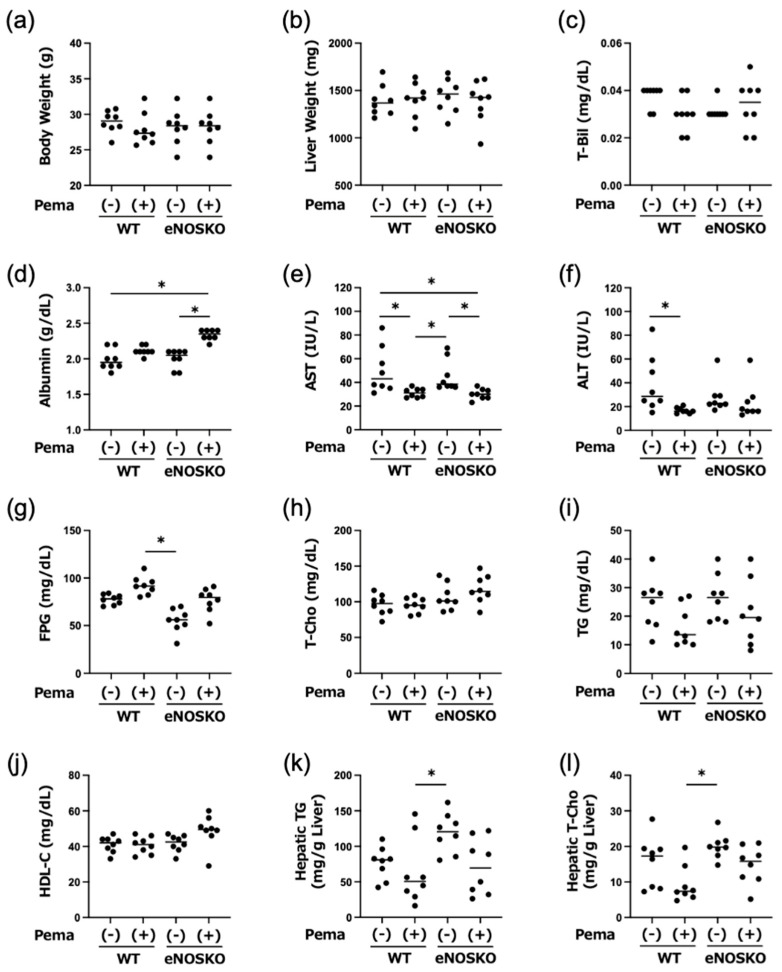
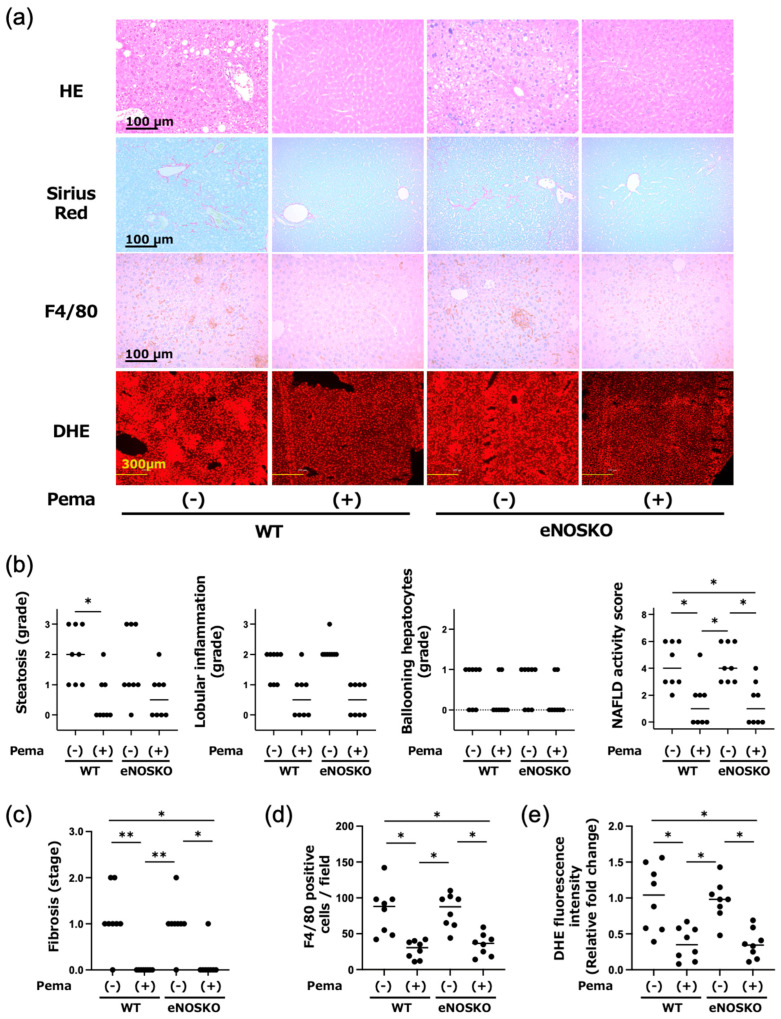
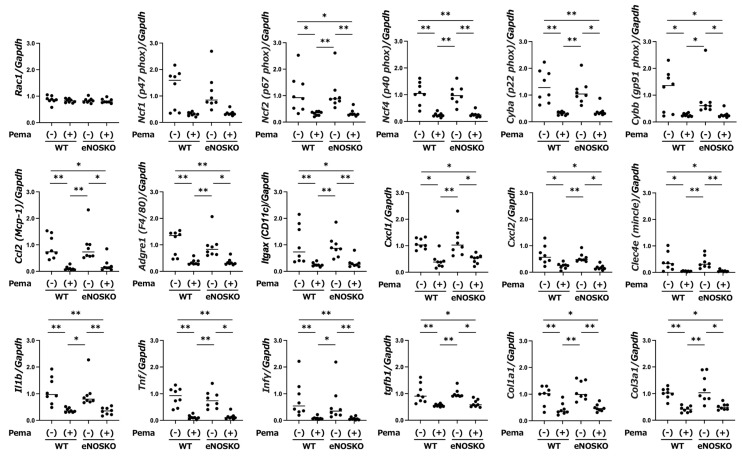
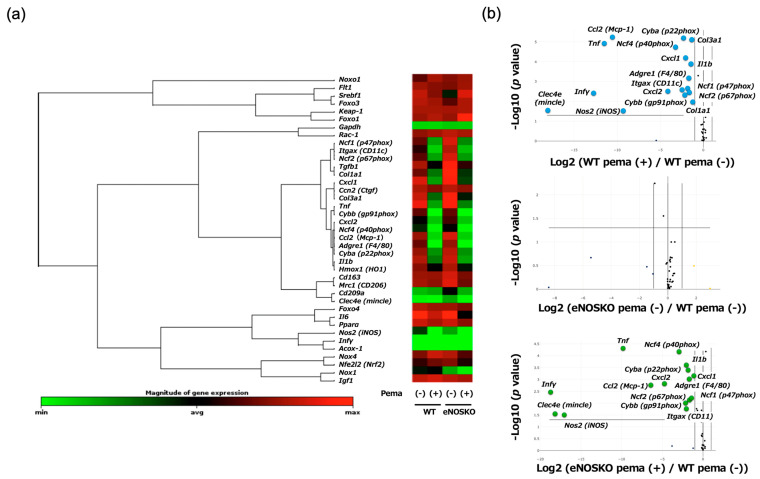
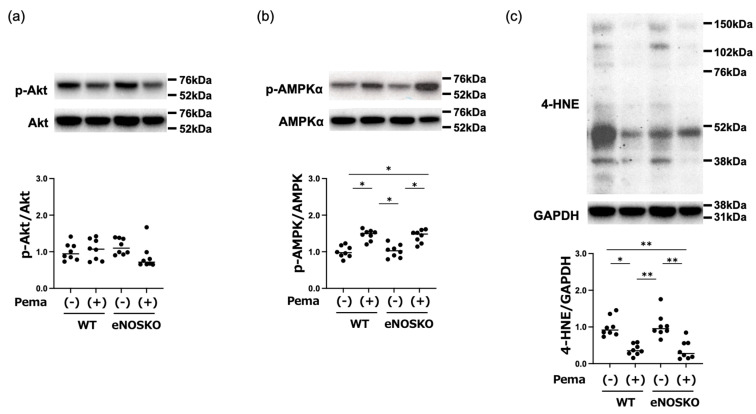
Endothelial dysfunction contributes to the progression of metabolic-dysfunction-associated steatotic liver disease (MASLD). Pemafibrate has been shown to ameliorate MASLD in basic and clinical studies, but it is unclear whether it is also effective in the status of endothelial dysfunction. An MASLD animal model was induced in male wild-type (WT) and endothelial nitric oxide synthase (eNOS)-deficient (eNOSKO) mice by feeding them a high-fat/cholesterol/cholate diet, and they were administered either a vehicle or pemafibrate at 0.17 mg/kg/day for 10 weeks. Although pemafibrate treatment did not change plasma lipid profiles in either WT or eNOSKO mice, pemafibrate reduced plasma AST levels in both WT and eNOSKO mice compared to the levels in the vehicle-treated mice. Histopathological analysis of the liver showed that MASLD was improved in the pemafibrate-treated groups in both WT and eNOSKO mice. Compared to vehicle treatment, pemafibrate treatment significantly reduced the expression levels of hepatic NADPH oxidase subunit genes, M1 macrophages, inflammatory-cytokine-related genes and profibrotic genes in both WT and eNOSKO mice, along with reduction in hepatic oxidative stress assessed by dihydroethidium staining and 4-hydroxynonenal protein levels. Thus, pemafibrate ameliorated MASLD with reduction in oxidative stress and inflammation even in vascular endothelial dysfunction.
Keywords: MASLD; NADPH oxidase; eNOS; endothelial dysfunction; oxidative stress; pemafibrate.
Conflict of interest statement
The authors declare no conflicts of interest.
Figures
References
-
- Angulo P., Kleiner D.E., Dam-Larsen S., Adams L.A., Bjornsson E.S., Charatcharoenwitthaya P., Mills P.R., Keach J.C., Lafferty H.D., Stahler A., et al. Liver Fibrosis, but No Other Histologic Features, Is Associated with Long-term Outcomes of Patients With Nonalcoholic Fatty Liver Disease. Gastroenterology. 2015;149:389–397.e10. doi: 10.1053/j.gastro.2015.04.043. - DOI - PMC - PubMed
Grants and funding
LinkOut - more resources
Full Text Sources
