


Integrated Multi-Omics of the Longissimus Dorsal Muscle Transcriptomics and Metabolomics Reveals Intramuscular Fat Accumulation Mechanism with Diet Energy Differences in Yaks
- PMID: 40723897
- PMCID: PMC12292755
- DOI: 10.3390/biom15071025
Integrated Multi-Omics of the Longissimus Dorsal Muscle Transcriptomics and Metabolomics Reveals Intramuscular Fat Accumulation Mechanism with Diet Energy Differences in Yaks
Abstract
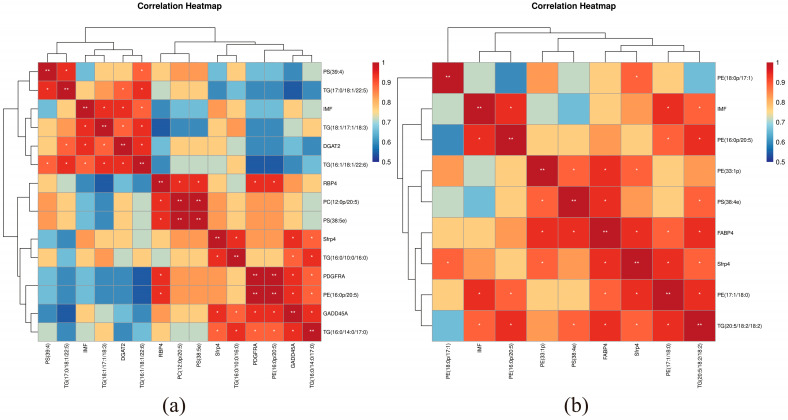
IMF (intramuscular fat, IMF), as a key index for evaluating meat quality traits (shear force and cooking loss, etc.), and its deposition process are jointly regulated by nutritional and genetic factors. In this study, we analyzed the molecular regulation mechanism of IMF deposition in the LD (longissimus dorsal muscle, LD) by dietary energy level in Pamir yaks. Meat quality assessment showed that the meat quality of the High-energy diet group (1.53 MJ/Kg, G) and the Medium-energy diet group (1.38 MJ/Kg, Z) were significantly improved compared with that of the Low-energy diet group (0.75 MJ/Kg, C), in which IMF content in the LD of yaks in G group was significantly higher (p < 0.05) compared with Z and C groups. Further analysis by combined transcriptomics and lipid metabolomics revealed that the differences in IMF deposition mainly originated from the metabolism of lipids, such as TG (triglycerides, TG), PS (phosphatidylserine, PS), and LPC (lysophosphatidylcholine, LPC), and were influenced by SFRP4, FABP4, GADD45A, PDGFRA, RBP4, and DGAT2 genes, further confirming the importance of lipid-gene interactions in IMF deposition. This study reveals the energy-dependent epigenetic regulatory mechanism of IMF deposition in plateau ruminants, which provides molecular targets for optimizing yak nutritional strategies and quality meat production, while having important theoretical and practical value for the sustainable development of livestock husbandry on the Tibetan Plateau.
Keywords: intramuscular fat deposition; lipid metabolomics; longissimus dorsal muscle; transcriptomics; yak.
Conflict of interest statement
The authors declare no conflicts of interest.
Figures
References
-
- Li Y., Zong W., Zhao S., Qie M., Yang X., Zhao Y. Nutrition and edible characteristics, origin traceability and authenticity identification of yak meat and milk: A review. Trends Food Sci. Technol. 2023;139:104133. doi: 10.1016/j.tifs.2023.104133. - DOI
-
- Bao P.J., Ding Z.Q., Ma X.M., La Y.F., Guo T., Zheng X.B., Ma J.E.D., Dao M., Zhou C., Zuo E.W., et al. Study on Slaughter Performance and Meat Quality of Pamir Yak. China Herbiv. Sci. 2024;44:83–87.
-
- Zhong J.C., Wang H., Chai Z.X., Ma Z.J. Exploitation and innovative utilization of yak germplasm resources. Chin. Livest. Poult. Breed. 2022;18:22–29.
MeSH terms
LinkOut - more resources
Full Text Sources
Research Materials
Miscellaneous
