


Screening of High-Yield 2-Phenylethanol Producing Strain from Wild-Type Saccharomyces cerevisiae and Optimization of Fermentation Parameters
- PMID: 40724265
- PMCID: PMC12294199
- DOI: 10.3390/foods14142444
Screening of High-Yield 2-Phenylethanol Producing Strain from Wild-Type Saccharomyces cerevisiae and Optimization of Fermentation Parameters
Abstract
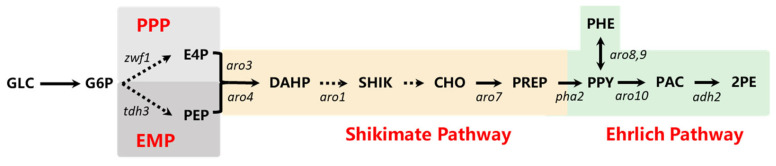
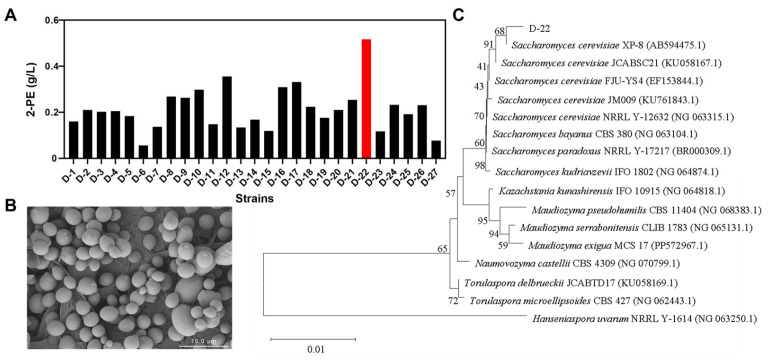
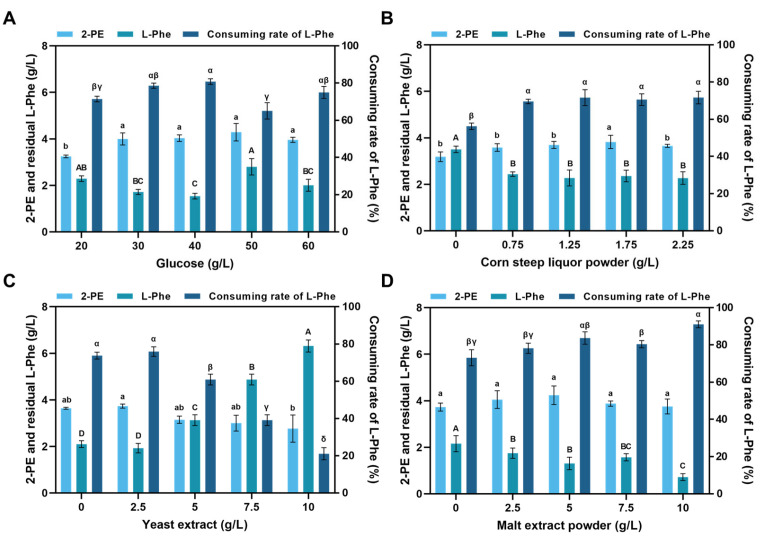
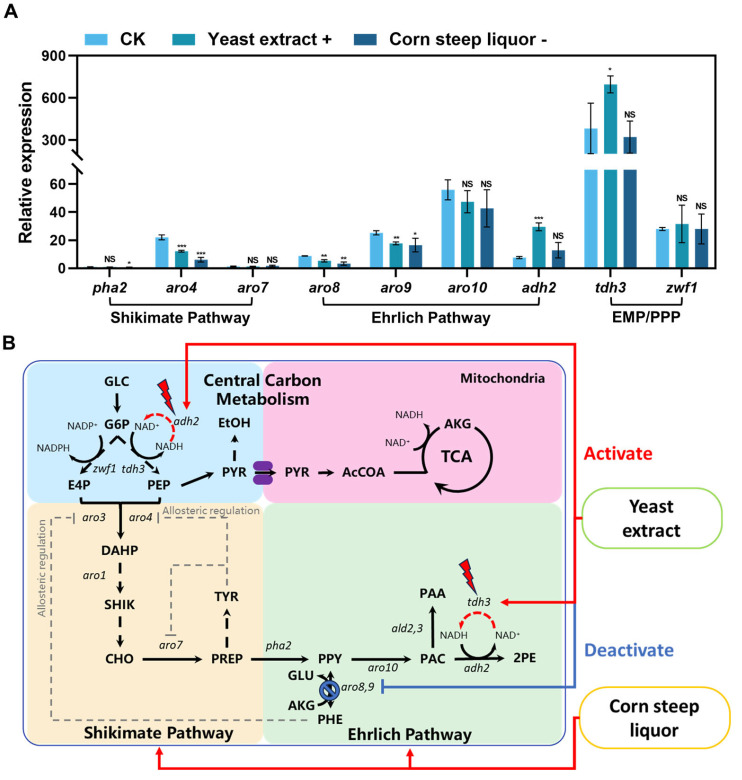
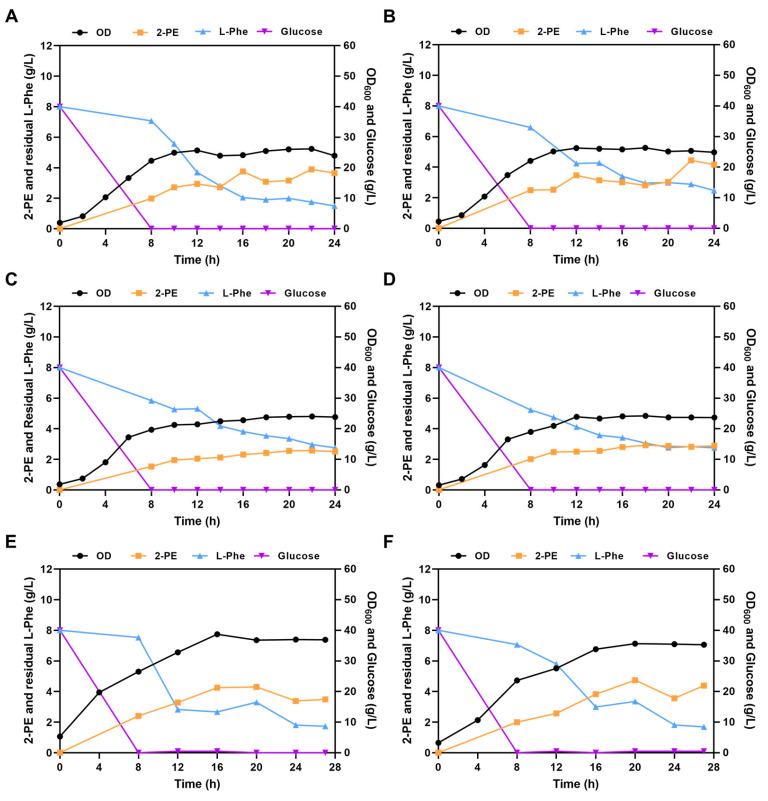
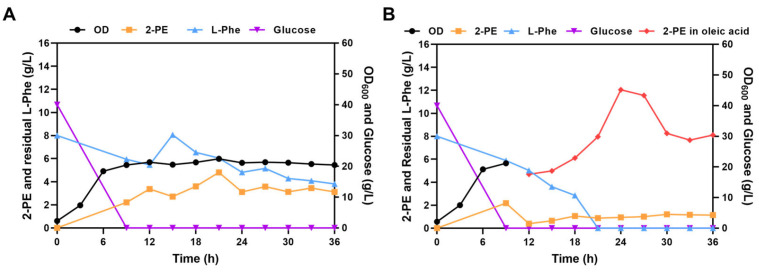
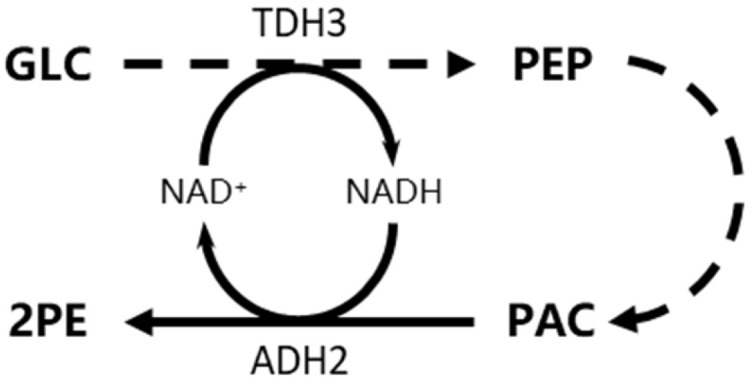
2-Phenylethanol (2-PE), an aromatic alcohol with a rose-like fragrance, is widely used in the food, pharmaceutical, and high-end cosmetic industries. In this study, a high-yield 2-PE-producing strain was isolated and identified as Saccharomyces cerevisiae based on morphological characterization and taxonomic identification. Fermentation medium components (carbon and nitrogen sources) were optimized through single-factor experiments in shaking flasks, and fermentation medium with 40 g/L glucose, 5 g/L malt extract, 1.75 g/L corn steep liquor, 2.5 g/L yeast extract, 5 g/L malt extract, 1.75 g/L corn steep liquor was considered suitable for 2-PE production. RT-qPCR results indicated that corn steep liquor activates expression of genes related to the shikimate pathway and Ehrlich pathway (pha2, aro4, aro8, and aro9), thereby promoting the synthesis of 2-PE through these pathways. Excess yeast extract inhibited the expression of aro8 and aro9, while enhancing the expression of tdh3 and adh2, thus promoting the de novo synthesis of 2-PE. Furthermore, fermentation in a 5 L bioreactor was applied to investigate the effects of feeding strategies, inoculum proportion, and pH on 2-PE production. With a pH of 5.5 and10% inoculum proportion, the supplementation of the substrate L-Phe led to a 2-PE production of 4.81 g/L after 24 h of fermentation. Finally, in situ product recovery (ISPR) techniques was applied to alleviate 2-PE cytotoxicity, achieving a production of 6.41 g/L. This process offers a promising strategy for producing 2-PE efficiently and naturally, paving the way for further industrial applications in food, pharmaceutical, and cosmetic sectors.
Keywords: 2-phenylethanol; Saccharomyces cerevisiae; fermentation condition optimization; strain screening.
Conflict of interest statement
The authors declare no conflicts of interest.
Figures
References
-
- Liu P., Wang Y., Ye D., Duan L., Duan C., Yan G. Effect of the Addition of Branched-Chain Amino Acids to Non-Limited Nitrogen Synthetic Grape Must on Volatile Compounds and Global Gene Expression during Alcoholic Fermentation. Aust. J. Grape Wine Res. 2018;24:197–205. doi: 10.1111/ajgw.12313. - DOI
-
- Chantasuban T., Santomauro F., Gore-Lloyd D., Parsons S., Henk D., Scott R.J., Chuck C. Elevated Production of the Aromatic Fragrance Molecule, 2-Phenylethanol, Metschnikowia Pulcherrima through Both De Novo and Ex Novo Conversion in Batch and Continuous Modes. J. Chem. Technol. Biotechnol. 2018;93:2118–2130. doi: 10.1002/jctb.5597. - DOI - PMC - PubMed
Grants and funding
LinkOut - more resources
Full Text Sources
