


Water Stress Is Differently Tolerated by Fusarium-Resistant and -Susceptible Chickpea Genotypes During Germination
- PMID: 40724552
- PMCID: PMC12299476
- DOI: 10.3390/life15071050
Water Stress Is Differently Tolerated by Fusarium-Resistant and -Susceptible Chickpea Genotypes During Germination
Abstract
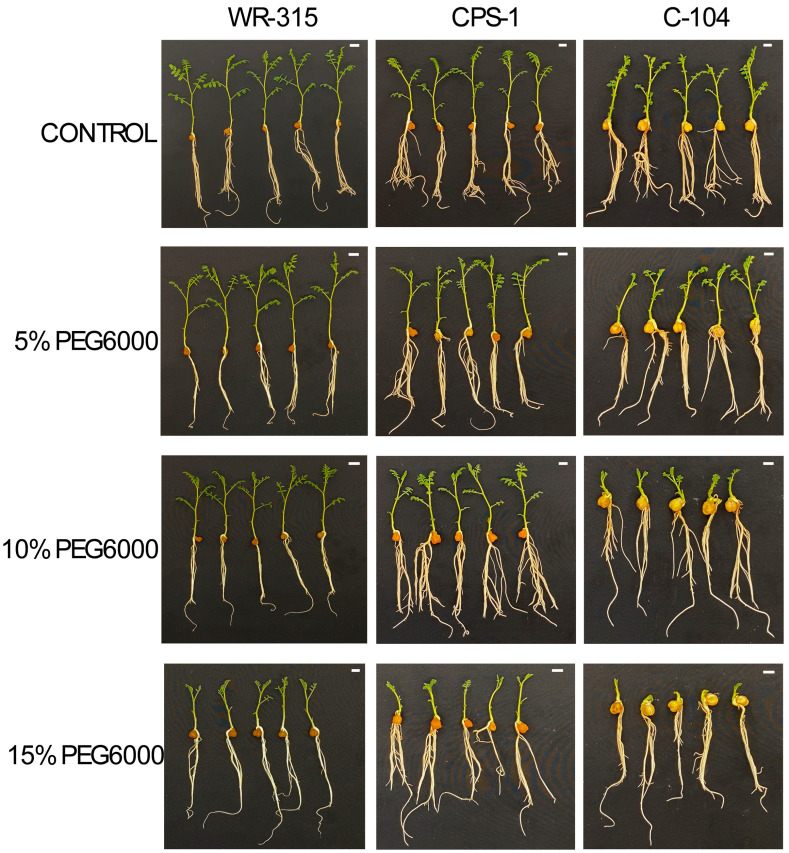
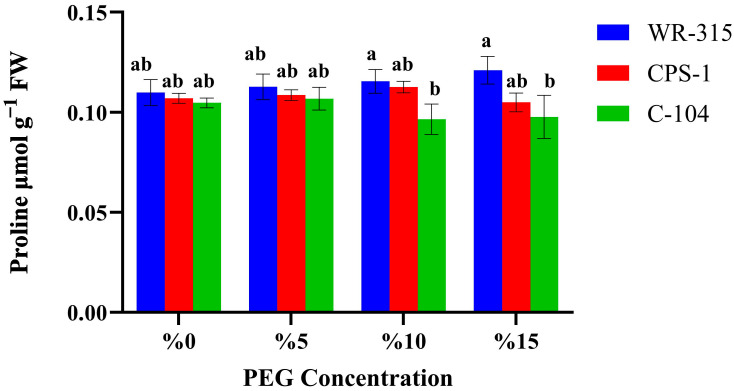
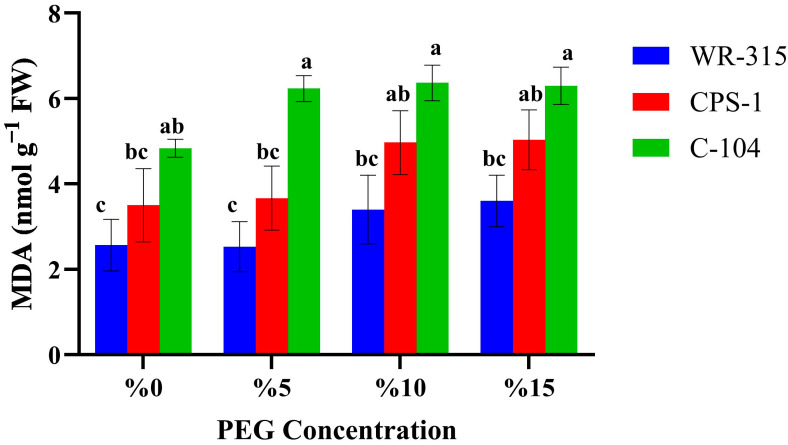
Chickpea is a legume that grows in most parts of the world. It is negatively affected by abiotic and biotic factors like drought and fungal diseases, respectively. One of the most important soil-borne pathogens affecting chickpeas is Fusarium oxysporum f.sp. ciceris (Foc). Its population dynamics in the soil are affected by fluctuations in soil water content and host characteristics. For the last three decades, drought has been common in most areas of the world due to global warming. Drought stress decreases the quality and quantity of the chickpeas, particularly where soil-borne pathogens are the main stress factor for plants. The use of both drought-tolerant and disease-resistant cultivars may be the only option for cost-effective yield production. In this study, we screened the seeds of twelve chickpea genotypes WR-315, JG-62, C-104, JG-74, CPS-1, BG-212, ANNIGERI, CHAFFA, BG-215, UC-27, ILC-82, and K-850 for drought tolerance at increasing polyethylene glycol (PEG) concentrations (0-, 5-, 7.5-, 10-, 15-, 20-, 25-, 30- and 50%) to create drought stress conditions at different severities. The performances of genotypes that were previously tested in Foc resistance/susceptibility studies were assessed in terms of percentage of germination, radicle and hypocotyl length, germination energy, germination rate index, mean germination time, and vigor index in drought conditions. We determined the genotypes of C-104, CPS-1, and WR-315 as drought-susceptible, moderately drought-tolerant, and drought-tolerant, respectively. We then elucidated the stress levels of selected genotypes (20-day-old seedlings) at 0-15% PEG conditions via measuring proline and malondialdehyde (MDA) contents. Our findings showed that genotypes that were resistant to Foc also exhibited drought tolerance. The responses of chickpea genotypes infected with Foc under drought conditions are the next step to assess the combined stress on chickpea genotypes.
Keywords: chickpea; combined stress; drought stress; fusarium wilt; germination.
Conflict of interest statement
The authors declare no conflicts of interest.
Figures
References
-
- Gaur P.M., Samineni S., Sajja S., Chibbar R.N. Achievements and Challenges in Improving Nutritional Quality of Chickpea. Legume Perspect. 2015;9:31–33.
-
- Gopalakrishnan S., Srinivas V., Samineni S. Nitrogen Fixation, Plant Growth and Yield Enhancements by Diazotrophic Growth-Promoting Bacteria in Two Cultivars of Chickpea (Cicer arietinum L.) Biocatal. Agric. Biotechnol. 2017;11:116–123. doi: 10.1016/j.bcab.2017.06.012. - DOI
-
- Tiwari S., Sahu V.K., Gupta N., Tripathi M.K., Yasin M. Evaluation of Physiological and Biochemical Contents in Desi and Kabuli Chickpea. Legume Res. Int. J. 2020;I:1–12. doi: 10.18805/LR-4265. - DOI
-
- Arora N.K. Impact of Climate Change on Agriculture Production and Its Sustainable Solutions. Environ. Sustain. 2019;2:95–96. doi: 10.1007/s42398-019-00078-w. - DOI
Grants and funding
LinkOut - more resources
Full Text Sources
