


Cardiovascular Remodeling and Potential Controversies in Master Endurance Athletes-A Narrative Review
- PMID: 40724596
- PMCID: PMC12300461
- DOI: 10.3390/life15071095
Cardiovascular Remodeling and Potential Controversies in Master Endurance Athletes-A Narrative Review
Abstract
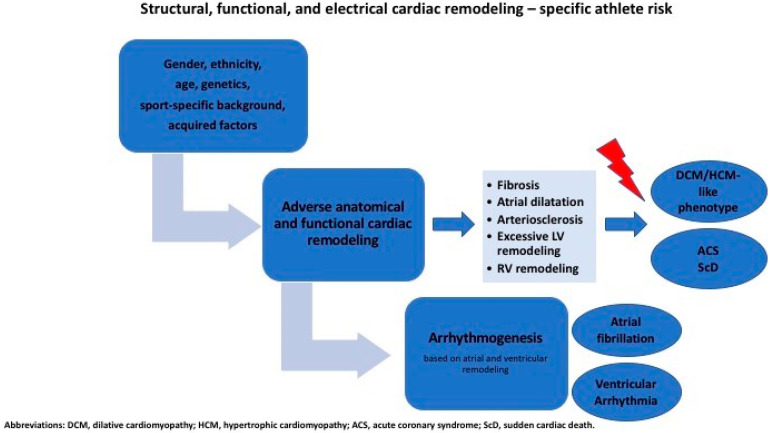
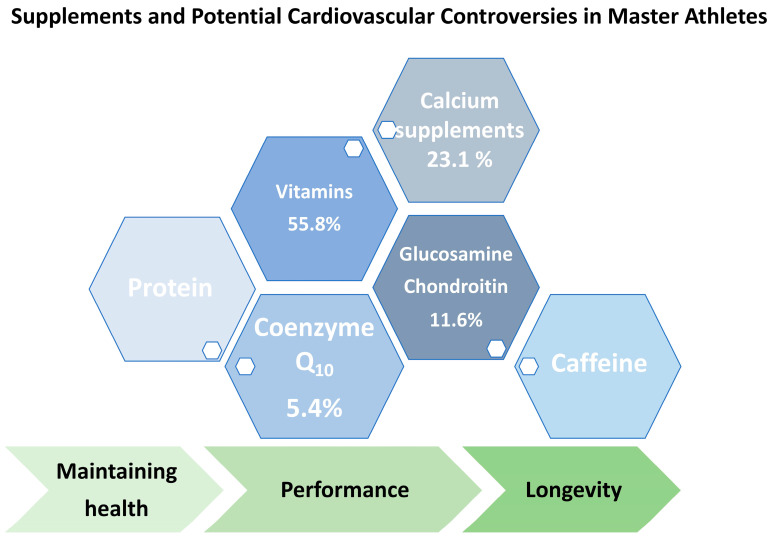
While the interest and participation in general endurance training and recreational sports competitions have continuously increased in recent decades, the number of recreational master-level endurance athletes has additionally multiplied. Athletes, active men and women older than 40 years of age, who participate in competitive athletics are usually referred to by the term master athletes (MAs). Previous research revealed the significant benefits of regular moderate physical activity, i.e., its positive influence on cardiovascular risk factors and cardiovascular health; however, recent data have raised concerns that long-term endurance exercise participation is associated with cardiac remodeling and potential adverse cardiovascular outcomes. Previous research also indicated potential structural, functional, and electrical remodeling in MAs due to prolonged and repeated exposure to high-intensity endurance exercise-a condition known as athlete's heart. In this review, we focus on the association between extreme levels of endurance exercise and potential cardiovascular controversies, such as arrhythmogenesis due to new-onset atrial fibrillation, accelerated coronary artery atherosclerosis, and exercise-induced cardiac remodeling. Additionally, the exercise-dependent modulation of immunological response, such as proteomic response and cytokine alterations, is discussed. Furthermore, we discuss the impact of nutritional supplements in MAs and their potential benefits and harmful interactions. We aim to provide sports medicine practitioners with knowledge of these contemporary longevity controversies in sports cardiology and to highlight the importance of shared decision making in situations of clinical uncertainty.
Keywords: atrial fibrillation; cardiac remodeling; cardiovascular risk; coronary artery atherosclerosis; master athlete; nutritional supplements.
Conflict of interest statement
The authors declare no conflicts of interest.
Figures
References
-
- Merghani A., Maestrini V., Rosmini S., Cox A.T., Dhutia H., Bastiaenan R., David S., Yeo T.J., Narain R., Malhotra A., et al. Prevalence of Subclinical Coronary Artery Disease in Masters Endurance Athletes With a Low Atherosclerotic Risk Profile. Circulation. 2017;136:126–137. doi: 10.1161/CIRCULATIONAHA.116.026964. - DOI - PubMed
-
- Arnett D.K., Blumenthal R.S., Albert M.A., Buroker A.B., Goldberger Z.D., Hahn E.J., Himmelfarb C.D., Khera A., Lloyd-Jones D., McEvoy J.W., et al. 2019 ACC/AHA Guideline on the Primary Prevention of Cardiovascular Disease: A Report of the American College of Cardiology/American Heart Association Task Force on Clinical Practice Guidelines. Circulation. 2019;140:e596–e646. doi: 10.1161/CIR.0000000000000678. - DOI - PMC - PubMed
Publication types
LinkOut - more resources
Full Text Sources
