


What a Modern Physician Should Know About microRNAs in the Diagnosis and Treatment of Diabetic Kidney Disease
- PMID: 40724919
- PMCID: PMC12294747
- DOI: 10.3390/ijms26146662
What a Modern Physician Should Know About microRNAs in the Diagnosis and Treatment of Diabetic Kidney Disease
Abstract
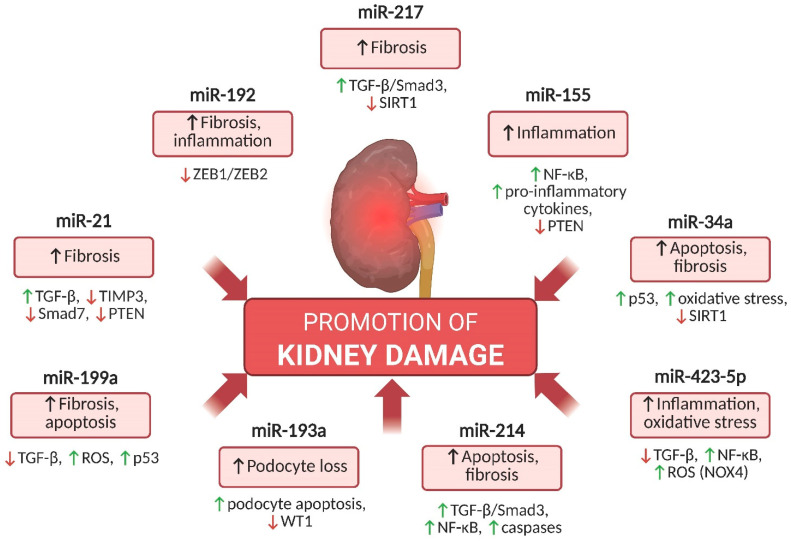
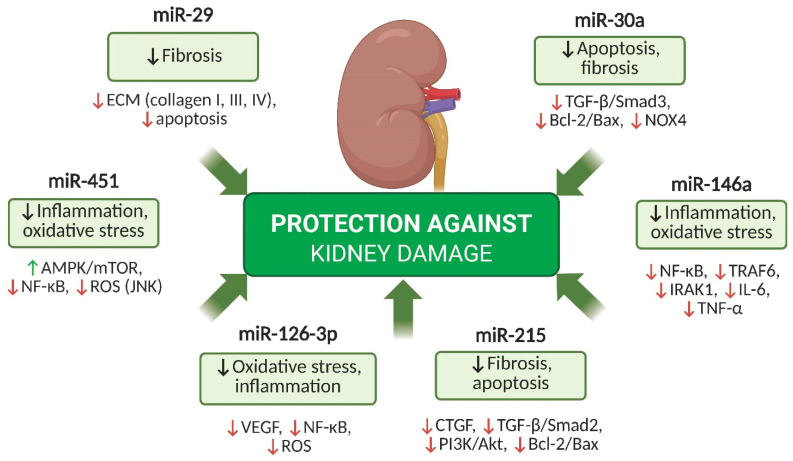
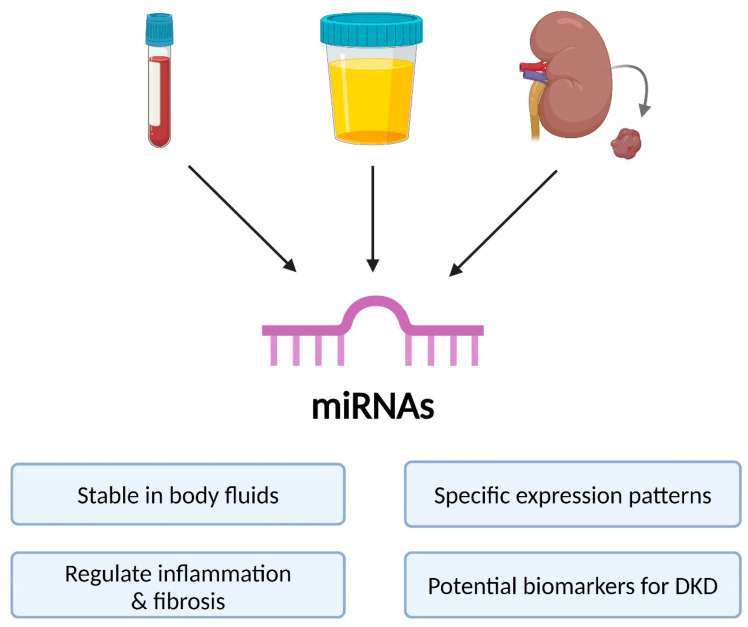
Diabetic kidney disease (DKD) remains the leading cause of end-stage kidney disease (ESKD) globally. Despite advances in our understanding of its pathophysiology, current therapies are often insufficient to stop its progression. In recent years, microRNAs (miRNAs)-small, non-coding RNA molecules involved in post-transcriptional gene regulation-have emerged as critical modulators of key pathogenic mechanisms in DKD, including fibrosis, inflammation, oxidative stress, and apoptosis. Numerous studies have identified specific miRNAs that either exacerbate or mitigate renal injury in DKD. Among them, miR-21, miR-192, miR-155, and miR-34a are associated with disease progression, while miR-126-3p, miR-29, miR-146a, and miR-215 demonstrate protective effects. These molecules are also detectable in plasma, urine, and renal tissue, making them attractive candidates for diagnostic and prognostic biomarkers. Advances in therapeutic technologies such as antagomiRs, mimics, locked nucleic acids, and nanoparticle-based delivery systems have opened new possibilities for targeting miRNAs in DKD. Additionally, conventional drugs, including SGLT2 inhibitors, metformin, and GLP-1 receptor agonists, as well as dietary compounds like polyphenols and sulforaphane, may exert nephroprotective effects by modulating miRNA expression. Recent evidence also highlights the role of gut microbiota in regulating miRNA activity, linking metabolic and immune pathways relevant to DKD progression. Further research is needed to define stage-specific miRNA signatures, improve delivery systems, and develop personalized therapeutic approaches. Modulation of miRNA expression represents a promising strategy to slow DKD progression and improve patient outcomes.
Keywords: biomarkers; diabetic kidney disease; gene regulation; microRNA; therapy.
Conflict of interest statement
The authors declare no conflict of interest.
Figures
Similar articles
-
The Role of miR-802 in Diabetic Kidney Disease: Diagnostic and Therapeutic Insights.Int J Mol Sci. 2025 Jun 7;26(12):5474. doi: 10.3390/ijms26125474. Int J Mol Sci. 2025. PMID: 40564936 Free PMC article. Review.
-
miR-214 and Its Primary Transcript Dnm3os Regulate Fibrosis and Inflammation Through RAGE Signaling in Diabetic Kidney Disease.Diabetes. 2025 Jul 1;74(7):1205-1219. doi: 10.2337/db24-0121. Diabetes. 2025. PMID: 40183805
-
Management of urinary stones by experts in stone disease (ESD 2025).Arch Ital Urol Androl. 2025 Jun 30;97(2):14085. doi: 10.4081/aiua.2025.14085. Epub 2025 Jun 30. Arch Ital Urol Androl. 2025. PMID: 40583613 Review.
-
Signatures of miRNA 5-methylcytosine modification profile and potential immune-related target gene regulation in diabetic kidney disease.Gene. 2025 Sep 10;964:149648. doi: 10.1016/j.gene.2025.149648. Epub 2025 Jun 25. Gene. 2025. PMID: 40578771
-
A comprehensive investigation of identifying miRNA biomarkers and their potential role in age-related cataract by meta-analysis and bioinformatics analysis.Graefes Arch Clin Exp Ophthalmol. 2025 May;263(5):1307-1325. doi: 10.1007/s00417-024-06723-3. Epub 2025 Jan 6. Graefes Arch Clin Exp Ophthalmol. 2025. PMID: 39760860
References
-
- Sun H., Saeedi P., Karuranga S., Pinkepank M., Ogurtsova K., Duncan B.B., Stein C., Basit A., Chan J.C.N., Mbanya J.C., et al. IDF Diabetes Atlas: Global, regional and country-level diabetes prevalence estimates for 2021 and projections for 2045. Diabetes Res. Clin. Pract. 2022;183:109119. doi: 10.1016/j.diabres.2021.109119. - DOI - PMC - PubMed
Publication types
MeSH terms
Substances
LinkOut - more resources
Full Text Sources
Medical
