


Is Minimal Change Disease Associated with Prostate Cancer or Is Age Just a Number?
- PMID: 40729293
- PMCID: PMC12225443
- DOI: 10.3390/reports7030070
Is Minimal Change Disease Associated with Prostate Cancer or Is Age Just a Number?
Abstract
Background: Prostate cancer is the most common malignancy in men. Secondary nephrotic syndrome, a feature of paraneoplastic syndrome, occurs in 11% of cases and is mainly caused by membranous glomerulopathy. The association between minimal change disease and prostate cancer is rare. Only one cause has been described in the available literature.
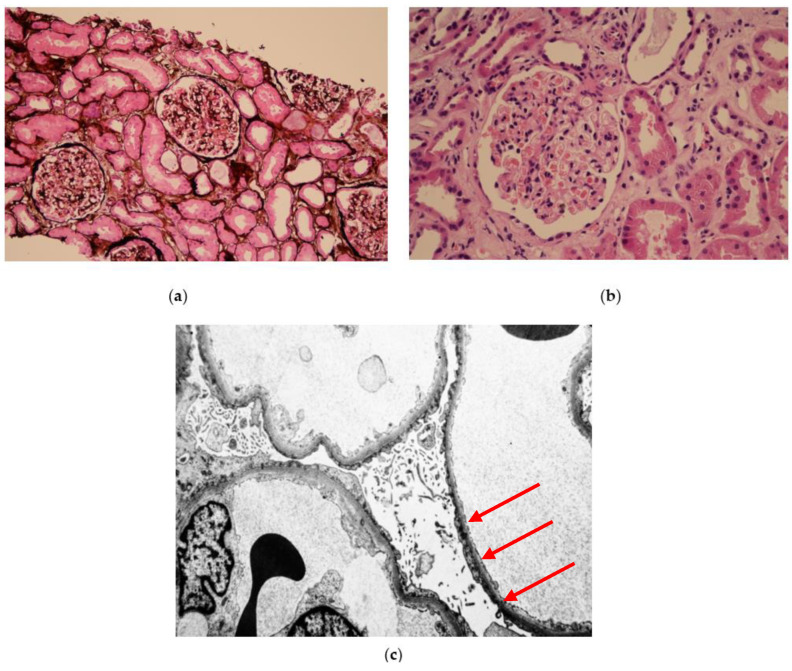
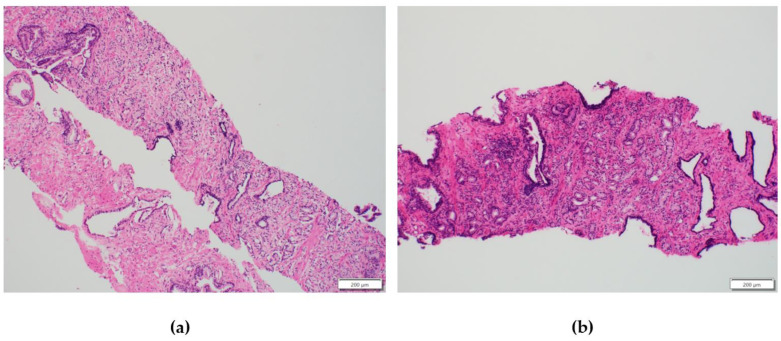
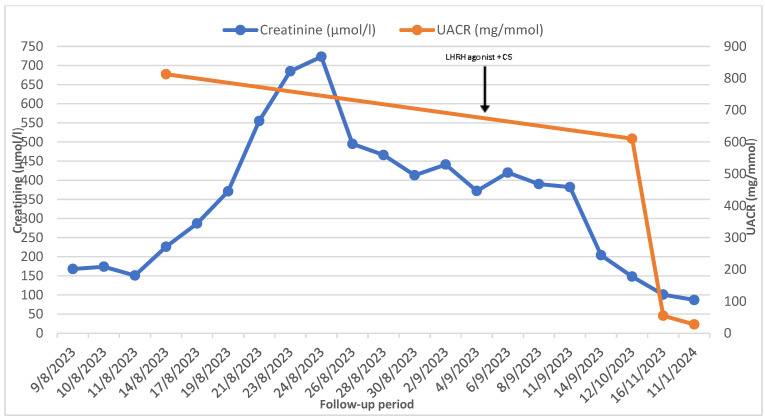
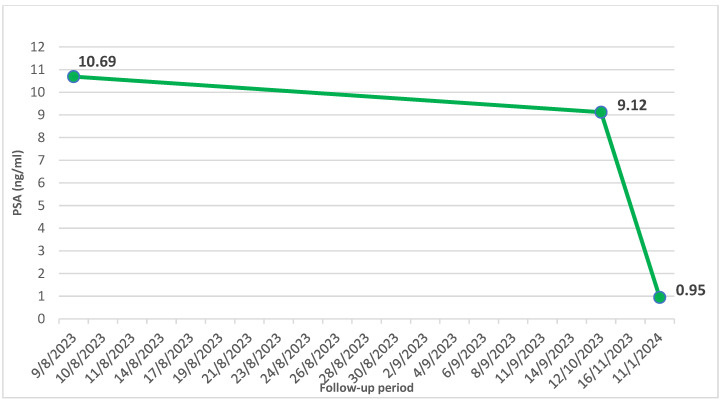
Case presentation: We present the case of a 77-year-old patient who was admitted to our department with stage 3 acute kidney injury and with nephrotic syndrome with anasarca (creatinine: 168 µmol/L, eGFR: 33 mL/min/1.73 m2, albumin: 18.5 g/L, total cholesterol: 6.86 mmol/L, urine albumin creatinine ratio: 812.7 mg/mmol). In the differential diagnosis of nephrotic syndrome, looking for a secondary cause is essential, so the parainfectious causes of nephrotic syndrome were excluded. An elevated prostate-specific antigen (10.69 ng/L) was found when screening for oncological causes, and prostate adenocarcinoma was identified on biopsy. A renal biopsy was then performed with a finding of minimal change disease. Despite the generally accepted guidelines of prostate carcinoma in that stage and age of the patient being watchful waiting, antiandrogen therapy was started with the cooperation of a urologist. There was a significant improvement in renal parameters in the patient (creatinine: 87 µmol/L, eGFR: 73 mL/min/1.73 m2, albumin: 33.4 g/L, urine albumin creatinine ratio: 27.6 mg/mmol).
Conclusion: This case shows the importance of multidisciplinary cooperation in the treatment of secondary causes of nephrotic syndrome. In the case of proven paraneoplastic syndrome, it is necessary to start treating the malignancy; however, in general, a conservative approach without treatment is recommended.
Keywords: minimal change disease; nephrotic syndrome; prostate cancer.
Conflict of interest statement
The authors declare no conflicts of interest. We declare that two authors, Talarčík P. and Nyitrayová O., do not have any conflicts of interest with Cytopathos, spol. s r.o., ensuring the integrity of this work.
Figures
References
-
- American Society of Clinical Oncology (ASCO) [(accessed on 1 January 2024)]. Available online: https://www.cancer.net/cancer-types/prostate-cancer/statistics.
-
- Zamora G., Pearson-Shaver A.L. StatPearls [Internet] StatPearls Publishing; Treasure Island, FL, USA: 2023. [(accessed on 11 March 2024)]. Minimal Change Disease. Available online: https://www.ncbi.nlm.nih.gov/books/NBK560639/ - PubMed
-
- American Joint Committee on Cancer (AJCC) [(accessed on 15 March 2024)]. Available online: https://www.cancer.org/cancer/types/prostate-cancer/detection-diagnosis-....
-
- Tapia C., Bashir K. StatPearls [Internet] StatPearls Publishing; Treasure Island, FL, USA: 2023. [(accessed on 13 March 2024)]. Nephrotic Syndrome. Available online: https://www.ncbi.nlm.nih.gov/books/NBK470444/
-
- Cheung A.K., Chang T.I., Cushman W.C., Furth S.L., Hou F.F., Ix J.H., Knoll G.A., Muntner P., Pecoits-Filho R., Sarnak M.J., et al. KDIGO 2021 Clinical Practice Guideline for the Evaluation and Management of Chronic Kidney Disease. Chapter 5: Minimal change disease (MCD) in adults. Kidney Int. 2021;100:S1–S276. doi: 10.1016/j.kint.2020.11.003. - DOI
Publication types
LinkOut - more resources
Full Text Sources
Research Materials
Miscellaneous