


The association between remnant cholesterol and the risk of osteoporotic vertebral fracture in older adults
- PMID: 40729345
- PMCID: PMC12306751
- DOI: 10.1371/journal.pone.0327171
The association between remnant cholesterol and the risk of osteoporotic vertebral fracture in older adults
Abstract
Background: Serum lipid levels have been shown to influence bone mineral density. Additionally, a limited number of studies have suggested that remnant cholesterol (RC) may be linked to the risk of osteoporosis. However, the relationship between RC and fracture risk remains unclear. This study aimed to explore the association between RC levels and the risk of vertebral fractures in a longitudinal cohort.
Methods: A total of 1995 participants aged 50 years or older who underwent chest computed tomography (CT) scans for lung cancer screening between July 2016 and December 2019 were included in this study. Follow-up continued until June 2023. The concentration of RC was calculated via the following formula: total cholesterol minus the sum of high-density lipoprotein cholesterol and low-density lipoprotein cholesterol. The RC-to-cholesterol ratio was also determined. The participants were divided into low and high groups for RC, and the RC-to-cholesterol ratio was based on the median values. Vertebral fractures were assessed via the Genant semiquantitative classification system on CT-reconstructed sagittal images.
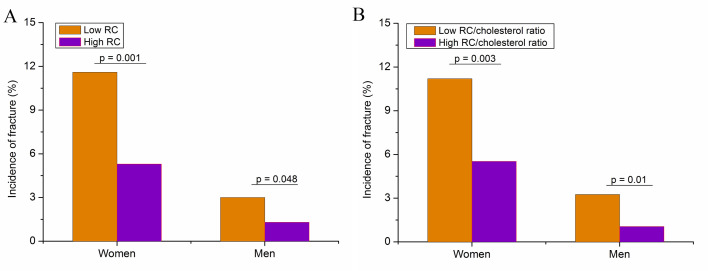
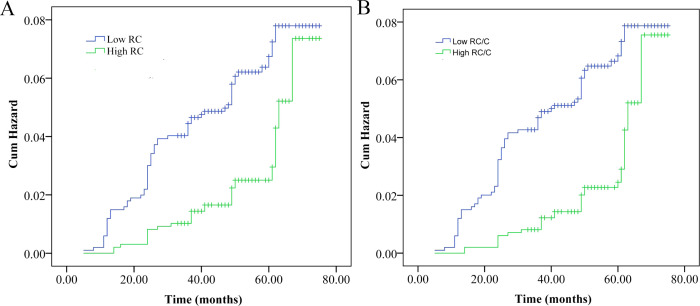
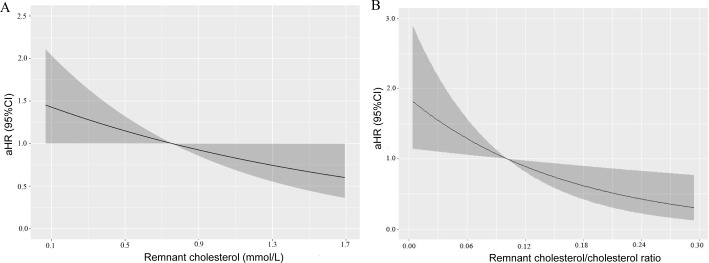
Results: During a median follow-up period of 60 months, 95 new vertebral fractures were recorded. The incidence of fractures was significantly greater among participants with low RC levels than among those with high RC levels (6.4% vs. 3.1%, P < 0.01). A multivariate Cox proportional hazards model indicated that individuals with high RC levels had a 41% lower risk of vertebral fractures than those with low RC levels did (adjusted hazard ratio [aHR]: 0.48, 95% confidence interval [CI]: 0.24--0.93). Similar findings were observed for the RC-to-cholesterol ratio (aHR: 0.40, 95% CI: 0.21-0.79). Restricted cubic spline analysis further demonstrated that the risk of vertebral fractures decreased as the RC level and the RC-to-cholesterol ratio increased. Subgroup analysis revealed that the association between RC and fracture risk was mainly observed in women.
Conclusion: Higher levels of remnant cholesterol and a higher RC-to-cholesterol ratio were associated with a reduced risk of vertebral fractures, particularly in women.
Copyright: © 2025 Liu et al. This is an open access article distributed under the terms of the Creative Commons Attribution License, which permits unrestricted use, distribution, and reproduction in any medium, provided the original author and source are credited.
Conflict of interest statement
The authors have declared that no competing interests exist.
Figures
References
MeSH terms
Substances
LinkOut - more resources
Full Text Sources
Medical
