


Molecular characterization of imprinting disorders: Beckwith-Wiedemann, Silver-Russell, and Prader-Willi syndromes in Egyptian patients
- PMID: 40730975
- PMCID: PMC12306037
- DOI: 10.1186/s12887-025-05901-4
Molecular characterization of imprinting disorders: Beckwith-Wiedemann, Silver-Russell, and Prader-Willi syndromes in Egyptian patients
Abstract
Background: Imprinted genes, characterized by monoallelic expressions (either maternal or paternal), they are crucial for normal growth and development. Disruption of their monoallelic expressions leads to imprinting disorders (ImpDis). The aim of this study is to achieve proper diagnosis of ImpDis in Egyptian patients through clinical evaluation and genetic testing, emphasizing certain clinical manifestations that may indicate ImpDis to provide accurate diagnosis and genetic counseling.
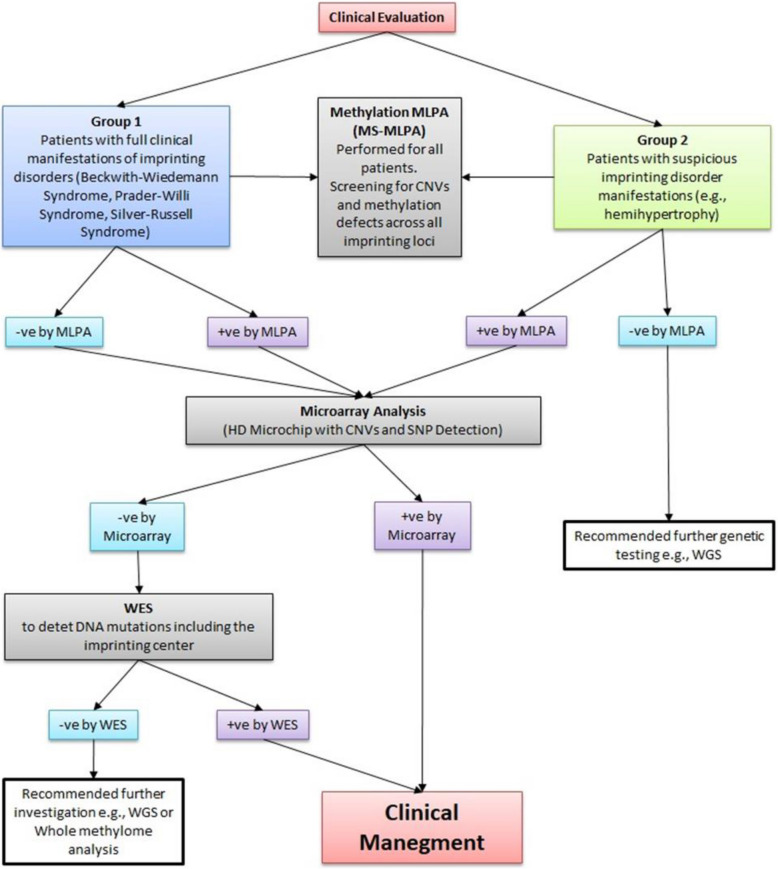
Methods: Fifty-three patients, either clinically evaluated for Impaired Disposition (ImpDis) or suspected to have it, were referred from the outpatient genetic clinics at the National Research Center, Egypt. Nineteen patients displayed clinical manifestations of ImpDis syndromes, while 34 showed signs affecting growth, which suggested ImpDis. These growth-related symptoms included growth retardation, feeding problems, failure to thrive, hypoglycemia, obesity, hemihypertrophy, asymmetry, and overgrowth. Of the 19 patients with syndromic ImpDis, 8 were clinically diagnosed with Silver-Russell syndrome (SRS), 7 with Prader-Willi syndrome (PWS), and 4 with Beckwith-Wiedemann syndrome (BWS). We employed methylation-specific multiple ligation-dependent probe amplification (MS-MLPA) for all patients, SNP-array testing for 12 patients, and whole exome sequencing (WES) for one patient.
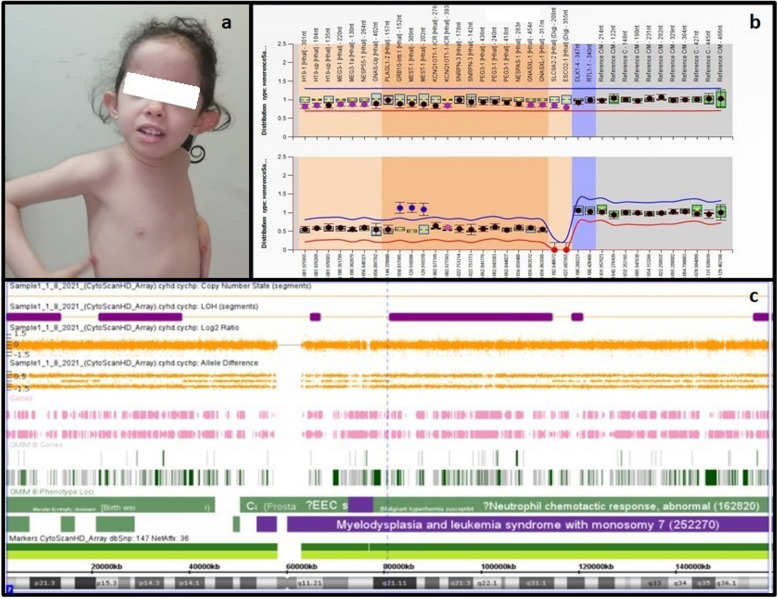
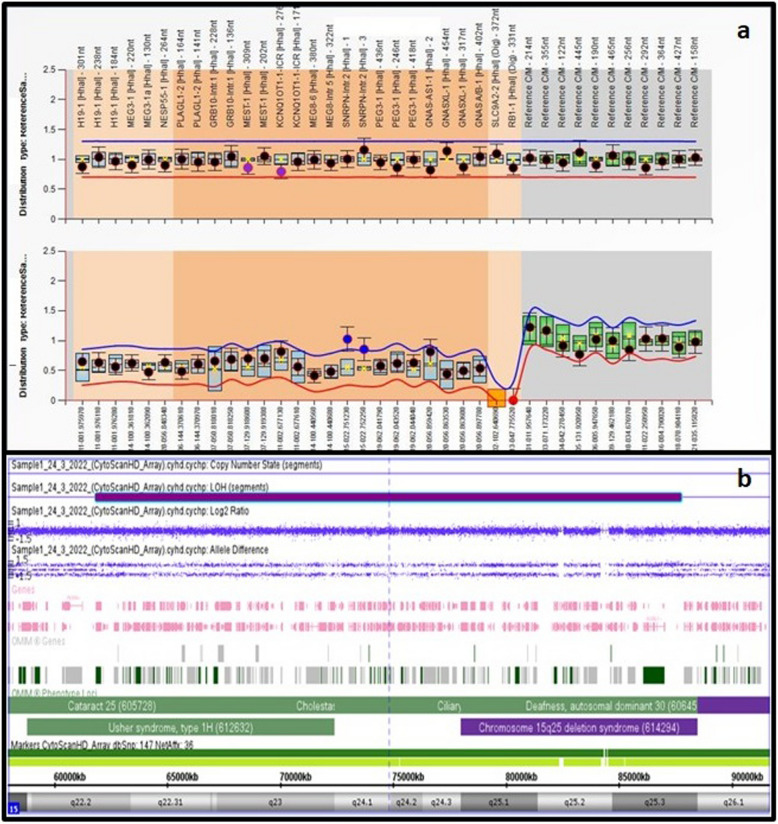
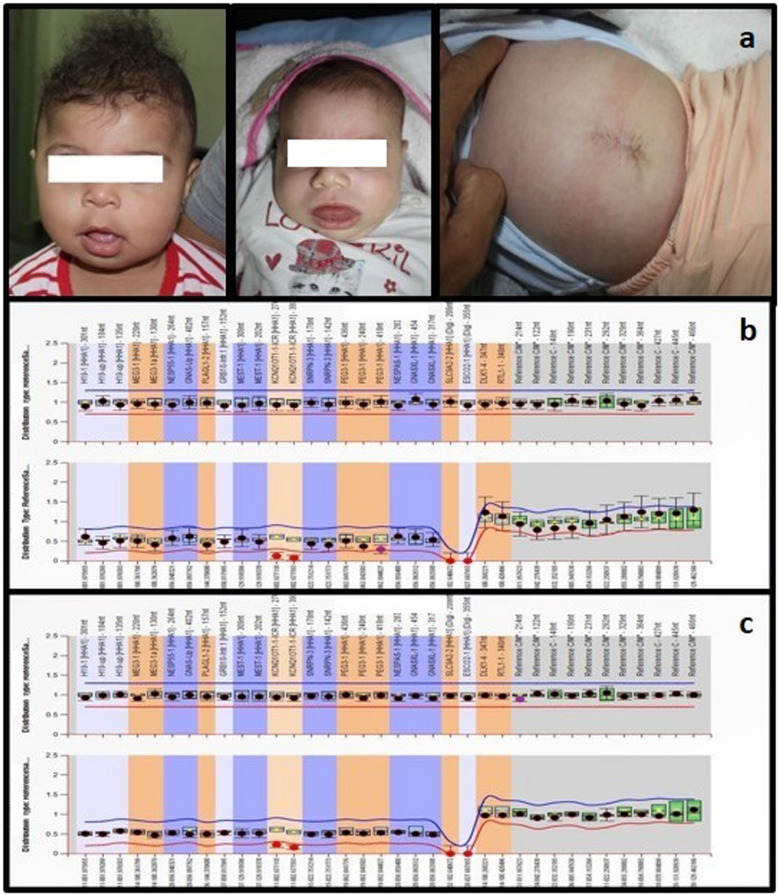
Results: In patients with Silver-Russell syndrome (SRS), one patient exhibited hypermethylation of the GRB10 and MEST genes, along with segmental uniparental disomy (UPD) on chromosome 7 (patient 1). Another patient had a variant in the HMGA2 gene (NM_001300918.1:c.310dup), which, according to the American College of Medical Genetics (ACMG) criteria, was classified as PM2 VUS (patient 2). In patients with Prader-Willi syndrome (PWS), one patient showed hypermethylation of the SNPRN gene (patient 3). In patients with Beckwith-Wiedemann syndrome (BWS), two displayed hypomethylation of the KCNQ-CR region (patients 4 and 5). Among the group of patients with symptoms suggestive of ImpDis, no methylation defects were detected through MS-MLPA.
Conclusion: It is crucial to diagnose ImpDis accurately, as understanding the exact cause of ImpDis is important for genetic counseling and personalized medicine. Early diagnosis enables timely interventions, which can improve developmental outcomes. Precision in diagnosis helps differentiate between conditions with overlapping clinical features. HMGA2 mutation should be verified in SRs patients with negative 11p15 methylation defect and matUPD7.
Keywords: Beckwith Wideman; Hypo and hyper methylation; Imprinted disorders; Imprinted genes; Prader-Willi; Silver-Russel syndrome; Single nucleotide polymorphism analysis; Uniparental disomy.
© 2025. The Author(s).
Conflict of interest statement
Declarations. Ethics approval and consent to participate: The Patients parents have given their written informed consent for their children to participate in this study. This research received ethical approval from the Ethical Committee of the National Research Centre. Certificate number: 19250. Consent for publication: We obtained written informed consent from the parents for publication. Competing interests: The authors declare no competing interests.
Figures
References
MeSH terms
LinkOut - more resources
Full Text Sources
Medical
Miscellaneous
