


Enhancing theory of mind in autism through humanoid robot interaction in a randomized controlled trial
- PMID: 40731038
- PMCID: PMC12307709
- DOI: 10.1038/s41598-025-12253-7
Enhancing theory of mind in autism through humanoid robot interaction in a randomized controlled trial
Abstract
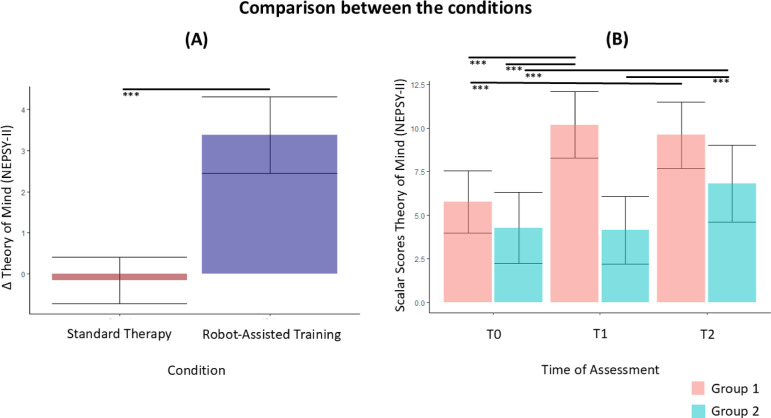
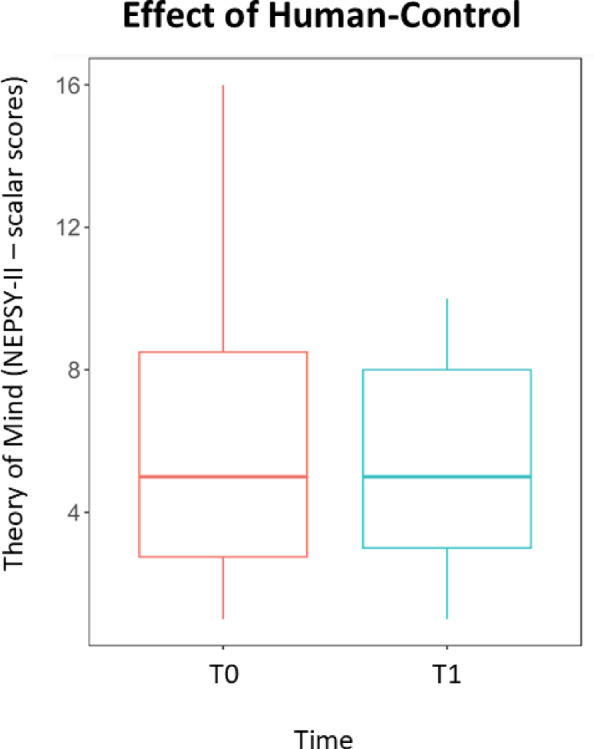
Autism Spectrum Disorder presents significant challenges in social cognition, particularly in understanding others' thoughts, emotions, and intentions. Traditional interventions often rely on role-playing games with human therapists or inanimate objects, but these approaches may lack consistency and ecological validity. This study integrated Applied Behavior Analysis principles with robot-assisted training to improve social cognition in children with autism. A randomized, two-period crossover trial involving 32 children (mean age = 7.53 ± 1.32 years, 7 females) compared robot-assisted training using the humanoid robot iCub with standard therapy and an active human-assisted control condition. During robot-assisted sessions, children engaged in structured social role-play scenarios, practicing essential social skills such as perspective-taking, joint attention, and recognizing intentions. The robot's human-like appearance and adaptive behavior provided an engaging, predictable learning environment. Results indicated that robot-assisted training significantly improved social cognition, in contrast to traditional therapy and the human-assisted control group, where no improvements were found. Importantly, the active human control confirmed that these improvements were driven by the robot's presence rather than the protocol itself. These findings demonstrate the potential of humanoid robots as effective therapeutic tools for enhancing social skills in children with autism, offering a scalable and engaging complement to existing clinical practices. Clinical Trial Registration: ISRCTN15341724, registered on May 6, 2025. Available at: https://www.isrctn.com/ISRCTN15341724 .
Keywords: Applied behavior analysis (ABA); Autism spectrum disorder (ASD); Humanoid robots; Robot-Assisted training; Social cognition training; Theory of Mind (ToM).
© 2025. The Author(s).
Conflict of interest statement
Declarations. Competing interests: The authors declare no competing interests.
Figures
References
-
- Volkmar, F. R. Encyclopedia of Autism Spectrum Disorders (Springer International Publishing, 2021).
-
- Wise, S. J. We’re all Neurodiverse: How To Build a neurodiversity-affirming Future and Challenge Neuronormativity (Jessica Kingsley, 2023).
-
- Sharma, S. R., Gonda, X. & Tarazi, F. I. Autism spectrum disorder: classification, diagnosis and therapy. Pharmacol. Ther.190, 91–104 (2018). - PubMed
-
- Fletcher-Watson, S. & Happé, F. Autism: A New Introduction To Psychological Theory and Current Debate (Routledge, 2019).
-
- Roane, H. S., Fisher, W. W. & Carr, J. E. Applied behavior analysis as treatment for autism spectrum disorder. J. Pediatr.175, 27–32 (2016). - PubMed
Publication types
MeSH terms
Grants and funding
LinkOut - more resources
Full Text Sources
Medical
