


Adaptive Evolution of Sporosarcina pasteurii Enhances Saline-Alkali Resistance for High-Performance Concrete Crack Repair via MICP
- PMID: 40732037
- PMCID: PMC12300605
- DOI: 10.3390/microorganisms13071526
Adaptive Evolution of Sporosarcina pasteurii Enhances Saline-Alkali Resistance for High-Performance Concrete Crack Repair via MICP
Abstract
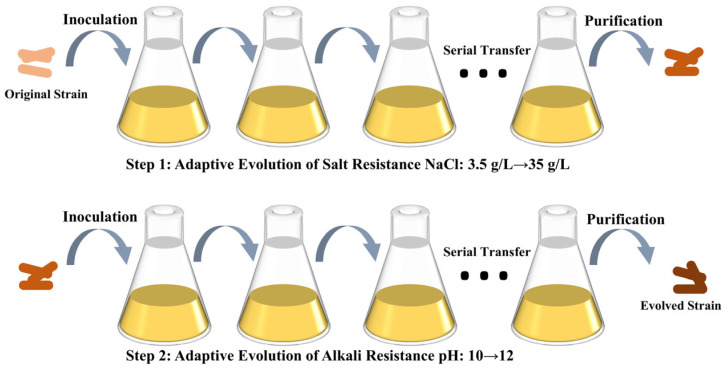
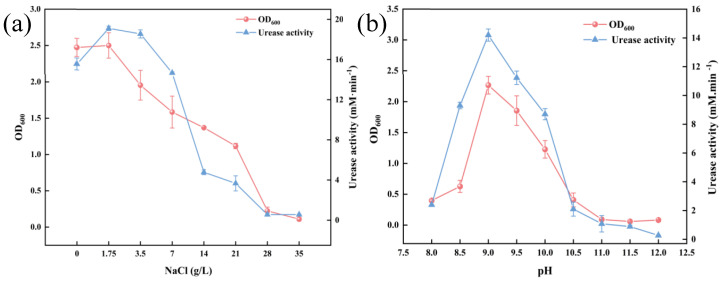
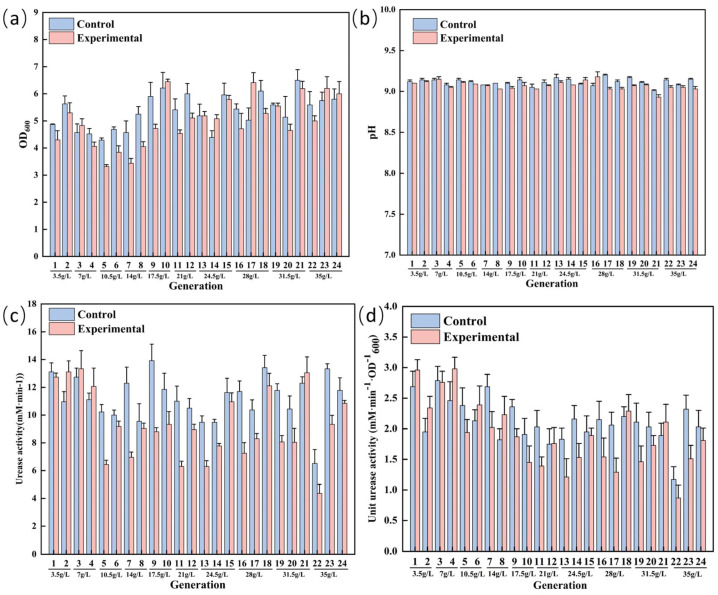
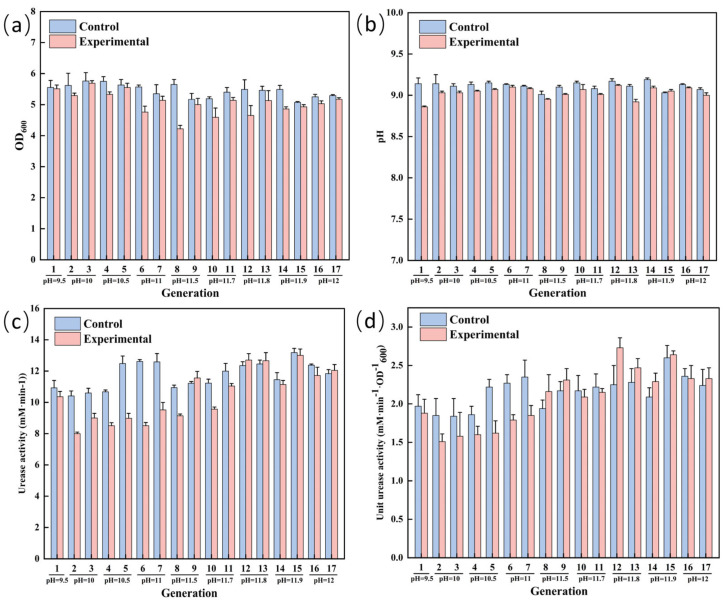
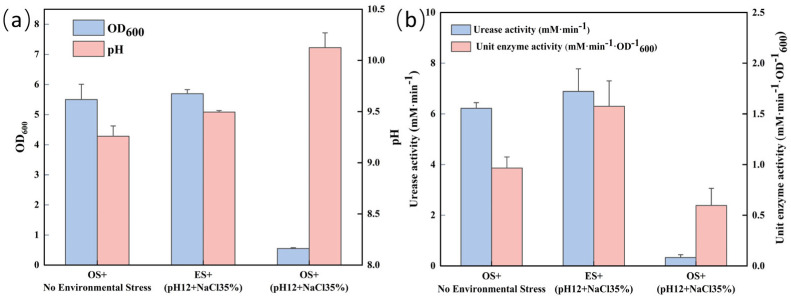
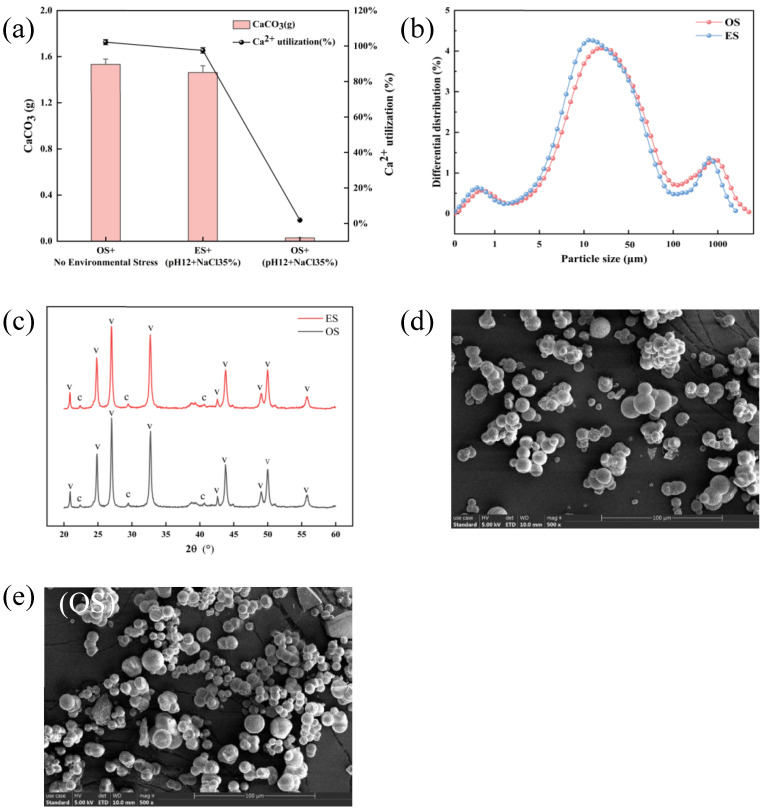
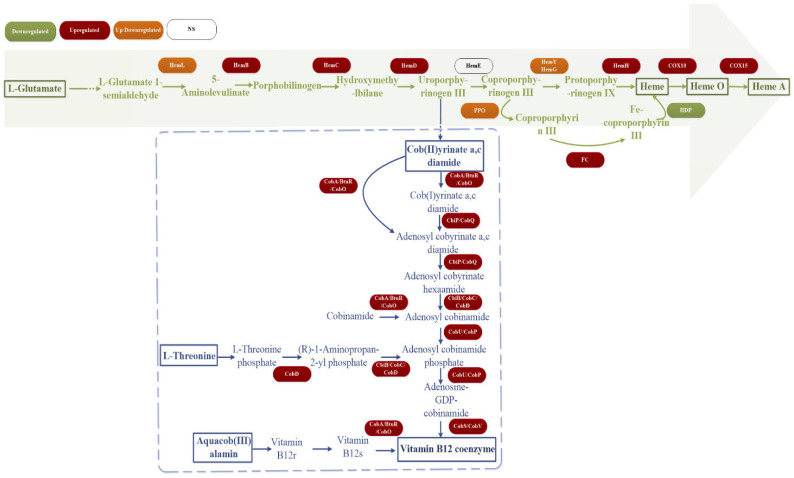
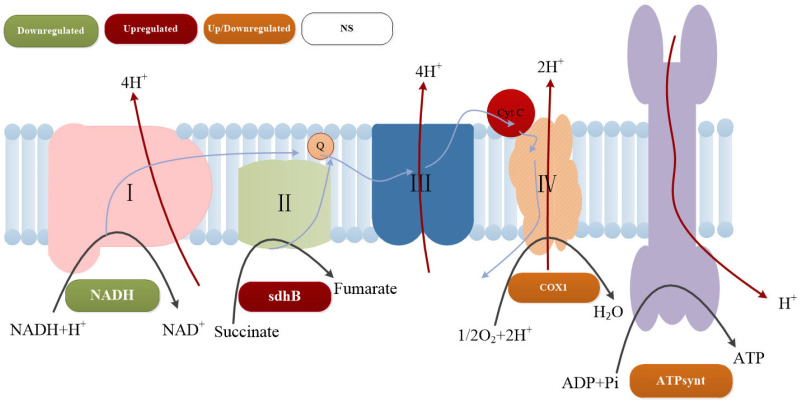
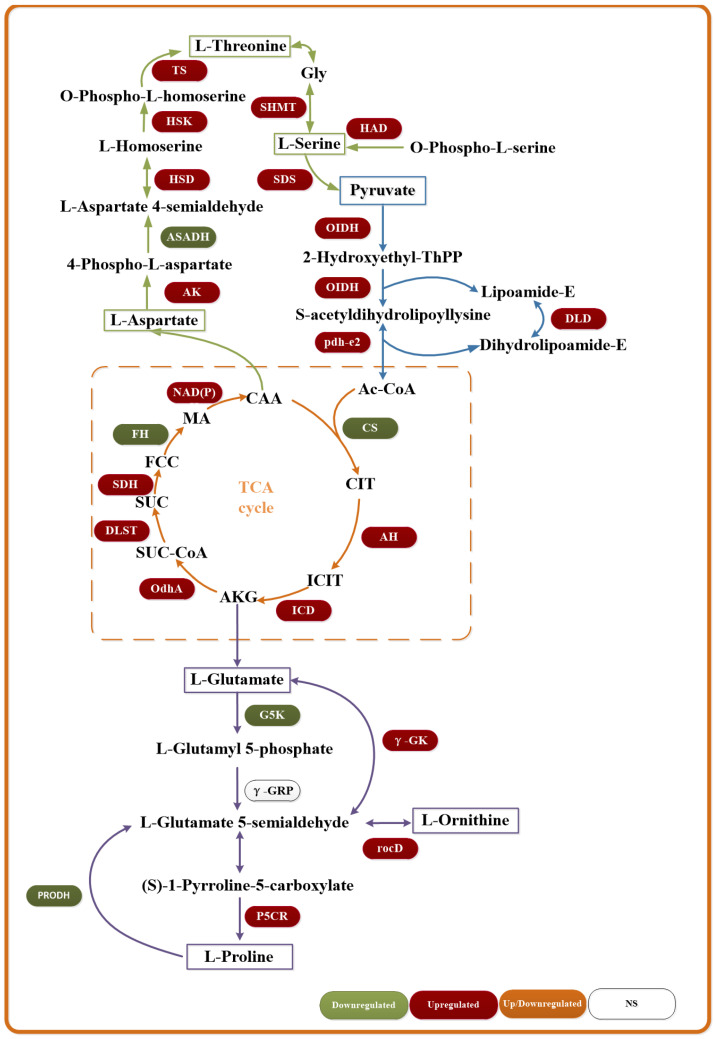
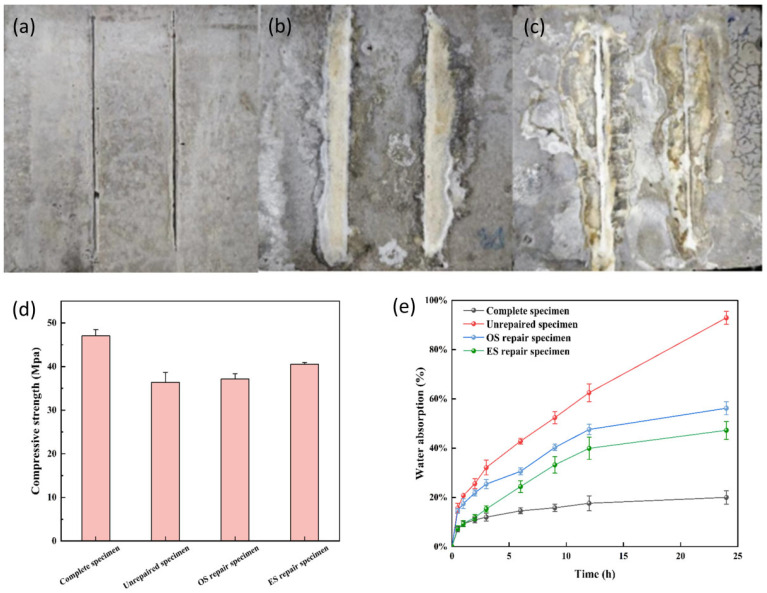
Microbially induced calcium carbonate precipitation (MICP) has emerged as a research focus in concrete crack remediation due to its environmental compatibility and efficient mineralization capacity. The hypersaline conditions of seawater (average 35 g/L NaCl) and alkaline environments (pH 12) within concrete cracks pose significant challenges to the survival of mineralization-capable microorganisms. To enhance microbial tolerance under these extreme conditions, this study employed a laboratory adaptive evolution strategy to successfully develop a Sporosarcina pasteurii strain demonstrating tolerance to 35 g/L NaCl and pH 12. Comparative analysis of growth characteristics (OD600), pH variation, urease activity, and specific urease activity revealed that the evolved strain maintained growth kinetics under harsh conditions comparable to the parental strain under normal conditions. Subsequent evaluations demonstrated the evolved strain's superior salt-alkali tolerance through enhanced enzymatic activity, precipitation yield, particle size distribution, crystal morphology, and microstructure characterization under various saline-alkaline conditions. Whole-genome sequencing identified five non-synonymous mutated genes associated with ribosomal stability, transmembrane transport, and osmoprotectant synthesis. Transcriptomic profiling revealed 1082 deferentially expressed genes (543 upregulated, 539 downregulated), predominantly involved in ribosomal biogenesis, porphyrin metabolism, oxidative phosphorylation, tricarboxylic acid (TCA) cycle, and amino acid metabolism. In concrete remediation experiments, the evolved strain achieved superior performance with 89.3% compressive strength recovery and 48% reduction in water absorption rate. This study elucidates the molecular mechanisms underlying S. pasteurii's salt-alkali tolerance and validates its potential application in the remediation of marine engineering.
Keywords: MICP; Sporosarcina pasteurii; anti permeability; compressive strength; genome; laboratory adaptive evolution; transcriptome.
Conflict of interest statement
The author declares no conflicts of interest.
Figures
References
-
- Ragab A.M., Elgammal M.A., Hodhod O.A., Ahmed T.E. Evaluation of Field Concrete Deterioration under Real Conditions of Seawater Attack. Constr. Build. Mater. 2016;119:130–144. doi: 10.1016/j.conbuildmat.2016.05.014. - DOI
-
- Qu F., Li W., Zeng X., Luo Z., Wang K., Sheng D. Effect of Microlimestone on Properties of Self-Consolidating Concrete with Manufactured Sand and Mineral Admixture. Front. Struct. Civ. Eng. 2020;14:1545–1560. doi: 10.1007/s11709-020-0678-4. - DOI
-
- Qu F., Li W., Dong W., Tam V.W.Y., Yu T. Durability Deterioration of Concrete under Marine Environment from Material to Structure: A Critical Review. J. Build. Eng. 2021;35:102074. doi: 10.1016/j.jobe.2020.102074. - DOI
-
- Zhang M., Xu R., Liu K., Sun S. Research Progress on Durability of Marine Concrete under the Combined Action of Cl− Erosion, Carbonation, and Dry–Wet Cycles. Rev. Adv. Mater. Sci. 2022;61:622–637. doi: 10.1515/rams-2022-0049. - DOI
-
- Fan Q., Fan L., Quach W.-M., Zhang R., Duan J., Sand W. Application of Microbial Mineralization Technology for Marine Concrete Crack Repair: A Review. J. Build. Eng. 2023;69:106299. doi: 10.1016/j.jobe.2023.106299. - DOI
LinkOut - more resources
Full Text Sources
